Kwila Decking Auckland: Costs, Suppliers & Care 2026 – Superior Renovations
Originally posted on Kwila Decking Auckland: Costs, Suppliers & Care 2026 – Superior Renovations
Superior Renovations - Auckland’s Trusted Home Renovation Specialists
Quick answer: Kwila decking costs roughly $90–$130 per m² for materials and $550–$900 per m² fully installed in Auckland — about $11,000–$18,000 for a standard 20m² deck. With proper installation and a clean-and-oil every 12–18 months, kwila lasts 15–25+ years in our coastal, humid conditions.
If you’re an Auckland homeowner weighing up a kwila deck — a spot for summer barbies in Botany Downs, or somewhere to sit and watch the bush in Titirangi — this guide covers the decisions that actually matter. Kwila (also called Merbau) is the go-to decking hardwood in Auckland for good reason. It’s dense and naturally oily, so it shrugs off our humidity, coastal salt air, and UV without much fuss. Rich reddish-brown tones, a 15–25+ year lifespan with proper care, and a hardness that takes high-traffic family use in its stride.
This is the kwila material guide. It draws on the outdoor building projects across Auckland we’ve delivered over the past decade — costs, durability, maintenance, finishes, alternatives, and what to watch out for. Auckland’s conditions are specific: intense UV, salty air in the coastal suburbs, and clay soils that complicate substructures. The advice below is built around those, not generic timber-yard copy. For the wider cost picture across every decking material and size, our full Auckland deck cost guide is the place to start.
Last updated: June 2026
How Much Does Kwila Decking Cost in Auckland?
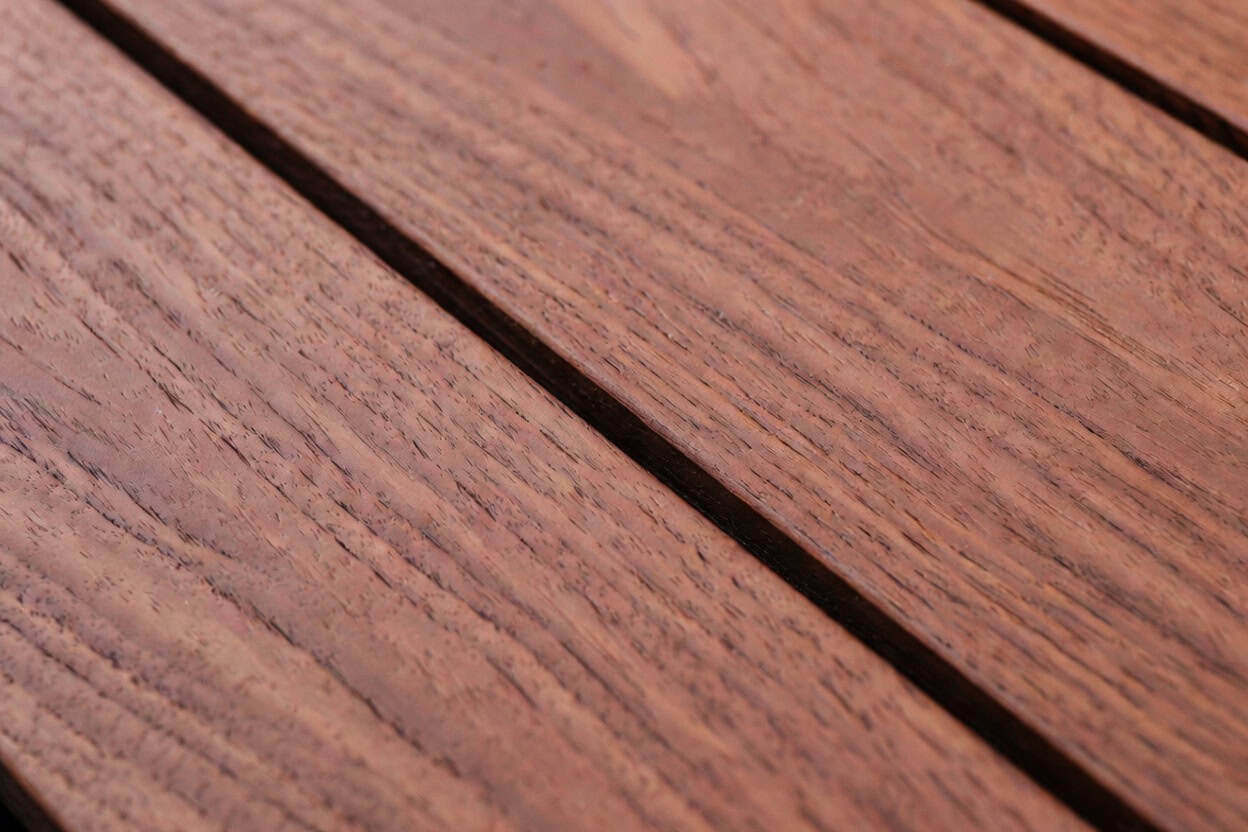
Budget $90–$130 per m² for kwila materials and $550–$900 per m² fully installed — roughly $11,000–$18,000 for a standard 20m² deck. Kwila is a premium hardwood and the price reflects that. But “premium” isn’t the same as overpriced once you factor in 20 years of ownership. Across more than 1,000 Auckland renovation projects, outdoor work is the category where shortcuts in spec show up fastest — the climate punishes anything done on the cheap.
One thing to be upfront about: timber and labour pricing has moved sharply in recent years and still fluctuates with supply and demand. Treat the figures below as ranges to budget within, not fixed quotes. For the all-materials comparison (pine through to aluminium), see our Auckland deck cost guide.
Materials, labour, and the bits people forget
The cost of a kwila deck isn’t just the timber. There’s installation labour, site preparation, substructure, fixings, and ongoing maintenance to account for. Kwila boards run $90–$130 per m² to supply; the jump to $550–$900 per m² installed is mostly labour and substructure, because hardwood is slow to lay. Every screw is pre-drilled and countersunk, which is why a kwila install costs more in labour than a softwood one.
| Supplier (Auckland) | Board size | Supply price (per m², incl GST) |
|---|---|---|
| South Pacific Timber | 140×19mm | ~$89–$95 |
| PlaceMakers (FSC Griptread) | 140×19mm finished | ~$90–$100 |
| BBS Timbers / JSC Timber | 140×19mm | ~$90–$115 |
| Typical supply band | FSC / select grade | $90–$130 |
💡 Quick tip: Order 5–10% more board than your measured area to cover cuts, waste, and the odd defect. Running short mid-build means a second delivery charge and a colour-match gamble if the next batch is from a different lot.
What pushes the installed price up
That $550–$900 per m² installed band is wide because Auckland sites vary so much. Here’s what moves the number:
- Deck height and subframe. A ground-level deck on a flat section needs minimal substructure. An elevated deck on a Titirangi hillside needs engineered posts, bracing, and concrete footings — the subframe alone can cost as much as the boards.
- Site prep and access. Old deck removal, drainage work, or getting materials up a steep Mt Eden driveway all add labour time, and that time lands in the quote.
- Design complexity. A single-level rectangle in Flat Bush costs less than a multi-level deck with integrated seating in Herne Bay. If you want help weighing complexity against budget, our Design Studio in Wairau Valley exists for exactly that.
- Fixings and pre-coating. T316 stainless screws for coastal sites and pre-oiling boards on all four faces before they go down add a little upfront — both are worth every cent.
- Council consent. Where consent is triggered, add $500–$2,000 and allow processing time (more on this below).
“The job we see go wrong most often isn’t the timber — it’s boards that went down without being oiled on all four faces first. On a coastal site that one step decides whether you’re re-sanding in year three or year ten. It’s the cheapest insurance on the whole build.”
— Alison Yu, Designer, Superior Renovations
Do you need council consent for a deck?
A deck is exempt from building consent only if it’s not possible to fall more than 1.5 metres from it — even if the deck collapsed. That’s Exemption 24 of Schedule 1 of the Building Act 2004, per Building Performance (MBIE). Above that fall height, you need consent from Auckland Council. Either way, a safety barrier is required under Building Code clause F4 wherever there’s a fall of one metre or more.
Ignore the “25m²” figure that gets repeated online — it doesn’t apply to decks at all. That threshold relates to detached sheds and similar standalone structures, not decks. Where consent is required, the structural work is restricted building work and must be carried out or supervised by a Licensed Building Practitioner (LBP). We handle all consent paperwork in-house on the projects we deliver, so it’s one less coordination headache for the homeowner.
Important note: Exempt work still has to meet the Building Code, and a resource consent can apply separately — for site coverage, yard setbacks, or daylight planes. On tight Auckland sections it pays to check the planning rules before you commit to a footprint.
Is kwila worth it?
Pine is cheaper upfront and composite is lower maintenance, but kwila sits in a practical middle ground. A well-maintained kwila deck realistically lasts 15–25+ years in Auckland, and its look is hard to fake with a synthetic board. For homeowners planning to stay put and actually use the outdoor space, the numbers hold up — especially in suburbs like Parnell or Devonport, where a good deck shows up in a valuation.
Pros and Cons of Kwila Decking for Your Auckland Home
Kwila has a strong reputation in the Auckland market — mostly well earned. But it isn’t the right answer for everyone. Here’s the honest version of what you’re getting and what you’re signing up for.
Why Auckland homeowners choose kwila
It handles our conditions
Kwila’s high oil content gives it natural resistance to moisture, insects, and decay — the three things that shorten a deck’s life here. Whether you’re in Takapuna copping salt spray off the harbour or in Mt Eden dealing with heavy winter rain, it’s built for it. The catch is that the timber’s natural resistance only pays off if the install is done right — drainage, ventilation, and fixings all matter.
The look is hard to argue with
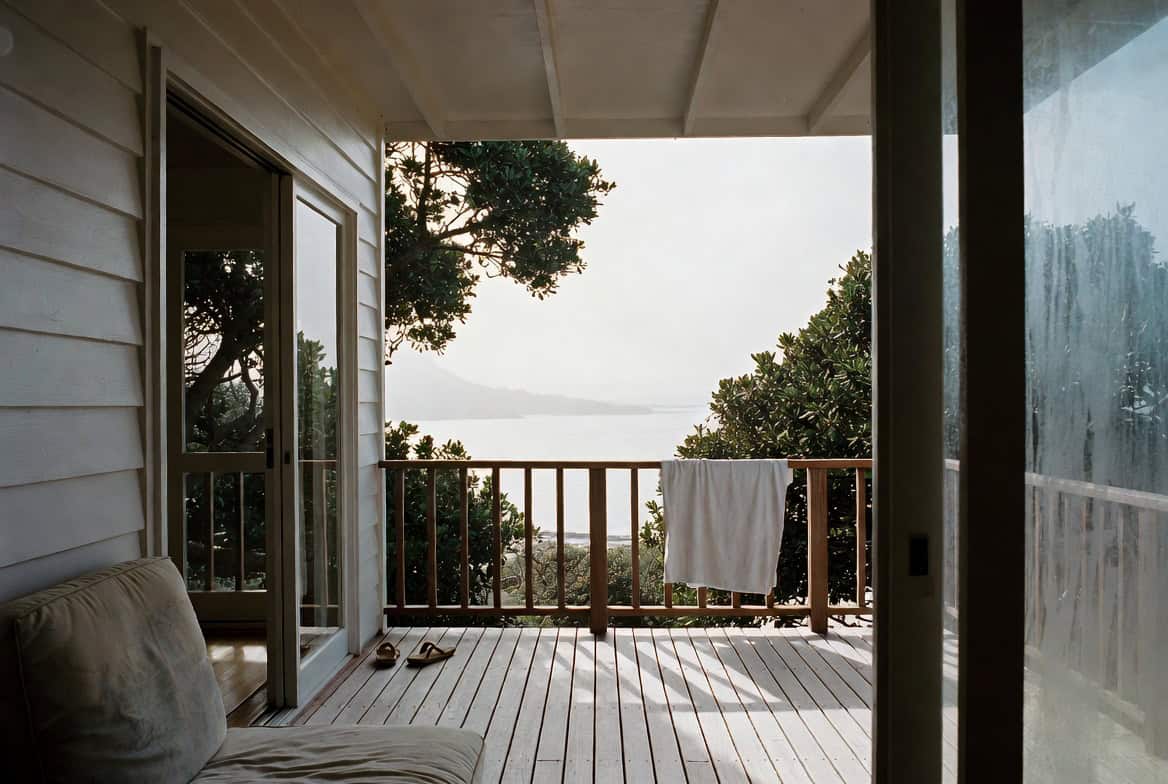
Kwila’s warm reddish-brown tones — shifting toward gold as the timber ages — add character a composite board rarely matches convincingly. It works on a modern build in Grey Lynn and on a classic bungalow in Henderson alike. Left untreated, it weathers to a clean silver-grey, which suits beachside places like Devonport or Waiheke without any colour upkeep at all.
“A deck earns its keep when it reads as another room, not an add-on. We set the deck level to sit flush with the interior floor so the indoor-outdoor line disappears — open the doors and the living space just keeps going. That’s the detail clients actually feel, every summer.”
— Dorothy Li, Design Manager, Superior Renovations
Less maintenance than pine
This is a relative claim, but a real one. A clean and an oil every 12–18 months is the commitment with kwila; pine needs attention every six to twelve months to stay decent. Products like Dryden OilStain or Resene Kwila Timber Stain are straightforward to apply and easy to get from Mitre 10 or Bunnings.
FSC-certified options exist
Kwila’s sustainability record has historically been patchy — some supply chains raise legitimate concerns about logging in the source regions. FSC-certified kwila addresses that directly, so if environmental provenance matters to you, ask for the certification and verify it rather than taking the supplier’s word.
Built for heavy use
Kwila’s Janka hardness of around 1,800 lbf means it takes heavy furniture and constant foot traffic without denting or marking. For a deck that’s going to be used hard — regular entertaining in Botany Downs, kids in Albany — it’s a more practical pick than softer timbers.
The downsides worth knowing
Tannin bleeding
Kwila bleeds tannins — a reddish-brown run-off that washes out after rain and can stain concrete, pavers, or the neighbour’s fence. In a tight Remuera backyard, plan for it. The bleed is worst in the first few months and settles down, but it’s an unpleasant surprise if you’re not across it beforehand.
💡 Quick tip: Lay drop cloths during the build, hose the deck down every couple of weeks for the first three to six months, and pre-coat the boards before they go in. Those three steps deal with most of the tannin problem.
Higher upfront cost than pine
At $90–$130/m² materials and $550–$900/m² installed, kwila sits above pine ($350–$550/m² installed) but in a similar band to composite ($550–$850/m² installed). For a budget-conscious deck in Manurewa where function matters more than finish, pine is worth a look. For anyone staying in the home and using the space properly, kwila usually wins the ten-year comparison.
It still needs maintenance
Low maintenance isn’t no maintenance. Skip the annual oil and kwila fades to silver-grey — fine if that’s the look you want, but unprotected timber also dries out and can crack in Auckland’s UV-heavy summers. Set a reminder and stick to it. The job takes an afternoon, not a weekend.
It’s not a DIY install
Kwila’s density makes it harder to work than pine. It needs correct board spacing (4–6mm), the right fixings, and experienced hands to avoid splitting or cupping — both more common in Auckland’s humidity if the install is sloppy. Use a tradie with hardwood decking experience specifically, not just general carpentry, and ask to see photos of past kwila jobs.
Pros and cons at a glance
| Advantages | Disadvantages |
|---|---|
| Handles Auckland’s coastal, humid weather | Tannin bleed can stain nearby surfaces early on |
| Rich reddish-brown look that ages well | Higher upfront cost than pine |
| Lower maintenance than softwoods | Still needs oiling to hold its colour |
| FSC-certified options available | Sourcing ethics vary without certification |
| High density suits heavy family use | Needs experienced installers to avoid cupping |
Alternatives to Kwila Decking
Kwila isn’t the only answer. Depending on your budget, maintenance appetite, and what the deck needs to do, one of these might suit you better. Here’s the honest comparison.
Treated pine
Pine is the most common decking timber in New Zealand for one reason: it’s the cheapest, at $50–$80/m² materials and $350–$550/m² installed. H3.2-treated pine is pressure-treated for outdoor use and widely stocked at Bunnings and Mitre 10. The trade-offs: a shorter 10–15 year life, staining every six to twelve months, and a softer surface that dents under heavy use. Good for a bigger deck in Papakura on a tight budget — just be honest about the upkeep.
Composite
Composite — wood fibre and recycled plastic — has grown fast in Auckland because it barely needs maintaining: no oiling, no staining, just a hose-down. Expect $100–$200/m² materials and $550–$850/m² installed. It handles fade, rot, and moisture well, which suits coastal spots like Devonport. Two things to check before you commit: darker boards get genuinely hot underfoot in summer, and some homeowners still find the not-quite-timber look unconvincing. For a poolside or wet area, pick a textured surface — smooth composite gets slippery.
Vitex
Vitex is a tropical hardwood that gets less attention than kwila but deserves a look. At $80–$110/m² materials and $500–$850/m² installed, it offers durability close to kwila with a lighter, golden-brown tone that suits coastal properties in Mission Bay or Waiake where kwila’s deeper red can feel heavy. It bleeds tannins like kwila and still needs oiling, and fewer Auckland suppliers carry it — so sourcing can be the limiting factor.
Bamboo
Bamboo is gaining traction as a sustainable option. High-density, thermally treated bamboo costs $90–$150/m² materials and $500–$800/m² installed, and resists moisture and pests reasonably well when it’s a quality product. The risk is quality variance — cheaper bamboo warps and cracks in Auckland’s humidity, so this is one to spec carefully and not buy on price.
💡 Quick tip: Work out the ten-year cost, not just the install price. Kwila and vitex often win that number even when pine looks cheaper on day one — the maintenance and replacement maths catches up.
How the options compare
| Material | Materials /m² | Installed /m² | Lifespan | Maintenance | Best for |
|---|---|---|---|---|---|
| Kwila | $90–$130 | $550–$900 | 15–25+ yrs | Low (oil 12–18 mo) | Coastal, high-traffic decks |
| Treated pine | $50–$80 | $350–$550 | 10–15 yrs | High (stain 6–12 mo) | Budget-conscious builds |
| Composite | $100–$200 | $550–$850 | 20–30 yrs | Very low (clean only) | Low-maintenance priority |
| Vitex | $80–$110 | $500–$850 | 15–20 yrs | Low (oil 12–18 mo) | Coastal, lighter look |
| Bamboo | $90–$150 | $500–$800 | 10–20 yrs | Moderate (seal 12 mo) | Eco-conscious builds |
Figures are indicative 2026 Auckland ranges, fully installed (materials, labour, subframe, standard site prep), and shift with timber and labour costs. They exclude balustrades, stairs, and complex foundations.
How Long Does Kwila Decking Last in Auckland?
The headline number is 15–25+ years. That’s the realistic lifespan of a well-installed, properly maintained kwila deck in Auckland — but the gap between 15 and 25+ years comes down to a handful of factors worth getting right from the start.
What determines the lifespan
- Timber grade. FSC-certified, select-grade kwila is denser and more consistent than cheap stock. Knots and imperfections are where moisture gets in and trouble starts.
- Installation quality. Board spacing of 4–6mm, stainless fixings, and proper substructure ventilation are the three things that most separate a 25-year deck from a 12-year one.
- Maintenance. A clean every six months and an oil every 12–18 months protects against UV and moisture. Neglect it and you’ll see cracking and fading within a few seasons in high-UV spots like Parnell.
- Coastal exposure. In Mission Bay, Waiake, or St Heliers, salt air attacks the fixings before it touches the timber — which is why T316 stainless matters.
- Usage. A high-traffic entertainer’s deck in Howick lives a harder life than a quiet sitting area in Titirangi. Kwila’s built for it, but it’s worth being honest about the wear.
💡 Quick tip: On Auckland’s clay-heavy soils, keep a minimum 450mm clearance under the deck for airflow. Clay drains slowly, so moisture sits longer underneath than it would on sandy ground — and trapped damp is what rots a substructure.
What Auckland’s climate throws at it
Rain, UV, and salt air make Auckland demanding — but kwila was built for tropical conditions, so it’s not out of its depth. Three things to manage: moisture (pre-coat all four board faces before installing), UV (oil regularly or accept the silver-grey patina, knowing the surface still degrades unprotected), and salt air (the real risk is corroded fixings, not the timber — spec T316 stainless near the coast). See the kind of outdoor work we deliver in the projects we’ve completed across the city.
How kwila compares on lifespan
| Material | Life expectancy | Key factors for longevity |
|---|---|---|
| Kwila | 15–25+ years | Regular oiling, quality install, FSC-certified timber |
| Treated pine | 10–15 years | Frequent staining, H3.2 treatment, ventilation |
| Composite | 20–30 years | Minimal upkeep, UV-resistant brands, proper install |
| Vitex | 15–20 years | Oiling, quality fixings, ventilation |
| Bamboo | 10–20 years | High-density treatment, sealing, quality sourcing |
Kwila sits in a strong spot — better than pine and bamboo, comparable to vitex, and while composite edges it on raw lifespan, composite costs more and lacks kwila’s natural character. For most Auckland homeowners, that’s the right trade.
Maintaining Your Kwila Deck: A Practical Auckland Guide
Kwila is low-maintenance next to pine. It is not no-maintenance. Auckland’s humidity, UV, and salt air work on any deck regardless of timber species — the question is whether you stay ahead of it or fix the damage after the fact. Staying ahead is cheaper and less work. Here’s the routine.
The three core tasks
1. Cleaning
Clean every six months — spring and autumn. In shady suburbs like Titirangi, mildew establishes fast and is harder to shift once it’s in the grain. A mild deck cleaner like Wet & Forget and a stiff brush handles most of it. For coastal homes, the post-winter clean matters most — salt and moisture together create the surface deterioration that’s easy to prevent and annoying to fix.
2. Managing tannin leaching
Kwila bleeds tannins for the first three to six months. Hose or low-pressure wash every two to three weeks early on to flush the run-off before it sets on surrounding pavers or concrete. Pre-coating all four board faces before installation cuts the bleed from the outset, and drop cloths during the build protect tight Ponsonby or Grey Lynn courtyards where pavers sit close to the deck edge.
💡 Quick tip: If tannin reaches concrete or light pavers, a diluted oxalic acid cleaner (available at Bunnings) lifts the stain without damaging the deck surface.
3. Oiling or staining
Oil or stain every 12–18 months to protect against UV and moisture. Skip it and the deck fades to silver-grey — a legitimate look, but the UV still degrades unprotected timber even if the patina suits you. Dryden OilStain and Resene Kwila Timber Stain both penetrate the boards and hold up to NZ conditions rather than sitting on top where they peel. Clean and dry the deck first, sand lightly if the surface is rough, then apply with the grain. Allow 24–48 hours to dry — and check the forecast, because applying before rain is a wasted afternoon.
Maintenance schedule for Auckland conditions
| Task | Frequency | Best time | Notes |
|---|---|---|---|
| Tannin wash-down | Every 2–3 weeks, first 3–6 months | After installation | Low-pressure; protect nearby surfaces |
| General cleaning | Every 6 months | Spring and autumn | Mild cleaner; focus on shaded areas |
| Oiling / staining | Every 12–18 months | Spring or early summer | UV-resistant product; apply in the cooler part of the day |
| Inspection | Every 6 months | After winter and after summer | Check fixings, cracks, mildew — coastal sites especially |
Mistakes worth avoiding
- Not pre-coating before installation. Unsealed undersides and board ends invite moisture from below — one of the more avoidable causes of early deck failure here.
- Cheap oils. They don’t penetrate and won’t survive Auckland’s UV. You’re applying it to an expensive deck — pay for a quality product.
- High-pressure washing. It damages the surface grain and drives moisture into the boards. Low pressure or a stiff brush is all you need.
- Skipping inspections. A loose screw caught early is a ten-second fix. Found after a winter of movement, it can mean replacing a board.
If you’re planning a pergola or louvre roof over your deck, factor the shading into your maintenance plan — covered sections stay damp longer and need a closer eye on mildew. You can ballpark the structure with our pergola cost calculator before you commit.

Painting, Staining, or Letting Kwila Weather Naturally
How you finish a kwila deck shapes how it looks and how much work it takes over its life. Three options — stain to keep the natural colour, paint for a different look, or let it weather. Each is legitimate; they just come with different commitments.
Staining
Staining is the default for kwila in Auckland because it works with the timber rather than hiding it. Oil-based products like Resene Kwila Timber Stain or Dryden OilStain penetrate the boards and protect from within — they don’t peel or bubble the way a surface coating can in our humidity. You get a range of tones from clear to deep brown, easy reapplication every 12–18 months, and protection that suits coastal and north-facing decks. The only real limit: if you want a colour that doesn’t read as timber, stain won’t get you there.
Painting
Paint gives an opaque finish and bold colour — but the grain disappears, which is why most kwila owners don’t do it. It works for specific looks: a charcoal deck in Ponsonby, a clean white against a coastal-style Herne Bay home. Expect more prep (sanding and priming), a higher maintenance burden (chips and peels in humidity, touch-ups every two to three years), and the loss of the natural character you probably bought kwila for. If you go this way, use a quality exterior paint with UV and mildew resistance.
Natural weathering
Left untreated, kwila weathers to a silver-grey patina — a genuine aesthetic, not a failure mode, and popular in coastal suburbs like Waiheke where it suits the setting. The trade-off is that unprotected timber degrades faster under UV and the patina can be patchy in shaded areas. If this is the look you want, apply a clear sealant initially — it slows the silvering slightly but protects the structure underneath while the patina develops.
💡 Quick tip: Test any stain or paint on an offcut first. Kwila’s natural oils and grain affect how colour takes, and what looks right in the tin isn’t always what ends up on the deck.
What finishing costs
Materials run $10–$20/m²; professional application adds $30–$50/m² — worth it on a large or complex deck where even coverage matters, and especially for painting where prep quality decides how long the finish holds. For a standard rectangular 20–30m² deck, DIY staining is well within reach for most handy homeowners. A 4L tin covers roughly 20–40m² and costs $50–$100.
Best Suppliers for Kwila Decking in Auckland
Kwila quality varies between suppliers — grade, sourcing, and the advice you get alongside the timber all affect how the deck performs. Here’s an honest rundown of the main Auckland options.
💡 Quick tip: Always ask for FSC certification documentation in writing. A supplier who can’t produce it is telling you something about the supply chain.
The main Auckland kwila suppliers
| Supplier | Supply price /m² | FSC option | Best for |
|---|---|---|---|
| PlaceMakers | $90–$120 | Yes | Reliable supply for larger projects |
| Mitre 10 | $85–$115 | Sometimes | Materials + maintenance products in one stop |
| Bunnings | $80–$110 | Sometimes | DIY builds, convenience |
| South Pacific Timber | $95–$130 | Yes | Sustainable, high-grade kwila |
| BBS Timbers | $90–$120 | Yes | Hardwood expertise, coastal spec advice |
| JSC Timber | $90–$115 | Yes | Broad range, custom milling |
For budget and convenience, Bunnings or Mitre 10. For sustainability, South Pacific Timber. For hardwood expertise and coastal-specific advice, BBS Timbers or JSC Timber. For broad coverage and reliable supply on a bigger job, PlaceMakers. Any of these, specified correctly and installed well, will give you a deck that performs for 15–25+ years.
What to check before you buy
- Timber grade. Ask for select or standard grade as a minimum — fewer knots, more consistent density.
- FSC certification. Get it in writing.
- Fixings. Confirm they stock T316 stainless, or can point you to a source. Not all carry it as standard.
- Delivery. Check lead times and freight, especially for Waiheke or harder-access North Shore sites.
- Order extra. Add 5–10% over your measured area for cuts, waste, and defects.
Your Kwila Decking Project: The Short Version
Kwila is a well-suited decking timber for Auckland — it handles the salt, UV, and humid winters, and looks good doing it. With proper installation and consistent maintenance, 20+ years is a realistic expectation.
Budget summary for a 20m² kwila deck
| Item | Cost range | Notes |
|---|---|---|
| Kwila materials (supply) | $1,800–$2,600 | $90–$130/m² |
| Installation, subframe, fixings, site prep | $9,200–$15,400 | The bulk — hardwood is labour-intensive |
| Council consent (if fall >1.5m) | $500–$2,000 | Schedule 1, Building Act 2004 |
| Annual maintenance | $200–$400 | Clean and oil |
| Fully installed total | $11,000–$18,000 | Standard ground-level 20m² build, excl. consent |
Build in a 5–10% contingency for site surprises — clay soils in Remuera or Howick sometimes need more substructure work than the initial quote anticipates. Elevated decks, balustrades, and stairs sit above this range.
Get the foundations right
The things that separate a 25-year deck from a 12-year one aren’t complicated: good timber, a proper install, T316 fixings near the coast, 450mm of under-deck ventilation on clay soils, pre-coating on all four faces, and a maintenance routine you actually stick to. Poor installation and neglected maintenance are what shorten kwila’s life — neither is hard to avoid.
➡ Book your free in-home consultation with Superior Renovations
➡ Explore our Auckland deck and outdoor renovation service
➡ Request a free feasibility report for your project
How much does a kwila deck cost in Auckland?
For a standard 20m² ground-level kwila deck, budget $11,000–$18,000 fully installed. Materials run $90–$130 per m² to supply; the fully installed cost sits around $550–$900 per m² once labour, subframe, fixings, and site prep are included. Add $500–$2,000 if council consent is triggered. Timber and labour pricing has risen and fluctuates, so treat these as ranges, not fixed quotes. Elevated decks, balustrades, and stairs push the cost higher. Compare at least two suppliers and quotes before committing.
Do I need council consent to build a deck in Auckland?
A deck is exempt from building consent only if it's not possible to fall more than 1.5 metres from it, even if the deck collapsed — Exemption 24 of Schedule 1 of the Building Act 2004 (Building Performance/MBIE). Any deck above that fall height needs consent from Auckland Council. A safety barrier is also required under Building Code clause F4 wherever there's a fall of one metre or more. The '25m²' figure repeated online doesn't apply to decks — it relates to detached sheds. Superior Renovations handles all consent paperwork in-house on our projects.
How long does kwila decking last?
A well-installed, properly maintained kwila deck lasts 15–25+ years in Auckland conditions. The difference between the bottom and top of that range comes down to timber grade, installation quality (4–6mm board spacing, T316 stainless fixings, 450mm under-deck ventilation), maintenance, and coastal exposure. Kwila is a dense tropical hardwood with natural oils that resist moisture, insects, and decay — but it only delivers on that if the install and upkeep are done right.
How often should I maintain my kwila deck?
Clean every six months (spring and autumn) and oil or stain every 12–18 months using a product like Resene Kwila Timber Stain or Dryden OilStain. In the first three to six months after installation, hose the deck down every two to three weeks to manage tannin run-off before it stains nearby pavers or concrete. The total commitment is a few hours twice a year plus an annual oiling session — far less than pine.
Should I stain, paint, or let my kwila deck weather naturally?
Staining is the most practical choice for most Auckland homeowners — it protects the timber, keeps the natural colour, and needs reapplying every 12–18 months. Painting offers bolder colour but peels more readily in our humidity and needs attention every two to three years. Natural weathering produces a silver-grey patina that suits coastal properties in Waiheke or Devonport; apply a clear sealant initially to protect the structure while it silvers. Test any finish on an offcut first — kwila takes colour differently than pine.
How do I deal with tannin bleeding on kwila?
Kwila bleeds reddish-brown tannins after rain, worst in the first three to six months. Hose or low-pressure wash the deck every two to three weeks early on, pre-coat all four faces of each board before installation to cut the bleed at the source, and lay drop cloths during the build to protect pavers and concrete in tight Auckland backyards. If tannin reaches a hard surface, a diluted oxalic acid cleaner lifts the stain without damaging the deck.
What kwila spec does an Auckland coastal site need?
Specify T316 stainless steel fixings — standard steel corrodes in salt air and fails long before the timber does. Keep a minimum 450mm clearance under the deck for ventilation, which matters more on Auckland's clay soils where drainage is slow. Pre-coat boards on all four faces before installation, and oil annually rather than every 18 months in high-UV or exposed coastal spots like Mission Bay, Takapuna, and St Heliers. These steps separate a deck that lasts from one that needs remediation in year eight.
Where can I buy quality kwila decking in Auckland?
Main options: Bunnings ($80–$110/m²) for affordable DIY supply; Mitre 10 ($85–$115/m²) for materials plus maintenance products; PlaceMakers ($90–$120/m²) for reliable grade and Auckland-wide coverage; South Pacific Timber ($95–$130/m²) for FSC-certified sustainable kwila; and BBS Timbers or JSC Timber ($90–$120/m²) for hardwood expertise and coastal-specific advice. Always ask for FSC documentation and confirm they stock T316 stainless fixings. Visit in person and check a grade sample before ordering volume.
Further Resources for your outdoor renovation
- Featured projects and client stories to see specifications on some of the projects.
- Real client stories from Auckland
Need more information?
Take advantage of our FREE Complete Home Renovation Guide (48 pages), whether you’re already renovating or in the process of deciding to renovate, it’s not an easy process, this guide which includes a free 100+ point check list – will help you avoid costly mistakes.
Download Free Renovation Guide (PDF)
Have you been putting off getting renovations done?
We have partnered with Q Mastercard ® to provide you an 18 Month Interest-Free Payment Option, you can enjoy your new home now and stress less.
Learn More about Interest-Free Payment Options*
*Lending criteria, fees, terms and conditions apply. Mastercard is a registered trademark and the circles design is a trademark of Mastercard International Incorporated.
Still have questions unanswered?
Book a no-obligation consultation with the team at Superior Renovations, we’d love to meet you to discuss your renovation ideas!
[contact-form-7]
References
- Building Performance (MBIE) — Exemption 24: Decks, platforms, bridges, boardwalks
- Forte — How much does decking cost in New Zealand? (kwila supply pricing)
The post Kwila Decking Auckland: Costs, Suppliers & Care 2026 – Superior Renovations appeared first on Superior Renovations. #superiorrenovations


Comments
Post a Comment