Can I Reclad My House Without Building Consent? | Auckland Guide 2025
Originally posted on Can I Reclad My House Without Building Consent? | Auckland Guide 2025
Superior Renovations - Auckland’s Trusted Home Renovation Specialists
Can I Reclad My House Without Building Consent? The Complete Auckland Homeowner’s Guide (2025)
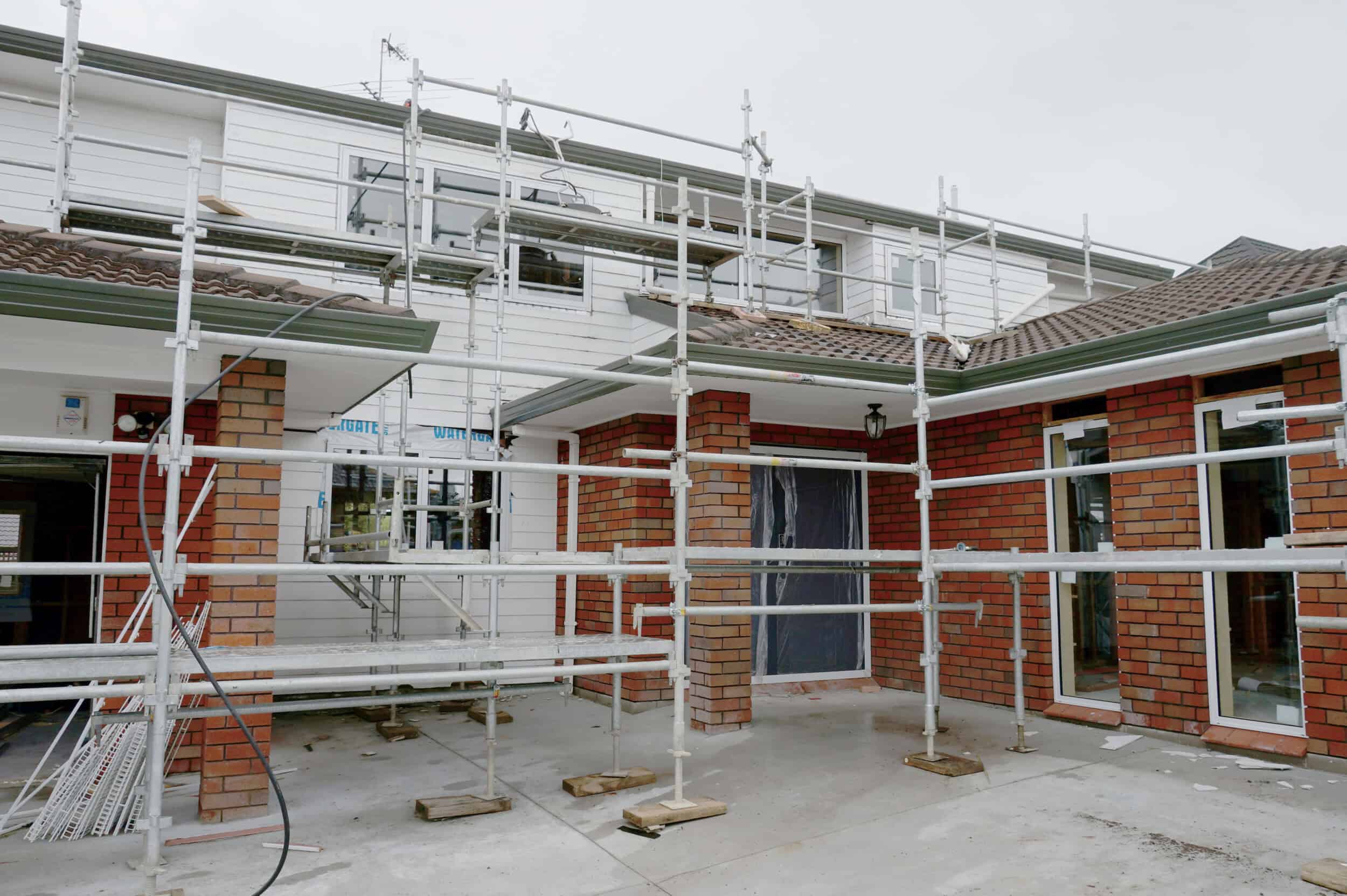
Here’s a question we get asked constantly at Superior Renovations — almost every week, actually. A homeowner calls us, mentions their walls are bubbling or peeling, maybe they’ve spotted some dark staining near the window frames, and then asks: “Do I actually need building consent to reclad, or can I just get someone in to do it?”
It’s a fair question. Recladding sounds, on the surface, like a bit of an exterior facelift — strip the old stuff off, slap some new stuff on, job done. But in New Zealand, and in Auckland particularly, it’s a whole lot more nuanced than that. And the consequences of getting it wrong can be genuinely painful — financially, legally, and when it comes to selling your home.
The short answer? In almost every case, yes — you do need building consent to reclad your house. But there are genuine exemptions, grey areas, and scenarios where you might be able to do repair work without going through the full consent process. This blog series breaks it all down.
We’ve written this guide specifically for Auckland homeowners. Our city has a unique cocktail of factors — a legacy of leaky homes from the 1990s and early 2000s, a coastal climate that’s tough on exterior cladding, and one of the busier property markets in the country. All of that makes understanding your recladding obligations not just important, but genuinely urgent for a lot of Kiwis.
Over the five sections in this series, we cover:
- Section 1: What recladding actually is — and when it legally requires building consent
- Section 2: The genuine exemptions — when you can do like-for-like repairs without consent
- Section 3: The risks of recladding without consent (they’re bigger than you think)
- Section 4: The Auckland consent process, step by step
- Section 5: Choosing the right cladding material for your Auckland home
We’ve drawn on guidance from Building Performance (MBIE), Auckland Council, and the Licensed Building Practitioners (LBP) programme, as well as our own team’s hands-on experience recladding homes across Auckland. Let’s get into it.
1: What Is Recladding — And When Does It Need Building Consent in NZ?

Superior Renovations
Let’s start with the basics, because “recladding” is one of those words that gets thrown around a lot — sometimes loosely. If you’re not sure exactly what it means in the eyes of the law, you might accidentally step into territory that requires building consent without even realising it.
So, What Exactly Is Recladding?
In plain terms, recladding means replacing any part of the exterior envelope of a building — the outer layer that sits between your home’s internal structure and the elements outside. This includes weatherboards, fibre cement panels, plaster systems (like stucco), and other cladding materials attached to the exterior walls.
According to Auckland Council, recladding is defined as replacing any component of the exterior envelope that is used to prevent moisture from entering the building. That’s the key thing to understand here. It’s not just about aesthetics. Cladding is fundamentally a weathertightness system — and weathertightness is one of the most tightly regulated aspects of the New Zealand Building Code.
Think about it this way. Your home’s cladding isn’t just a pretty face. Behind it sits the wall framing — the structural skeleton of your house. Between the cladding and the framing, there’s (or should be) insulation, a building wrap, cavity battens, and flashings around windows and doors. When any part of that external skin is replaced, it directly affects whether water can get in and how well it drains away if it does. That’s exactly why consent is required — because getting it wrong can lead to the very problems that turned thousands of Kiwi homes into what we now call “leaky homes.”
When Does Recladding Require Building Consent Under NZ Law?
Under the Building Act 2004 and its associated regulations, all building work in New Zealand requires a building consent unless it is specifically listed as exempt under Schedule 1 of the Act. Full recladding is not listed as exempt work. So the default position is: if you’re recladding your house — replacing the exterior cladding, even if with the same material — you almost certainly need consent.
There are several reasons why recladding consistently triggers the consent requirement:
1. It Affects Weathertightness
Weathertightness is one of the most critical functions of a building. The Building Code’s Clause E2 (External Moisture) requires that buildings are designed and built to prevent water ingress that could cause damage or affect the health of occupants. When you reclad, you’re directly working on the system that delivers that protection. Auckland Council — and the broader MBIE guidelines — confirm that building consent is required to ensure new cladding systems meet current standards.
2. It’s Classified as Restricted Building Work (RBW)
Recladding in New Zealand is classified as Restricted Building Work — which means it must be carried out or supervised by a Licensed Building Practitioner (LBP). This isn’t just a recommendation; it’s a legal requirement. If your reclad involves any work on the external envelope of a dwelling, only an LBP holding the relevant licence class (typically “Carpentry” or “Roofing”) can legally take responsibility for that work and sign off on a Record of Work. This requirement exists to protect homeowners — and it applies whether or not you’re going through the full consent process.
3. It May Expose Hidden Structural Damage
Here’s the thing about recladding — you often don’t know what you’re dealing with until the old cladding comes off. Many Auckland homes, particularly those built between the mid-1990s and mid-2000s, have hidden framing damage from years of water ingress. The building consent process includes inspections at key stages specifically to ensure that any discovered framing damage is properly repaired before the new cladding goes on. Without consent, there’s no mechanism for those inspections, and structural issues can simply be covered up.
“In my experience, the homes where we find the worst hidden damage are often the ones where someone has done a patch job without consent — they’ve covered up the problem rather than fixed it. Consent inspections exist for a reason, and they genuinely protect the homeowner.”
— Dorothy Li, Designer, Superior Renovations
What Does “Full Recladding” Actually Look Like?
To give you a concrete picture: a full reclad of a typical Auckland home involves removing all the existing exterior cladding, inspecting and repairing the underlying wall framing, replacing the building wrap and cavity battens, installing new flashings around all openings (windows, doors, roof-to-wall junctions), and then installing the new cladding system. It’s a major undertaking — and the building consent process is there to make sure every one of those steps is done correctly.
The consent documentation for a reclad is typically extensive. Auckland Council’s guidance requires detailed drawings and specifications showing ground clearances, deck and balcony details, the cladding system specification, flashing details at every opening, and weathertightness membrane information. It’s thorough — deliberately so.
Quick Reference: Does My Project Need Consent?
| Type of Work | Consent Required? | Notes |
|---|---|---|
| Full reclad (all external walls) | Yes — always | Restricted Building Work; LBP required |
| Partial reclad (significant sections) | Yes — in most cases | Check with council if extent is unclear |
| Like-for-like repair (small area, no durability failure) | Possibly exempt | See Section 2 — Schedule 1 Exemption 1 |
| Changing cladding type (e.g., plaster to weatherboard) | Yes — always | Different material = different weathertightness system |
| Repainting existing cladding | No | Maintenance; not building work |
| Replacing cladding that failed within 15 years | Yes — always | Durability failure triggers consent requirement |
| Replacing 30-year-old weatherboards like-for-like | Potentially exempt | If durability requirement met; confirm with council |
If you’re unsure where your project sits, the best first step is to use the MBIE’s “Can I Build It?” tool at canibuildit.govt.nz, or simply give Auckland Council a call. They’re generally helpful at the pre-application stage, and it’s far better to ask the question upfront than to discover you’ve done unconsented work after the fact.
We also cover the full consent process in detail in Section 4 of this guide, including the step-by-step process for Auckland homeowners. And if you want to understand what your options are for new cladding materials, head to our comprehensive guide to cladding options in NZ.
2: The Real Exemptions — When Can You Reclad or Repair Without Building Consent?
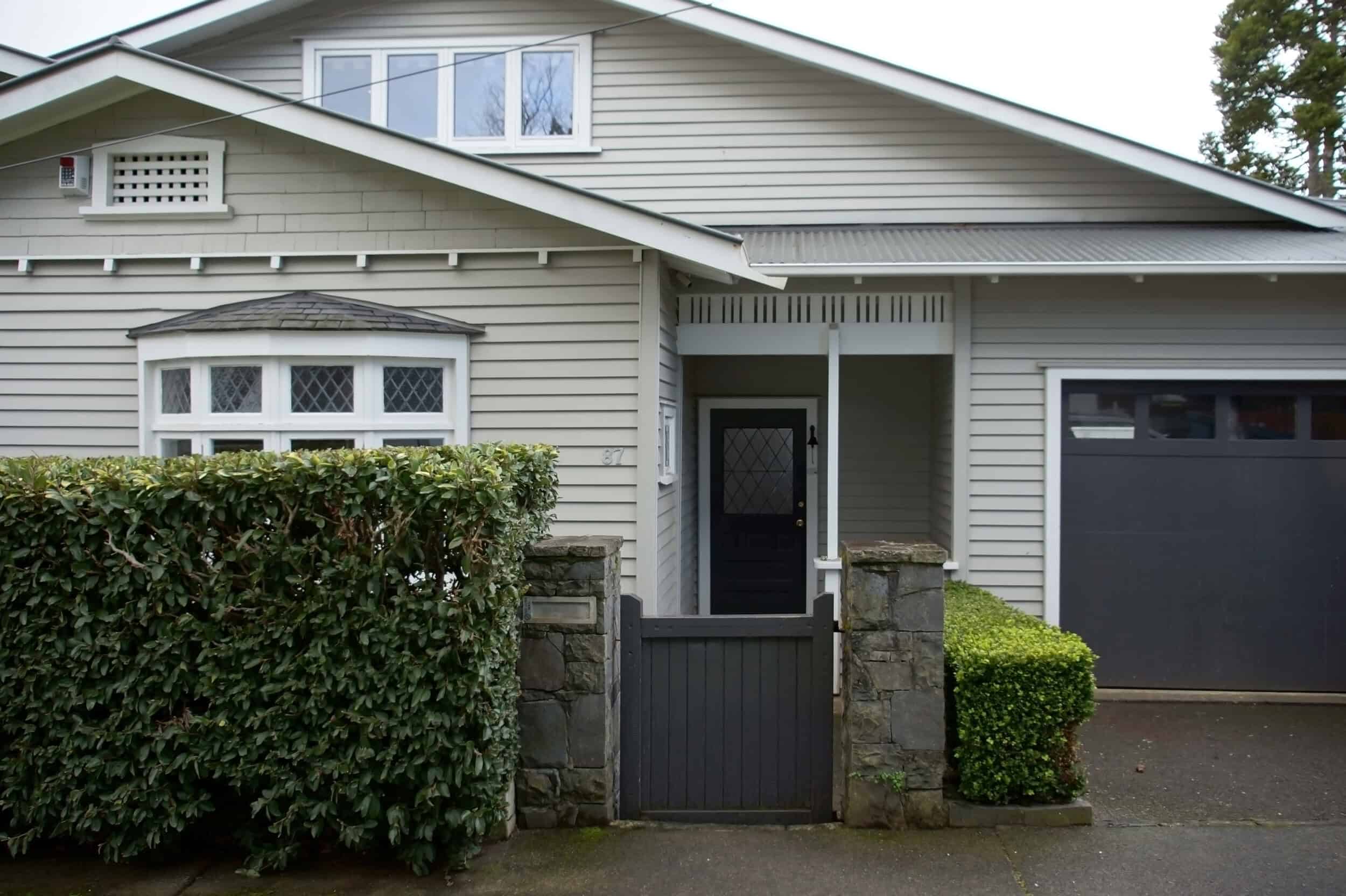
Here’s where things get genuinely interesting — and where a lot of homeowners and even some builders get caught out. While full recladding almost always requires consent, there are legitimate exemptions in New Zealand law that allow certain repair and replacement work to go ahead without a building consent. Understanding exactly where those boundaries lie is critical.
The key piece of legislation to understand is Schedule 1 of the Building Act 2004 — specifically Exemption 1. This exemption is the one that applies to most repair, maintenance, and like-for-like replacement work on existing buildings. But it comes with conditions, and those conditions matter enormously when it comes to cladding.
Schedule 1, Exemption 1: What It Actually Says
According to MBIE’s guidance on Exemption 1, building work is exempt from consent if it involves:
- The repair and maintenance of any component of a building, provided that comparable materials are used; OR
- The replacement of any component of a building, provided that: (a) a comparable component is used, AND (b) the replacement is in the same position.
Sounds straightforward, right? In practice, it’s a bit of a judgement call — and the MBIE guidance is clear that when in doubt, you should either seek a discretionary exemption from the council or just apply for building consent. The cost of getting it wrong is simply too high.
The Critical Durability Rule: The 15-Year Test
Here’s the single most important rule when it comes to cladding exemptions. The Building Code’s Clause B2 (Durability) requires that moderately difficult-to-access elements like exterior wall claddings last a minimum of 15 years from installation. This creates a specific rule for cladding repairs:
If your cladding has failed within its first 15 years — meaning it hasn’t met its durability requirement — you cannot replace it without building consent. This applies even if you’re doing a like-for-like replacement. The reason is logical: if the same cladding, installed the same way, failed once, simply repeating it won’t solve the problem. Consent ensures the new installation meets Building Code performance standards.
On the other hand, if your cladding is more than 15 years old and you’re replacing it with a comparable material in the same position, you may be able to do so without consent. According to MBIE’s Building Performance guidance, once cladding has exceeded its 15-year durability requirement, normal wear and end-of-life replacement may fall under the Schedule 1 exemption.
The practical implication: If your 1980s weatherboards are simply showing their age and you want to replace them with new timber weatherboards in the same position — that’s potentially exempt. But if your 2002 plaster cladding has been leaking for the past few years, you absolutely need consent, regardless of what you plan to replace it with.
What Does “Comparable” Actually Mean?
This is where the grey area lives. The legislation says “comparable materials” — not “identical materials.” According to MBIE’s guidance, comparability is about the level of performance of a product or element, not necessarily its physical likeness.
Here are some examples of what this looks like in practice:
| Replacement Scenario | Consent Needed? | Reasoning |
|---|---|---|
| 30-year-old timber weatherboards replaced with new timber weatherboards (same position) | Likely exempt | Comparable material, durability requirement met, same position |
| 12-year-old plaster cladding replaced (failed with leaks) | Consent required | Failed within 15-year durability requirement |
| Timber weatherboards replaced with fibre cement weatherboards | Consent required | Change in cladding material/type = different weathertightness system |
| Replacing asbestos cladding with fibre-cement sheet | Consent required | Asbestos cannot be used as replacement; fibre cement is the modern substitute but system changes |
| Repainting exterior walls | Not building work | Pure maintenance; exempt |
| Patching a small damaged section of weatherboard (like-for-like) | Likely exempt | Maintenance/minor repair with comparable material |
One thing the LBP guidance is very clear about: “It is a judgement call sometimes on whether your material is comparable or whether the element you are replacing has failed its durability requirements under the Building Code.” The recommendation from the Licensed Building Practitioners’ Board is that if you’re in any doubt, either seek a discretionary exemption from the council (what’s called an “Exemption 2”) or simply apply for consent. Don’t risk it.
“A lot of clients come to us having had someone tell them their repair work was exempt. Sometimes that’s right — but the key question is always whether the original cladding met its 15-year durability requirement. If there’s been any sign of water damage or weathertightness failure, we advise getting consent every single time. It’s not extra bureaucracy — it’s protection.”
— Alison Yu, Designer, Superior Renovations
Helpful Tip: The “When in Doubt” Rule
💡 Quick Tip for Skimmers: If your cladding is over 15 years old and you’re replacing it with the same type in the same position, you may not need consent. If your cladding has shown any signs of weathertightness failure at any age, you do need consent. If you’re changing cladding type, you need consent. When genuinely unsure — ask Auckland Council before you start.
The Asbestos Exception
There’s one important scenario that warrants special mention: asbestos-containing cladding. Many Auckland homes built before the mid-1980s — particularly those with flat “super six” fibrous cement cladding sheets — may contain asbestos. You cannot simply replace asbestos cladding under the maintenance exemption, and handling, removal, and disposal of asbestos-containing materials is subject to strict rules under WorkSafe New Zealand. Any recladding project involving potential asbestos should always involve proper testing, a licensed asbestos removalist, and a building consent. For more information, visit WorkSafe New Zealand’s asbestos guidance.
Resource Consent: A Different Thing Entirely
One important distinction that often trips people up: building consent and resource consent are two completely separate things. Residential recladding almost never requires resource consent — that’s the domain of matters like land use, zoning, and heritage overlays. But it does require building consent (unless a Schedule 1 exemption clearly applies). The two are issued by different teams within the council and serve different purposes. Don’t confuse them.
3: The Real Risks of Recladding Your Auckland Home Without Consent

Let’s be honest about something. The reason people consider skipping the consent process isn’t because they’re trying to dodge safety — it’s usually because getting building consent takes time, costs money, and involves a fair amount of paperwork. We get it. But the decision to reclad without consent when one is required isn’t just a minor administrative shortcut. The risks are serious enough that they deserve their own section in this guide.
We’ve seen this play out for Auckland homeowners. And the pattern is consistent: the upfront cost or inconvenience of getting consent looks much smaller in the rearview mirror compared to what happens when things go wrong.
Risk 1: Your Insurance May Not Cover You
This is the big one that most homeowners don’t think about until it’s too late. Most home insurance policies in New Zealand include clauses that limit or exclude cover for loss or damage arising from unconsented building work. If a future leak — whether related to the recladding or not — leads to a claim, and your insurer discovers that significant recladding work was done without consent, they may decline your claim or reduce the payout. You’re not just gambling with the cost of the reclad; you’re potentially gambling with your ability to claim on your entire home insurance policy.
Risk 2: Significant Financial Penalties
Under the Building Act 2004, carrying out building work that requires consent without obtaining one is an offence. The penalties can be significant — fines of up to $200,000 are available to the courts in serious cases, though the more typical enforcement pathway involves infringement notices and orders to remove or redo non-compliant work. The MBIE guidance notes an infringement fee of $1,000 for specific breaches under the Building (Forms) Regulations. But beyond the fines themselves, being required to strip off recently installed cladding and redo the work — this time with consent — is where the real financial pain lands.
Risk 3: You May Not Be Able to Sell Your Home
This is a scenario that catches people completely off-guard, often years after the unconsented work was done. When you sell your home in Auckland, both you and your real estate agent have a legal obligation to disclose material facts about the property. A property that has had significant recladding done without consent — which would show up when a buyer’s solicitor or building inspector reviews the property file — is a material fact. Buyers may walk away, or they’ll extract a significant price reduction to cover the cost of retrospectively obtaining consent or redoing the work.
Research from the University of Auckland Business School’s Department of Property found that properties with properly consented reclads — including the associated Code Compliance Certificate — are perceived far more favourably by buyers than those where the recladding history is unclear or where no CCC exists. A home with a fully documented reclad, done with consent, is a much easier sale than one with question marks over its history.
Risk 4: Hidden Structural Damage Gets Covered Up
Auckland’s leaky home crisis — concentrated in homes built between roughly 1994 and 2004 — was largely caused by a combination of poor design, monolithic cladding systems applied without adequate drainage cavities, and untreated timber framing. The consent inspection process for recladding exists specifically to catch framing damage that isn’t visible until the cladding comes off.
When a reclad is done without consent, there are no mandatory council inspections at key stages. A builder — even a well-meaning one — can install brand new cladding over badly damaged or rotting framing. The result looks fine from the outside. But inside the walls, the damage continues, often accelerating because the new cladding has introduced new drainage details that interact unexpectedly with the underlying structure. You may have paid for a full reclad and ended up in a worse position than you started.
“The case that really stuck with me was a homeowner in Pt Chevalier who had a reclad done in the early 2000s, apparently without consent. The framing was already compromised when the new cladding went on. By the time they came to us, the damage had spread throughout the entire wall cavity and into the floor framing. What might have been a $180,000 reclad had become a $350,000 remediation job. The consent would have caught it. And the cost of the consent would have been a rounding error.”
— Cici Zou, Designer, Superior Renovations
Risk 5: A Second Wave of Weathertightness Issues — Why 2025 Is a Critical Year
This is something that doesn’t get nearly enough attention. Industry experts across New Zealand have been warning that we may be seeing the early signs of a second wave of weathertightness issues — this time in homes built in the construction boom of the 2010s. With construction running at full pace through that period, pressure to build quickly and cheaply, combined with labour shortages, led to non-compliant work appearing more often than many realise.
The Weathertight Homes Tribunal — the specialist body set up to deal with historical leaky-home claims — is now winding down, and no new claims can be made. That means many Auckland homeowners won’t have formal legal pathways available if weathertightness problems are discovered in the future. Early action, proper consent, and quality workmanship are now the only real protection available.
Risk 6: Retrospective Consent Is Painful
If you’ve done — or inherited — recladding work that was done without consent, getting “retrospective consent” (formally known as a Certificate of Acceptance) is possible but genuinely difficult. Auckland Council typically requires invasive investigation to verify that unconsented work meets the Building Code — which can mean cutting holes in cladding, exposing framing, and other disruptive and expensive work. There’s no guarantee a Certificate of Acceptance will be issued, and the cost and disruption can far exceed what the original consent would have required.
The MBIE guidance is clear: exemptions are not retrospective. If unconsented work was carried out, you need to apply to the territorial authority for a certificate of acceptance, and the bar for approval is high.
Summary: The Real Cost of Skipping Consent
| Risk Area | Potential Consequence |
|---|---|
| Insurance | Declined claims; reduced payouts on unrelated events |
| Legal | Fines up to $200,000; orders to redo work |
| Property Value | Reduced sale price; difficulty selling; buyer withdrawal |
| Structural | Hidden damage not caught; escalating repair costs |
| Retrospective remediation | Invasive investigation; Certificate of Acceptance costs |
💡 Quick Tip for Skimmers: The cost of building consent for a reclad (typically $5,000–$7,000 for Auckland) is a tiny fraction of what it costs to deal with the consequences of skipping it. It’s not red tape — it’s protection.
We go into detail on the full building consent process for recladding in Auckland in Section 4. And if you want to understand what your Auckland home might cost to reclad properly, check out our recladding cost calculator tool for a ballpark figure.
4: The Auckland Building Consent Process for Recladding — Step by Step

Alright — so you’ve established that your recladding project needs consent. (As most do.) The next logical question is: what does the process actually look like? How long does it take? What does it cost? And who do you need on your team?
The honest answer is that the Auckland consent process for recladding is more involved than consents for, say, a new deck or bathroom addition. Auckland Council takes reclad applications seriously — partly because of the legacy of the leaky homes crisis, and partly because weathertightness failures are among the most costly and complex issues they deal with. That seriousness means more documentation, more inspections, and a bit more patience required. But it also means that when you’re done, you have a properly documented, fully protected home.
Here’s what the process typically looks like from start to finish.
Step 1: Get Your Property File
Before anything else happens, you — or your architect/designer — will need to obtain your property file from Auckland Council. This is not the same as a LIM (Land Information Memorandum) report. Your property file contains all historical consents, as-built drawings, certificates, and correspondence related to your specific property. For a reclad, the architect needs this to understand what the original consented construction was, whether there are any prior weathertightness issues on record, and what the current consented cladding system looks like.
If your home was built under the 1991 Building Act and was never issued a Code Compliance Certificate, Auckland Council may also require a Durability Inspection before processing your reclad consent application. This is an important step — it establishes the baseline condition of your home before remediation begins.
Step 2: Engage an Architect or Remedial Designer
For a reclad in Auckland, you’ll need a qualified designer — typically a registered architect or experienced building designer — to prepare your consent documentation. This isn’t optional for most reclads. The documentation needs to demonstrate clearly how the new cladding system will manage water, what the flashings look like at every junction, how ground clearances are handled, and how the system meets Building Code Clause E2 (External Moisture) requirements.
At Superior Renovations, we work closely with our trusted architects and designers who are specifically experienced in recladding projects. Having someone who knows the Auckland Council consent process inside out — and who understands the particular challenges of Auckland’s housing stock — is genuinely invaluable. We can refer you to our preferred architectural team as part of our full home renovation service.
Step 3: Pre-Application Meeting with Auckland Council (Strongly Recommended)
Auckland Council strongly recommends a pre-application meeting for reclad consents. This is an opportunity to sit down with a council consent officer and talk through your project before you submit the formal application. It’s not a rubber stamp — but it is a chance to identify any potential issues early, ensure your documentation is likely to be complete, and avoid costly delays once the application is lodged.
There’s typically a fee for a pre-application meeting, but it’s usually well worth it. Incomplete applications are a common cause of delay, and the council’s processing clock doesn’t start until they consider the application complete. Getting it right the first time saves time and money.
Step 4: Prepare and Lodge the Consent Application
Your architect will prepare the full consent application, which for a reclad typically includes:
- Detailed architectural drawings (site plan, elevations, sections)
- Weathertightness details — flashing specifications at windows, doors, roof-to-wall junctions, decks
- Cladding system specifications (what system is being used, its CodeMark certification or equivalent)
- Ground clearance details
- Cavity and drainage system details
- Schedule of materials
- Producer Statements (PS1) from the designer confirming design compliance
The application is lodged with Auckland Council, along with the consent fee. For a standard two-storey Auckland home, building consent fees for a reclad typically range from $5,000 to $7,000, depending on the project complexity. This is separate from the design fees and the building work itself.
Step 5: Council Processing and Approval
Once lodged, Auckland Council has 20 working days to process a building consent application — though this period can be suspended if they issue a Request for Information (RFI) asking for additional documentation. A well-prepared application minimises the risk of an RFI. When the consent is approved, you’ll receive the consent documentation and can begin construction.
Step 6: Council Inspections During Construction
This is where the consent process really earns its keep. For a reclad, Auckland Council typically requires inspections at several key stages, including:
- Foundation/base inspection — before new framing or building wrap is installed
- Framing inspection — after existing cladding is removed and framing is exposed, before any repair work is concealed
- Building wrap / underlay inspection — before cavity battens and cladding are installed
- Cladding and flashing inspection — before any joints or junctions are sealed
- Final inspection — when all work is complete
It’s also common for a weathertightness consulting engineer to be involved, providing Producer Statements (PS3) at key stages confirming that the work in progress meets the consented design. Your Licensed Building Practitioner will coordinate these inspections and provide a Record of Work on completion.
Step 7: Code Compliance Certificate (CCC)
Once the final inspection is passed and all required documentation is received, Auckland Council issues a Code Compliance Certificate (CCC). This is the formal confirmation that your reclad has been completed in accordance with the consented plans and meets the requirements of the Building Code. The CCC is one of the most valuable documents associated with your property. It’s what future buyers, their lawyers, and their lenders will want to see as evidence that the work was done properly.
“The consent process sounds daunting, but it’s genuinely straightforward when you have the right team around you. Our role is to manage the whole thing — from getting your property file through to the final CCC. You shouldn’t need to be chasing council inspectors or worrying about documentation. That’s what we’re here for.”
— Eunice Qin, Designer, Superior Renovations
How Long Does the Consent Process Take in Auckland?
| Stage | Typical Timeframe |
|---|---|
| Engage architect / obtain property file | 2–4 weeks |
| Prepare architectural drawings & documentation | 4–8 weeks |
| Pre-application meeting with council | 1–2 weeks to schedule |
| Council processing (statutory 20 working days) | 4–10 weeks (may extend if RFI issued) |
| Construction + council inspections | 8–20 weeks depending on project scope |
| Code Compliance Certificate issuance | 2–4 weeks after final inspection |
For a full reclad of a standard two-storey Auckland home, the overall process from initial engagement through to CCC is typically in the range of 6 to 12 months, including the design, consent, and construction phases. It’s a significant undertaking — which is exactly why working with an experienced renovation company that knows this process well makes such a difference.
For more detail on the building consent process in general — including for other types of renovation work — check out our comprehensive guide to building consents for Auckland renovations.
5: Choosing the Right Cladding Material for Your Auckland Home — What Works, What Doesn’t, and What Lasts

If you’ve made it this far, you know that recladding almost always requires building consent, you understand the exemptions, you know the risks of skipping consent, and you understand the Auckland process. The last major question is the fun one: what should you reclad with?
This is where the decisions get genuinely exciting — because a reclad isn’t just a maintenance exercise. It’s an opportunity to transform the look of your home, improve its energy performance, and future-proof it against Auckland’s particular climate challenges. And in a city where property values are what they are, the right cladding choice can meaningfully affect what your home is worth.
Auckland’s climate is genuinely demanding on exterior cladding. You’ve got high humidity, regular rainfall, UV exposure that’s more intense than most people realise (we’re close to the ozone hole, folks), and in coastal areas like Takapuna, Devonport, or Mission Bay, salt-laden air that accelerates corrosion and deterioration. Not every cladding material that performs well in, say, central Otago will work well on a north-facing wall in Parnell.
Fibre Cement Cladding: The Gold Standard for Auckland Reclads
If there’s one cladding material that dominates reclad work in Auckland right now, it’s fibre cement — and for good reason. Fibre cement is resistant to moisture, rot, and fire, and it handles Auckland’s coastal and humid conditions exceptionally well.
The market leader in New Zealand is James Hardie, whose range includes several products we regularly specify on Auckland reclad projects:

Axon™ Panel Grooved 133mm
Image from jameshardie.co.nz/products/cladding/axon-panel-collection showing Axon Panel on an Auckland home.
- Axon™ Panel: A vertical shiplap panel available in several finishes including Grooved, Brushed Concrete, and Smooth. The Axon Panel is a modern favourite for both full reclads and feature wall applications in Auckland — it can be painted any colour, including the dark tones currently trending in Auckland residential design. Available in five finishes, it complements both contemporary and classic Auckland homes. View the Axon Panel range here.
- Linea™ Weatherboard: A bevel-back fibre cement weatherboard that replicates the classic timber weatherboard aesthetic that’s traditional in many Auckland neighbourhoods — from Grey Lynn villas to North Shore bungalows. It carries a 25-year product warranty and is specifically designed for NZ conditions.
- Stria™ Cladding: Features deep horizontal grooves and can be installed horizontally or vertically, giving it a distinctive architectural character. Its interlocking edges make for efficient installation, and it comes with a 25-year warranty.
- Oblique™ Weatherboard: A two-width bevel weatherboard available for both horizontal and vertical installation, offering design flexibility for more complex facades.
What all James Hardie fibre cement products share is engineered resistance to Auckland’s specific conditions — fire resistance, moisture resistance, and durability against the UV exposure and salt air that characterise many Auckland locations. Our supplier partner Mitre 10 stocks a wide range of fibre cement products, and as a trusted partner of Superior Renovations, can assist with sourcing the right products for your project.
Timber Weatherboard: Classic, Sustainable, Excellent for Character Homes
Timber weatherboard remains one of the most beautiful exterior cladding options for Auckland’s many pre-war and character homes. Done right — with proper priming, painting, and sealing — quality timber weatherboard can last decades. The catch is maintenance: timber needs more regular attention than fibre cement, and in a coastal or high-humidity environment, the painting and sealing schedule needs to be taken seriously.
For villas in Ponsonby, bungalows in Mt Eden, or heritage homes in Remuera, timber weatherboard often makes the most architectural sense — and can actually be the more sympathetic choice from a character preservation perspective. It’s also worth noting that certain Auckland properties may fall under heritage overlays or special character zones, which can influence what cladding materials are acceptable. Always check with Auckland Council if your property has any heritage designations.
The E2 Risk Matrix: A Critical Tool for Auckland Homeowners
Before committing to any cladding material, the Building Code’s Clause E2/AS1 risk matrix should be used to assess your specific site. This matrix scores your project based on factors including wind zone (medium-high in most coastal Auckland areas), exposure level, building height, roof-to-wall junctions, and deck attachments. The score guides what cavity requirements and cladding systems are appropriate for your home.
High-risk coastal locations — Devonport, Takapuna, Mission Bay, anywhere on the Waitematā or Manukau harbours — typically score high on the E2 matrix, which means a properly drained and vented cavity system (minimum 20mm) is not optional. Skipping a proper cavity in these locations is, in our experience, the single biggest hidden risk in any reclad project.
“Run the E2 risk matrix early — coastal North Shore homes often score high, so we default to fibre cement or metal cladding with proper cavities. It’s not about being overly cautious; it’s about making sure the material we specify will still be performing in 25 years. Auckland’s weather deserves respect.”
— Dorothy Li, Designer, Superior Renovations
Cladding Material Comparison: Auckland Context
| Material | Durability | Maintenance | Best For | Auckland Considerations |
|---|---|---|---|---|
| Fibre Cement (James Hardie) | Excellent (25yr warranty) | Low | Modern & traditional homes | Ideal for coastal/humid areas; fire resistant |
| Timber Weatherboard | Good (with maintenance) | Medium-High | Character / heritage homes | Needs regular painting; avoid in very high exposure zones |
| Metal (Aluminium / Steel) | Excellent | Low | Contemporary / coastal | Specify marine-grade for coastal; check wind zone compatibility |
| Brick Veneer | Excellent | Very Low | Prestige / traditional | Higher cost; weight considerations; not suitable for all structures |
| Monolithic Plaster | Fair (with cavity system) | Medium | Contemporary / Mediterranean | Requires robust cavity system; not recommended without engineering input |
💡 Quick Tip for Skimmers: In Auckland — especially coastal suburbs — fibre cement with a properly drained cavity system is the combination that delivers the best long-term performance. The upfront cost difference versus cheaper options is almost always recovered through lower maintenance and better durability.
Don’t Forget Dulux — Finishing Your Reclad the Right Way
One detail that’s easy to overlook: the finishing coat on your new cladding matters enormously for long-term performance. We work with our supplier partner Dulux to ensure the right exterior coatings are specified for each project. The coating system needs to be compatible with the cladding material and rated for the exposure level at your specific site. A premium exterior paint system properly applied to fibre cement cladding can extend the life of your cladding significantly — and choosing Dulux’s Weathershield range, for example, gives you colour-fast, weather-resistant protection backed by a reputable brand.
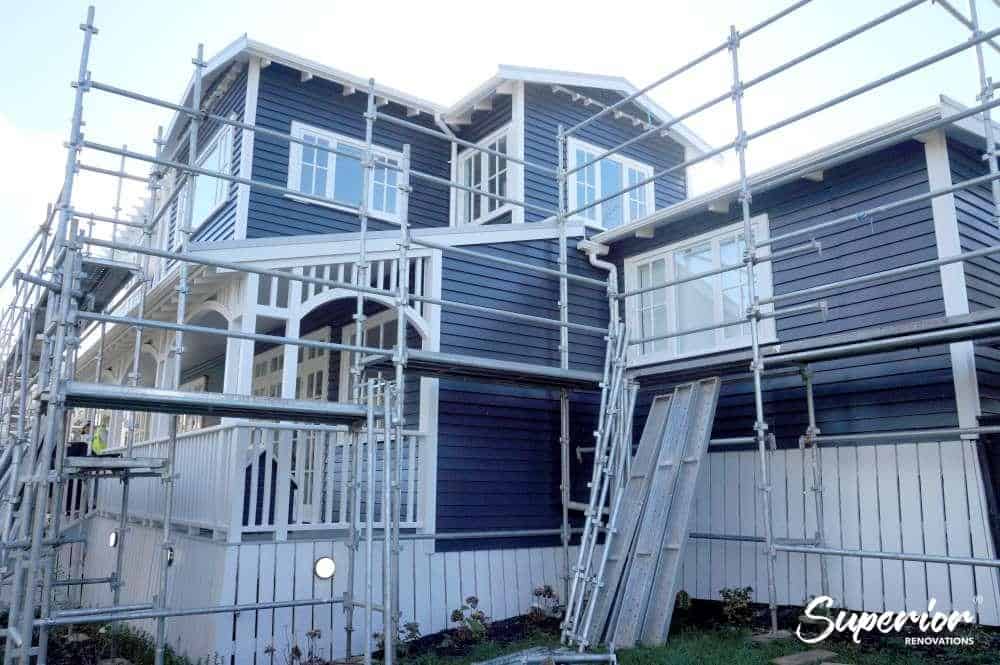
Conclusion: What You Need to Know Before You Start Your Auckland Recladding Project
Let’s pull all of this together. The question that started this whole guide — “Can I reclad my house without building consent?” — deserves a clear, direct answer.
In almost every real-world scenario, no. A full or significant partial reclad of a residential building in Auckland requires building consent. There are legitimate exemptions under Schedule 1 of the Building Act — primarily for like-for-like maintenance and replacement of cladding that has met its 15-year durability requirement — but these exemptions are narrow, require careful interpretation, and if applied incorrectly expose you to serious financial and legal risk.
The consent process, while it takes time and costs money, is genuinely protective. It ensures that hidden structural damage is caught and repaired, that your new cladding system is properly designed for your specific site, and that you end up with a Code Compliance Certificate that protects your home’s value and insurability for decades to come.
Here are the five things every Auckland homeowner should take away from this guide:
- Always check before you start. Use the MBIE “Can I Build It?” tool or call Auckland Council. The five minutes you spend asking the question could save you years of headaches.
- The 15-year durability rule is the key threshold. Cladding that’s failed within 15 years needs consent for replacement, full stop. If you’re not sure when your current cladding was installed or whether it’s met its durability requirement, get a professional assessment.
- Work with Licensed Building Practitioners. Recladding is Restricted Building Work. Only LBPs can legally carry it out or take responsibility for it. Always ask to see your builder’s LBP licence and relevant licence class.
- Choose your material carefully for your location. In Auckland, fibre cement with a properly drained cavity system is the standard recommendation for most homes — particularly in coastal or high-exposure areas. The E2 risk matrix is your friend.
- Get everything documented. From the consent application through to the final Code Compliance Certificate, keep all documentation associated with your reclad. Future buyers, their lawyers, and their bank will thank you for it.
At Superior Renovations, we’ve managed reclad projects across Auckland — from heritage villas in Remuera and Ponsonby to modern townhouses on the North Shore. We manage the entire process — design, consent, construction, council inspections, and final sign-off — under one roof, with a dedicated project manager keeping you informed at every stage. If you’re thinking about recladding your home, the first step is a conversation.
Do I always need building consent to reclad my house in New Zealand?
What happens if I reclad my Auckland home without consent?
The consequences can be serious: financial penalties under the Building Act (up to $200,000 in serious cases), difficulty or inability to sell your property, insurance complications, and the costly prospect of having to apply for retrospective consent — which often requires invasive investigation of the unconsented work. It's simply not worth the risk.
Can I replace a few damaged weatherboards without consent?
Replacing a small number of damaged weatherboards with comparable material in the same position may be exempt under Schedule 1, Exemption 1 — provided the original cladding has met its 15-year durability requirement and the damage isn't the result of a weathertightness failure. If the damage is the result of water ingress or if significant sections need replacing, you should seek advice from Auckland Council or a Licensed Building Practitioner before proceeding.
How much does a building consent cost for a reclad in Auckland?
For a standard residential reclad in Auckland, building consent fees typically range from $5,000 to $7,000. This is separate from design fees (typically $8,000–$13,000 for remedial design drawings) and the building work itself. The total cost of a full reclad on a standard two-storey Auckland home, including all consenting, design, and construction, typically ranges from $330,000 to $380,000 — depending on the extent of framing damage discovered and the materials chosen. See our detailed guide to recladding costs in NZ for a full breakdown.
What is Restricted Building Work, and does recladding qualify?
Restricted Building Work (RBW) is a category of building work in New Zealand that must be carried out or supervised by a Licensed Building Practitioner (LBP). Recladding — because it involves work on the external envelope of a dwelling — is classified as Restricted Building Work. This means your builder must hold an appropriate LBP licence, and they must provide a Record of Work on completion. Using an unlicensed builder for RBW is illegal.
Does recladding require resource consent as well as building consent?
No. Residential recladding does not require resource consent. Resource consent relates to land use, zoning, and matters regulated under the Resource Management Act — not building work. However, if your property is in a heritage overlay or special character zone, you should check with Auckland Council whether your chosen cladding material is acceptable before proceeding.
What cladding material is best for an Auckland reclad?
Fibre cement — particularly products like James Hardie's Axon Panel, Linea Weatherboard, and Stria Cladding — is widely considered the best option for most Auckland reclads. It's moisture-resistant, fire-resistant, low-maintenance, and performs exceptionally well in Auckland's coastal and humid conditions. Timber weatherboard remains a great option for character homes, particularly in heritage areas, provided the maintenance schedule is adhered to. The right choice always depends on your specific site, exposure level, and design goals — which is why we assess the E2 risk matrix for every project we undertake.
How long does the Auckland recladding consent process take?
From initial engagement with an architect through to receiving a Code Compliance Certificate, the full process typically takes 6 to 12 months for a standard Auckland home. The statutory processing time for Auckland Council is 20 working days, but this is just one part of a longer process that includes design, documentation, construction, and inspections. Working with an experienced team who knows the Auckland consent process can help minimise unnecessary delays.
Further Resources for your house renovation
- Featured projects and Client stories to see specifications on some of the projects.
- Real client stories from Auckland
Need more information?
Take advantage of our FREE Complete Home Renovation Guide (48 pages), whether you’re already renovating or in the process of deciding to renovate, it’s not an easy process, this guide which includes a free 100+ point check list – will help you avoid costly mistakes.
Download Free Renovation Guide (PDF)
Still have questions unanswered?
Book a no-obligation consultation with the team at Superior Renovations,
we’d love to meet you to discuss your renovation ideas!
[contact-form-7]
Or call us on 0800 199 888

Have you been putting off getting renovations done?
We have partnered with Q Mastercard ® to provide you an 18 Month Interest-Free Payment Option, you can enjoy your new home now and stress less.
Learn More about Interest-Free Payment Options*
*Lending criteria, fees, terms and conditions apply. Mastercard is a registered trademark and the circles design is a trademark of Mastercard International Incorporated.
The post Can I Reclad My House Without Building Consent? | Auckland Guide 2025 appeared first on Superior Renovations. #superiorrenovations


Comments
Post a Comment