Bathroom Tapware NZ: The Auckland Guide (2026)
Originally posted on Bathroom Tapware NZ: The Auckland Guide (2026)
Superior Renovations - Auckland’s Trusted Home Renovation Specialists
Bathroom Tapware NZ: The Auckland Guide to Brands, Finishes and What Actually Lasts
Quick answer: Good bathroom tapware NZ homeowners should look for is solid brass, lead-free to AS/NZS 3718, WELS-rated for Auckland mains pressure, and finished in PVD-coated chrome, matte black, brushed brass, or brushed nickel. Budget $600–$2,500 for tapware across a bathroom, depending on brand and finish.
Most bathroom tapware guides online are written by the companies selling the tapware. They’ll tell you all about their own product line and stay politely quiet about what fails after three years in an Auckland bathroom.
We’re a renovation company, not a tapware brand. We’ve installed tapware in over a thousand Auckland bathroom renovations — in Parnell villas, West Harbour new builds, Hillsborough bungalows, and Titirangi homes that back onto the bush. We’ve seen which brands hold up, which finishes wear, and what happens when someone specs a $90 budget mixer because it looked fine in the showroom.
This is what we actually tell clients when they ask “so which taps do we go with?” at the design studio in Wairau Valley — grounded in Auckland’s specific water conditions, our preferred brands, and honest cost figures for the 2026 renovation market.
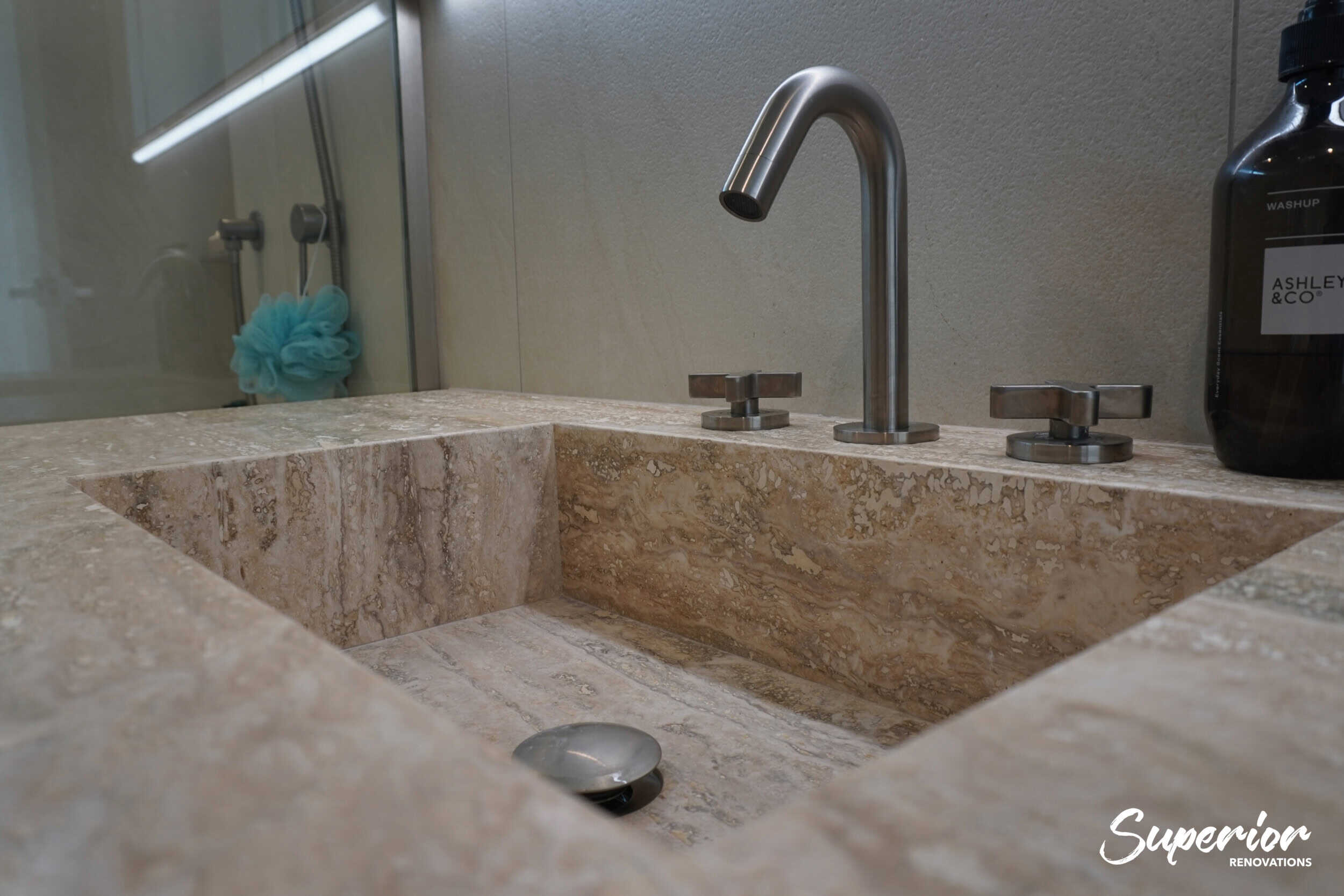
Designer Bathroom By Superior Renovations
What Makes Auckland Bathroom Tapware Different
Before you pick a brand, you need to understand what the water coming out of it will actually do to it. Every tapware brand sold in New Zealand is tested to survive water, but Auckland’s water has a specific profile that wrecks some finishes faster than others — and almost nobody writes about it.
Auckland water is mostly soft — and that’s not the win you’d think
Auckland’s water is classified as soft to slightly hard, with a calcium carbonate level mostly under 100mg/L. Watercare’s own data confirms the surface water that supplies most of the city — drawn from the Hūnua and Waitākere ranges — is low in calcium and magnesium. Groundwater-supplied areas (some rural and peri-urban pockets) can be moderately hard, but the metro supply is soft.
Most tapware guides treat soft water as the good news story. It’s more complicated than that.
Soft water doesn’t leave the chalky calcium scale you’d get in Adelaide or London, but it has a quietly damaging property: low-mineral water is mildly corrosive. Without a protective layer of mineral buildup, soft water slowly strips internal metal surfaces. Cheap zinc-alloy tapware corrodes from the inside faster than the same product would in a hard-water city. Solid brass fittings hold up — but only if the brass is the right alloy.
Silica is the other issue. Watercare’s water hardness page explicitly mentions silica scale can appear on tapware when water is left to evaporate — the whitish, hazy marks you sometimes see around a tap base. It isn’t easily descaled with vinegar the way calcium is. It just sits there.
Chlorine, PVD coatings, and the coastal question
All Auckland metro water is chlorinated as part of the disinfection process. Residual chlorine is low by international standards, but it still matters for tapware finishes. Cheap painted or electroplated finishes — the ones you sometimes see on budget matte black tapware — react with chlorine over time. The finish goes patchy. Sometimes after eighteen months. Sometimes after three years. Never after ten.
PVD (Physical Vapour Deposition) coatings are the durable answer. They’re molecularly bonded to the brass underneath, which means they resist chlorine, scratches, and the normal wear that kills cheaper finishes. Most premium brands now use PVD as standard on their coloured finishes. Budget brands still use painted or electroplated coatings and hope the customer moves house before the finish fails.
Then there’s salt air. If you’re renovating a bathroom in St Heliers, Mission Bay, Devonport, Herne Bay, or anywhere else within 500m of the coast, your tapware is dealing with airborne salt every day. Salt accelerates corrosion on any brass fitting, no matter how good. For coastal renovations we specify either 316-grade stainless steel or solid brass with a PVD coating — and we flag it to the client early because the brand choice narrows quickly.
💡 Quick tip: Coastal Auckland homes (Herne Bay, Mission Bay, St Heliers, Devonport, Takapuna) should factor salt air into tapware specification. The finish you see in a Newmarket showroom won’t look the same after two winters on the harbour edge. Ask your designer for PVD-coated options.
“We had a St Heliers bathroom last year where the client had picked budget matte black tapware before engaging us. Eighteen months in, the finish on the basin mixer had gone mottled. Salt air does that. We now have the salt-air conversation on day one with any coastal project — and spec PVD coatings from the start. It’s cheaper to pick the right tap once than to replace a full set at year three.”
— Cici Zou, Designer (NZ Dip. Interior Design), Superior Renovations
Mixer vs Three-Piece Tapware: The Configuration Decisions That Drive Cost
The tapware type you pick affects three things: how the bathroom looks, how it’s plumbed, and how much of your renovation budget it consumes. Most clients focus on the first. We focus on all three.
Basin mixer vs three-piece tapware
A basin mixer is a single-lever tap that combines hot and cold into one spout. A three-piece set is separate hot and cold handles with a central spout. Mixers dominate contemporary Auckland bathrooms because they’re easier to use one-handed and lend themselves to minimalist design.
Three-piece taps look right in heritage villas and bungalows — the cross-handled or lever variants read as correct in a 1920s Grey Lynn villa where a sleek basin mixer would feel imported from a different era. If you’re renovating a character home in Ponsonby or Mt Eden, three-piece tapware from a heritage-styled brand often holds more property value than a modern mixer.
Wall-mounted vs bench-mounted
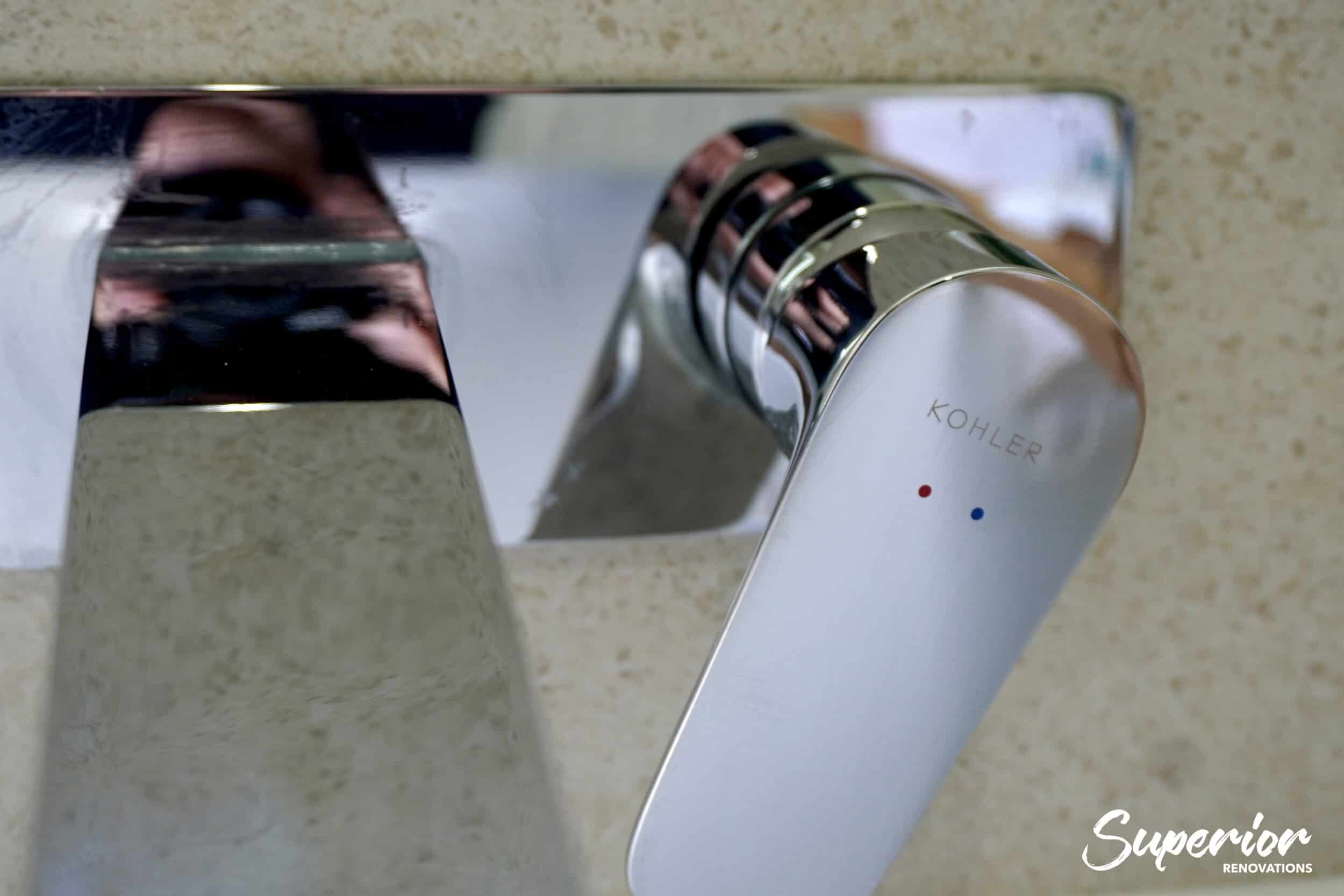
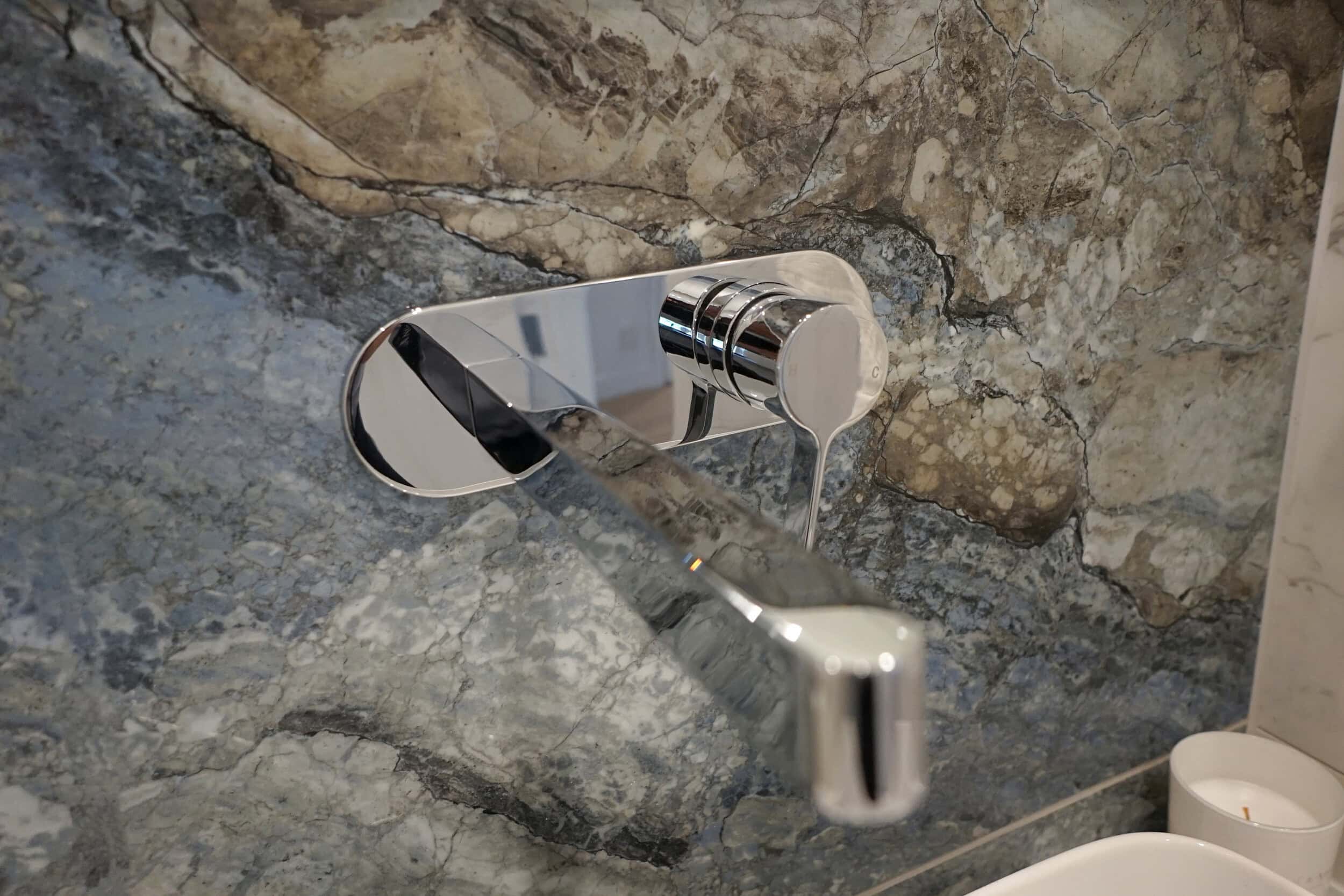
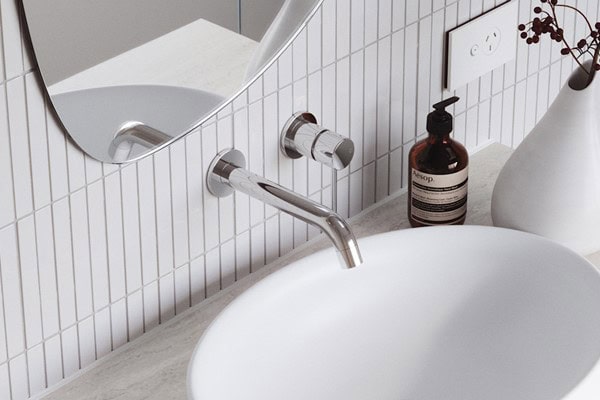
Bench-mounted tapware sits on the vanity or basin surface and runs into plumbing below. Wall-mounted tapware comes out of the wall, with all plumbing concealed behind the tiles.
Wall-mounted looks cleaner. It frees up the basin area, eliminates the water pooling around the base that kills a bench-mounted finish, and generally makes a small bathroom feel less cluttered. The catch: the plumbing has to be roughed in behind the waterproofing before tiling starts. If you want to replace a wall-mounted mixer in five years, you’re opening up tiled walls.
Bench-mounted tapware is the safer choice for renovations on a tight budget or where you might want to swap fixtures later. Wall-mounted is the premium choice when you’re committing to the design for a decade-plus.
Basin spout reach and height
One decision a lot of guides skip: the geometry of the tap matters for the basin you’re pairing it with. A tall vessel basin (the bowl-shape that sits on top of the vanity) needs a taller spout — typically 150mm+ from base to outlet — or the water hits the rim and splashes. A low undermount basin can take a shorter spout.
We’ve seen new bathrooms where a beautiful vessel basin was paired with a standard basin mixer and every handwash ends in splashed water across the vanity top. It’s the sort of thing you only notice after install.
💡 Quick tip: Match spout height to basin type before you lock in the order. A 142mm-tall basin mixer works for most standard undermount basins. For a tall vessel basin, look at 165mm+ or a wall-mounted spout so the water clears the rim.
The Brands We Install in Auckland Bathrooms
Every renovation company has a short list of brands they trust. Ours has been shaped by a thousand-plus installations, real warranty experience, and what our plumbers actually want to work with. We’re not paid to recommend any of these brands — they just keep performing.
Methven
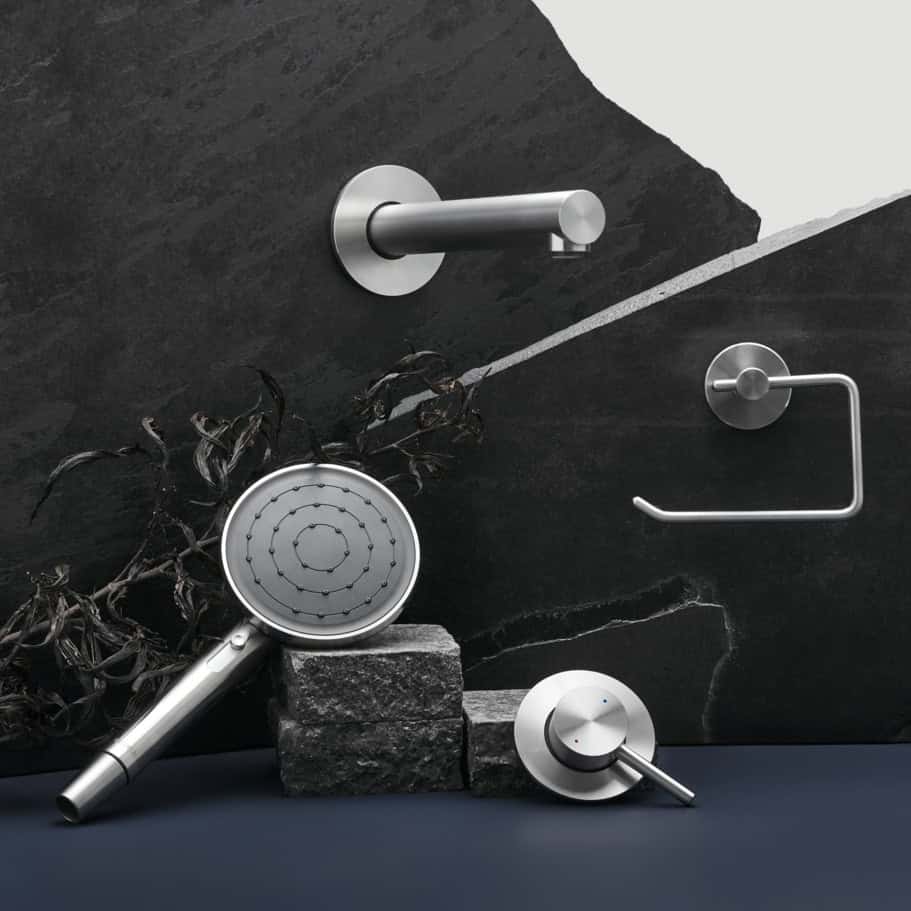
Methven is New Zealand’s best-known tapware brand, founded in Dunedin in 1886. They make tapware and shower systems with a strong contemporary design language, and their premium ranges (Aurajet, Turoa, Waipori) are standard specifications across a lot of our mid-range and premium bathroom renovations. The Aurajet showerheads have become almost default in Auckland new builds for good reason — the spray pattern is noticeably better than comparable imports. Methven offers a 15-year warranty on most tapware, which is long even by premium standards.
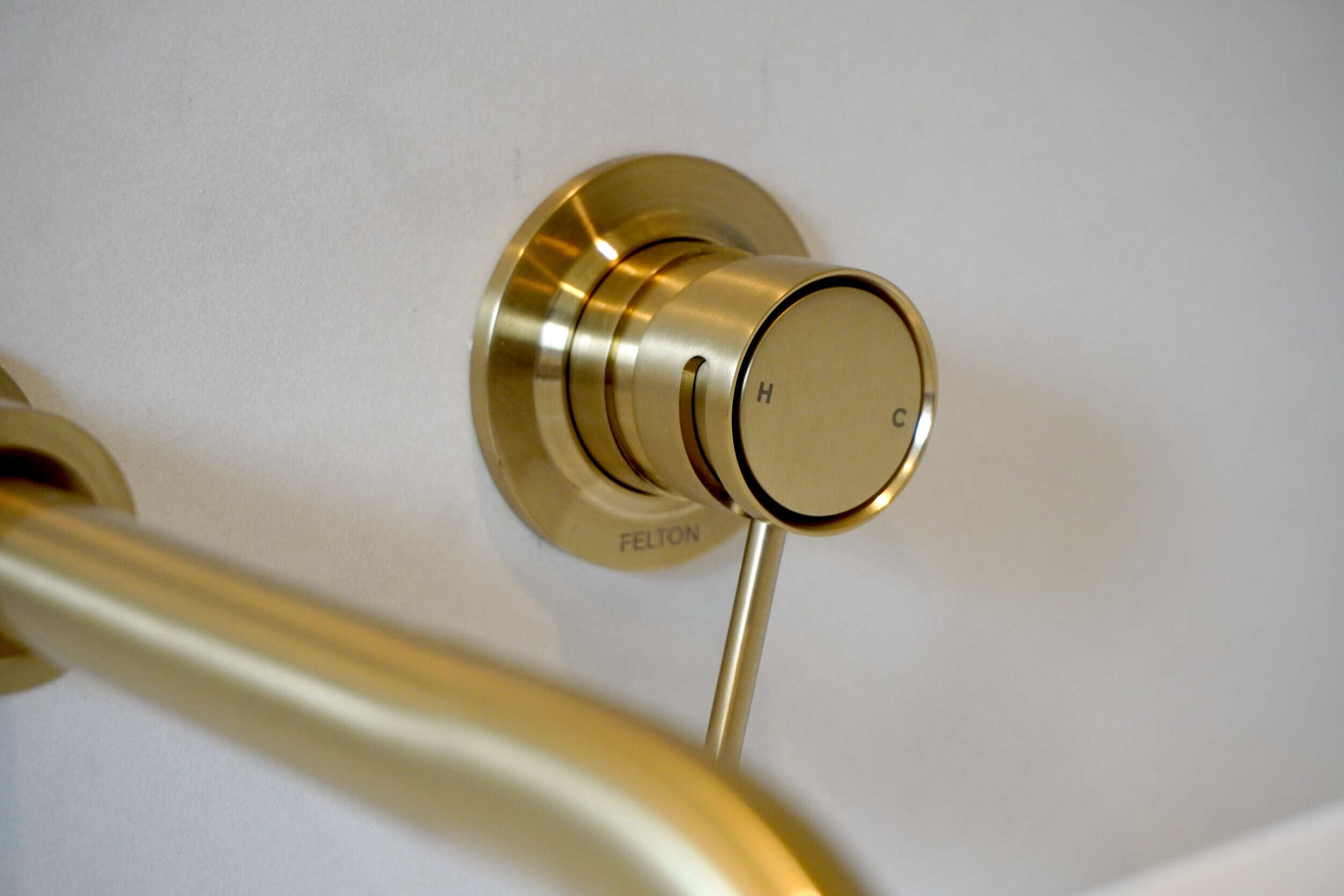
Felton
Felton is another New Zealand brand, based in Auckland. They sit at the mid-range price point with solid build quality and a broader style range than most imports — their Reflect and Axiss ranges get specified a lot on family bathrooms and ensuites where the client wants good tapware without the premium price tag. Felton’s national service network makes warranty claims straightforward, which matters more than clients realise.
Plumbline
Plumbline is a New Zealand-owned bathroomware company with a design-led product range and strong relationships with European manufacturers. Their Buddy, Progetto, and Lusso ranges show up often in architect-led Auckland renovations. Plumbline’s finishes — particularly their brushed finishes — are among the most durable we’ve seen hold up in Auckland bathrooms over five-plus years.
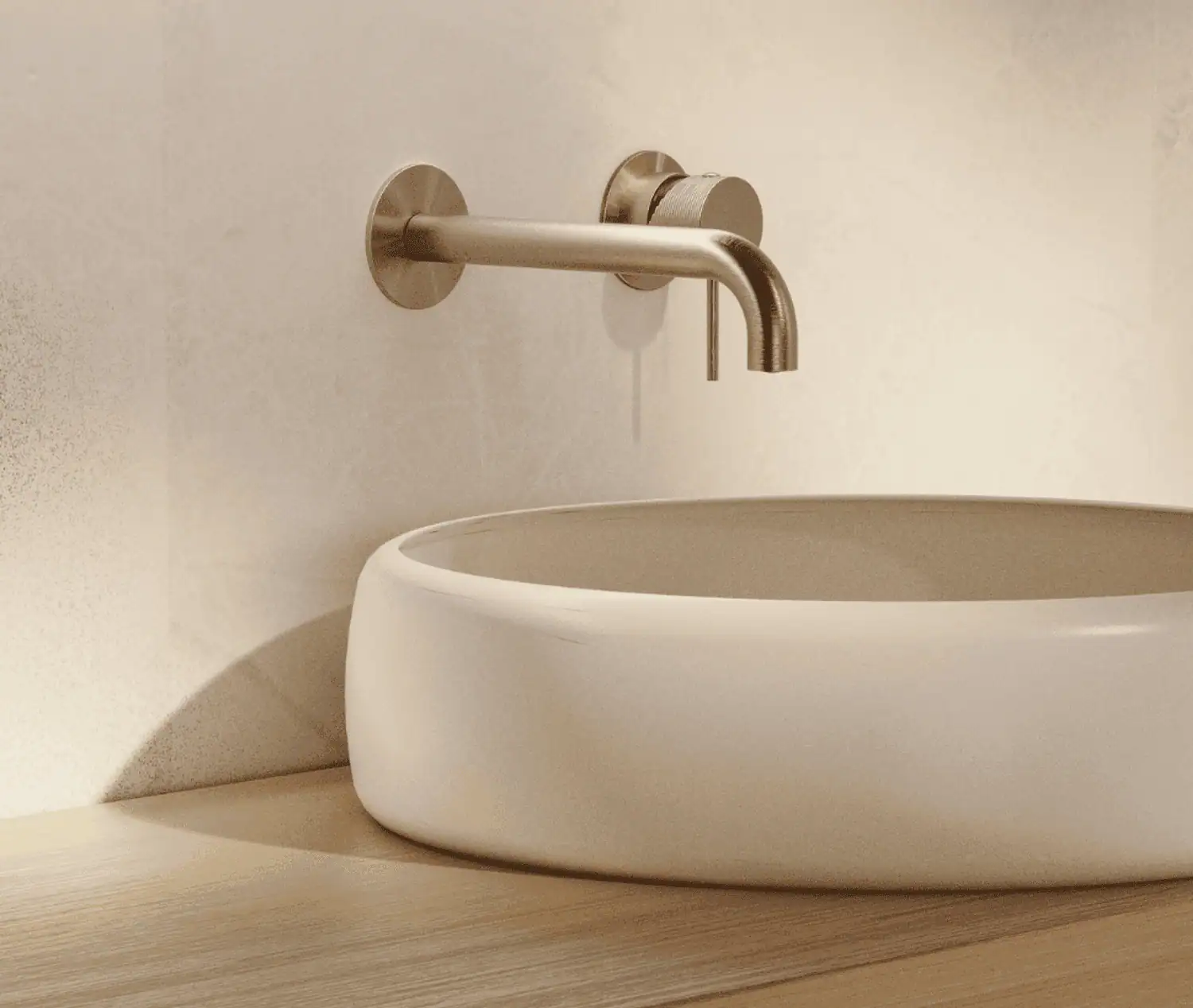
Paini
Paini is an Italian brand, made in Pogno since 1954, distributed in New Zealand through Robertson Bathware and plumbing merchants. Their tapware has the build quality Italian manufacturers are known for — solid brass bodies, long-life ceramic cartridges, and a design language that suits modern Auckland bathrooms. We specify Paini when a client wants European design without paying Astra Walker pricing.
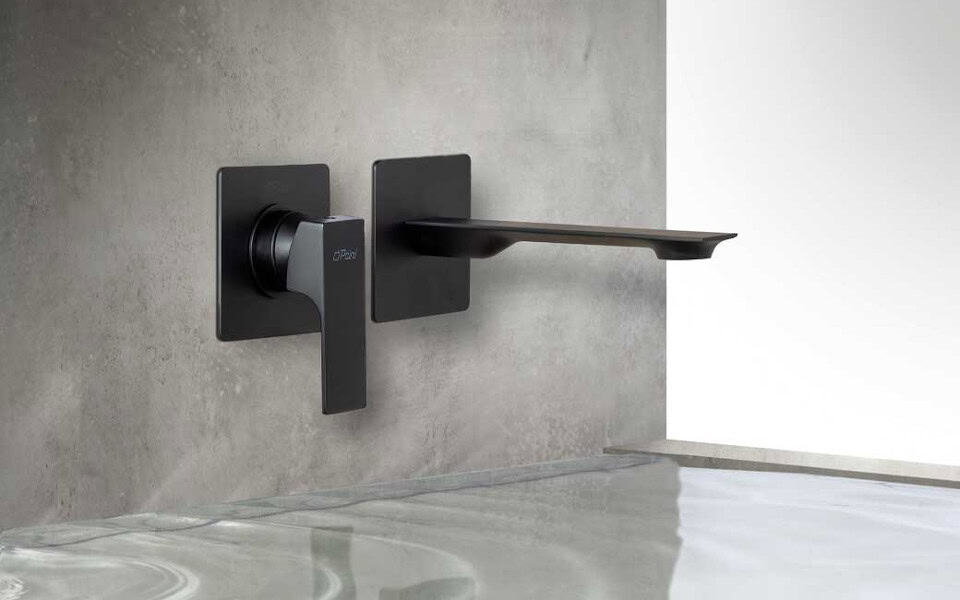
Astra Walker
Astra Walker is a premium Australian brand, manufactured in Sydney. Their pricing is higher than most — a basin mixer starts around $750–$1,200 — but the tapware is essentially built forever. Solid brass, lead-free, 20-year finish warranty on their PVD-coated ranges. We specify Astra Walker for high-end bathrooms in Parnell, Remuera, Herne Bay, and the premium ensuites where the client intends to live in the house for 15+ years.

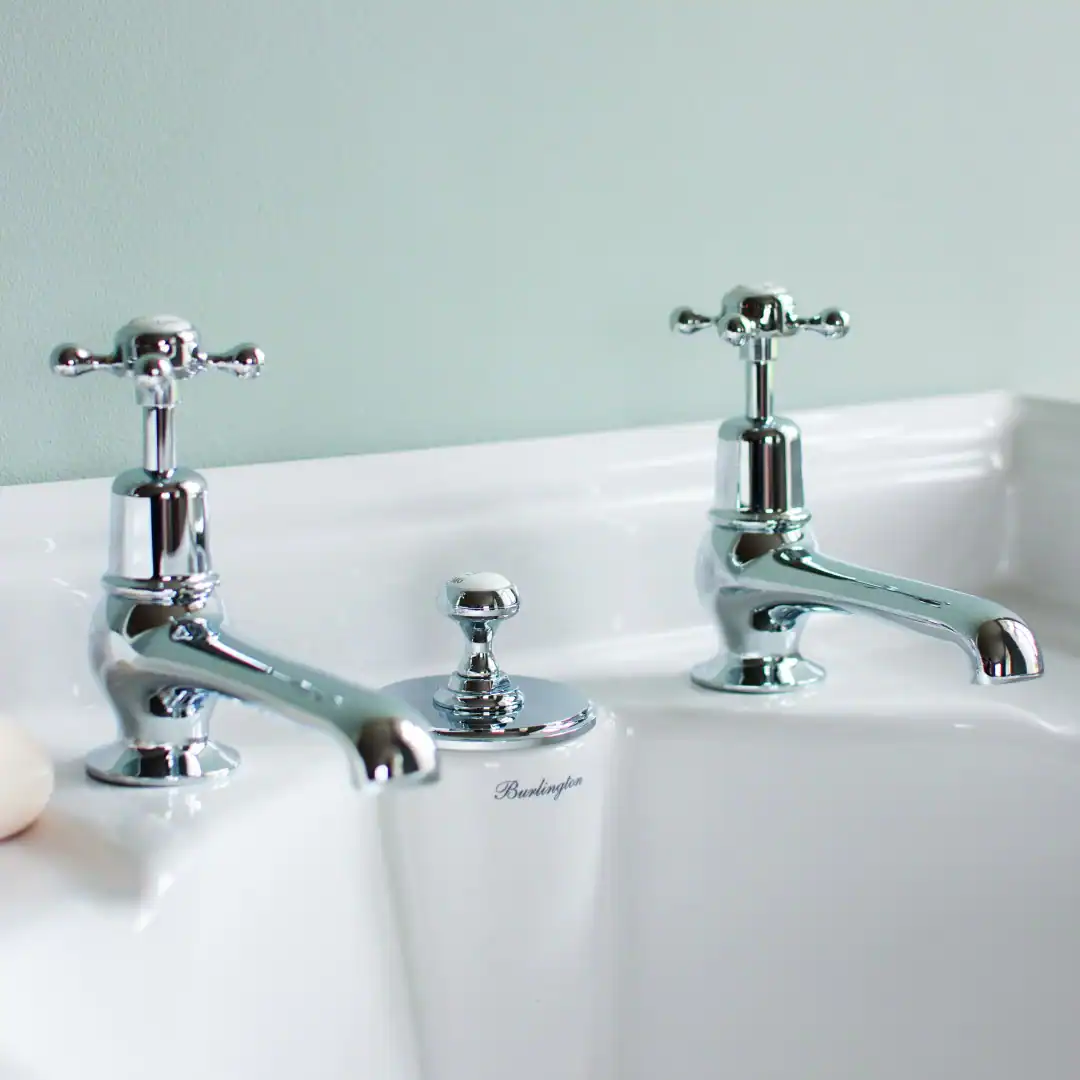
Burlington
Burlington is a UK heritage brand specialising in traditional English bathroom tapware — cross handles, pillar taps, exposed thermostatic valves, period-correct detailing. If the client is renovating a bathroom in a 1910 Mt Eden villa or an Edwardian Ponsonby home and wants the tapware to look period-correct, Burlington is generally where we end up. It’s expensive and the lead time can be 6–8 weeks, so we bring it into the design conversation early.
St Michels
St Michels is a New Zealand distributor carrying a range of premium European-styled bathroomware, including tapware, vanities, and bathware. They frequent our premium renovations in Parnell and Remuera, typically on the fixtures and fittings side. Their tapware selection skews contemporary with strong matte black and brushed brass options.
💡 Quick tip: When budget tightens, tapware is often the first place clients try to save money. Don’t. Tapware is the fixture you physically touch every day — the difference between a $120 mixer and a $450 one is obvious within a month. Save on the things you don’t touch: tile backing, vanity MDF core, framing timber. Not the taps.
“When a client asks me where to splurge in the bathroom, I give them two answers — tapware and tiling. Those are the two things your hand and your eye land on every single day. A cheap tap reveals itself immediately; a cheap tile reveals itself over time. Neither one ages well.”
— Eunice Qin, Designer, Superior Renovations
Finishes: What Holds Up in an Auckland Bathroom
Finish is where most tapware decisions go wrong. The showroom look isn’t the real test — the real test is how it looks after three Auckland winters of damp, daily use, and the occasional wipe with whatever cleaning product was on special at Countdown.
Chrome
Chrome is the baseline. It’s the most forgiving finish in a bathroom — hides water marks and fingerprints better than matte black, resists chlorine and salt air better than cheap coloured finishes, and still looks crisp at year ten. For family bathrooms where the priority is zero maintenance and long life, chrome is usually the right answer. It’s also the cheapest finish across every brand we use, which frees budget for other parts of the renovation.
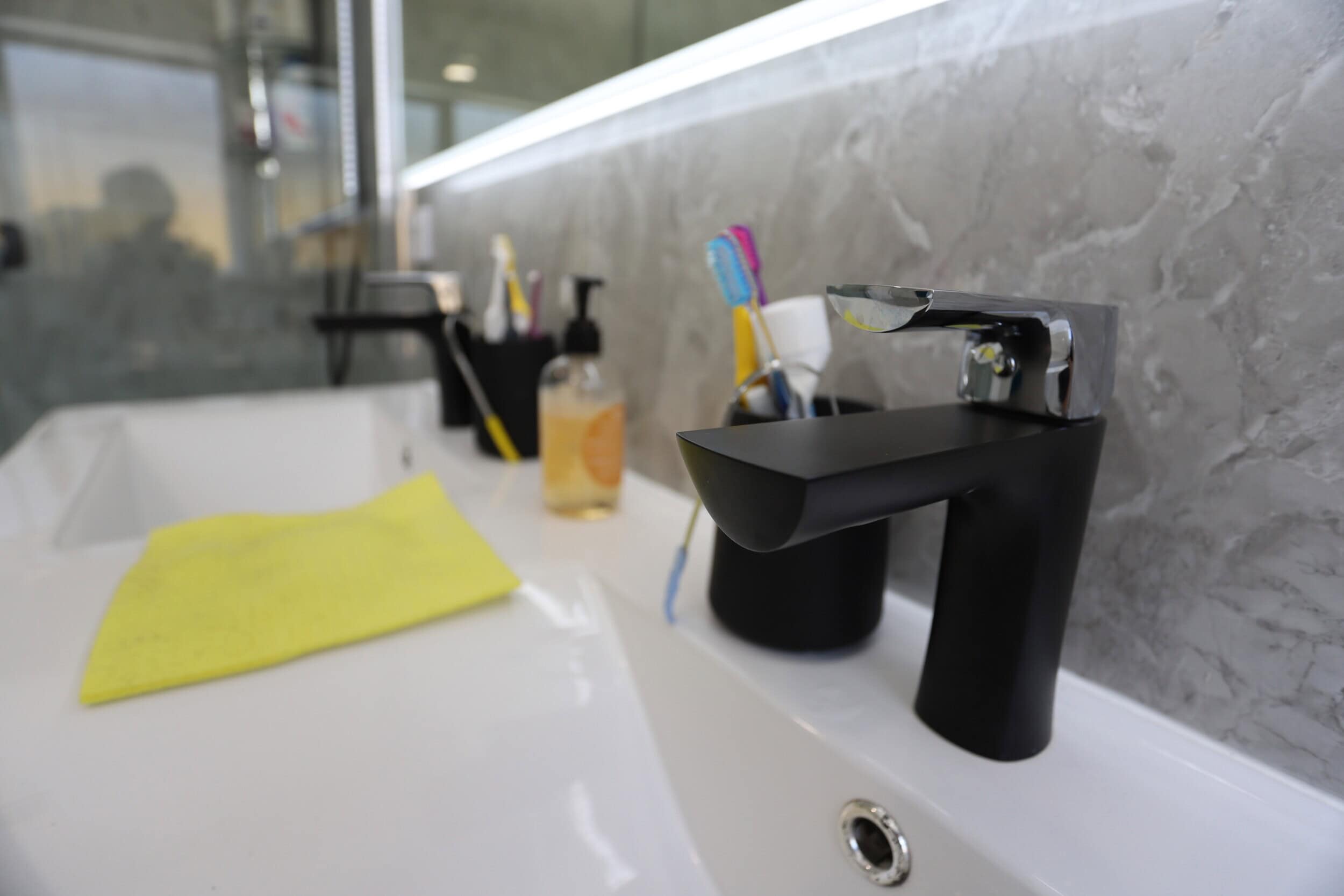
Matte black
Matte black is the single most popular finish in Auckland new bathrooms right now. Our 2026 project log shows it in around 40% of our premium bathroom renovations — and it’s still trending up. The caveat: matte black shows water marks and fingerprints more than any other finish. In a family bathroom used hard, it wants a daily wipe to look its best.
The bigger caveat is finish quality. Budget matte black tapware — typically under $200 for a basin mixer — is usually painted or electroplated, not PVD-coated. These finishes start breaking down within 18–36 months in an Auckland bathroom. PVD-coated matte black from a premium brand (Plumbline, Astra Walker, Methven’s premium ranges) holds up for 10+ years without noticeable wear. The price gap between a budget and a premium matte black basin mixer is often $300. The performance gap is an order of magnitude.
Superior Renovations
Brushed brass
Brushed brass is the second-fastest-growing finish we specify. It’s warmer than chrome, softer than matte black, and hides water marks better than either because the brushed texture breaks up reflection. It pairs well with the timber vanities and neutral tile palettes that dominate contemporary Auckland bathrooms.
Brushed brass in a premium PVD coating holds up just as well as premium matte black. The aesthetic risk is trend — brass sits in a more specific design moment than chrome, so if you’re renovating to sell in two years, chrome is the safer resale finish.
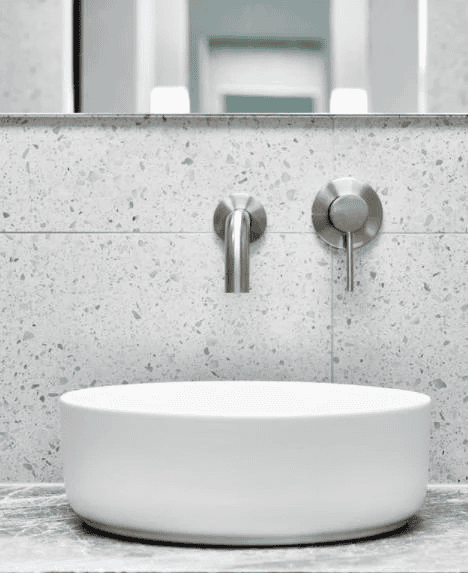
 Brushed nickel
Brushed nickel is quietly one of the most durable and versatile finishes available. Softer and warmer than chrome, cooler than brass, and fingerprint-resistant in a way matte black will never be. For a family bathroom where both durability and design matter, brushed nickel is a strong pick and probably under-specified in Auckland right now.
Brushed Nickel Meir
Gunmetal, polished nickel, rose gold
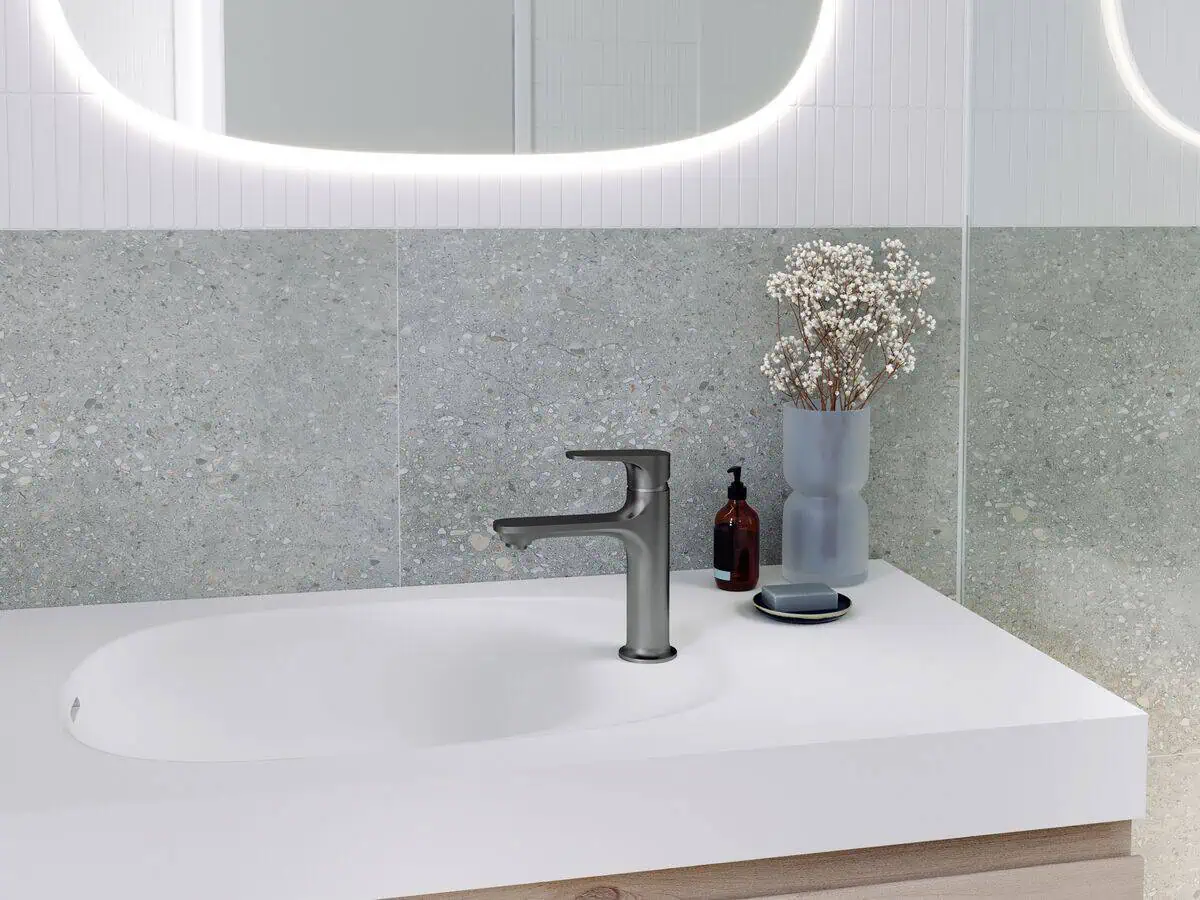
These are the specialty finishes. All three can look striking when paired with the right tiling and vanity, but all three are also trend-sensitive. Gunmetal reads contemporary but specific; polished nickel reads traditional; rose gold reads a very particular mid-2010s moment. If you’re renovating for long-term own-use, specify what you love. If you’re renovating for resale, stay closer to chrome, matte black, or brushed brass.
Mizu Silk Basin Mixer Brushed Gunmetal from Reece
💡 Quick tip: If you love matte black but share a bathroom with kids, consider brushed brass or brushed gunmetal instead. Same design intent, half the fingerprint visibility, much lower maintenance.
Mains Pressure, WELS Ratings, and AS/NZS 3718 Compliance
This is the section most buying guides skip. It’s also the section where specifying the wrong tapware creates the most expensive problems.
Auckland mains pressure — it’s not uniform
Most Auckland homes are on mains pressure water, meaning the water comes into the house at network pressure (typically 350–750 kPa depending on your zone). Some older homes — particularly character homes with original cylinders — run on low-pressure or unequal-pressure systems.
Specify mains-pressure tapware on a low-pressure system and you’ll get a weak dribble out of your new $600 mixer. Specify low-pressure tapware on a mains system and you risk flooding and failed seals. This is not the sort of mistake you want to find after the tiles are on.
Before picking tapware, your plumber should confirm your water pressure. If you’re doing a full bathroom renovation with us, our project manager handles this as part of the pre-quote process. Most premium tapware ranges come in both mains and universal versions — the universal ones work on either pressure but are slightly more expensive.
WELS — what the stars actually mean
Every tap sold in New Zealand carries a WELS (Water Efficiency Labelling Scheme) star rating, from 0 to 6. Bathroom basin mixers are typically rated 4–6 stars. More stars = lower flow rate = less water used.
For bathroom taps, a 5-star WELS rating is a good balance of water efficiency and usable flow. 6-star taps work but can feel underwhelming at the basin — great for environmental impact, mildly frustrating for handwashing. Most Auckland premium homes end up with 4–5 star tapware at the basin and 6-star at the shower where the flow restriction matters less to daily experience.
AS/NZS 3718 — the lead-free requirement
Since September 2025, all tapware installed in New Zealand for drinking water use must comply with the low-lead plumbing products standard, which in practice means AS/NZS 3718 certified with maximum 0.25% lead content in wetted surfaces. This matters for bathroom basin taps because people still drink from them — morning glass of water, brushing teeth, rinsing mouths.
Any tapware installed in a new renovation must carry the low-lead certification. Legitimate brands (Methven, Felton, Plumbline, Paini, Astra Walker, Burlington, St Michels) all comply. Imported tapware from non-certified sources may not — and installing non-compliant tapware can void your plumber’s certification and your renovation’s Code Compliance Certificate.
Important note: If you’re tempted by imported tapware bought online from an overseas retailer, check AS/NZS 3718 compliance before buying. A plumber cannot legally install non-compliant tapware in a New Zealand home. We’ve had clients arrive with beautiful Italian taps that we couldn’t install — and the return shipping cost more than the taps.
What Bathroom Tapware Actually Costs in an Auckland Renovation
This is the number nobody publishes honestly. Here’s what we see across live 2026 Auckland bathroom renovations.
Tapware as a share of total bathroom renovation cost
A typical mid-range Auckland bathroom renovation runs $26,000–$35,000 through to $40,000–$60,000 for a full overhaul, with labour rates at $90–$120 per hour (see our full 2026 bathroom renovation cost breakdown for the line-by-line detail). Tapware across the full bathroom typically accounts for 4–8% of the total renovation cost. That’s $1,000–$2,800 for a mid-range bathroom and $2,000–$5,000 for a premium bathroom.
Skimping on tapware to save $600 on a $35,000 renovation is almost always the wrong call. You’ll live with the tapware for 10+ years and touch it multiple times a day. The saving is 1.7% of project cost — the regret is daily.
Price ranges we see across brands
| Item | Budget range | Mid-range | Premium |
|---|---|---|---|
| Basin mixer (chrome) | $140–$280 | $340–$650 | $700–$1,400 |
| Basin mixer (matte black PVD) | $180–$340 (not recommended) | $420–$750 | $800–$1,600 |
| Basin mixer (brushed brass PVD) | N/A at this tier | $520–$850 | $900–$1,800 |
| Shower mixer | $180–$320 | $420–$780 | $850–$1,600 |
| Rain shower head | $120–$260 | $320–$620 | $700–$1,400 |
| Bath mixer and spout | $280–$480 | $560–$1,100 | $1,200–$2,400 |
| Full bathroom tapware set | $900–$1,600 | $2,000–$3,800 | $4,200–$8,500 |
These figures are for tapware supply only — installation is separate and runs around $180–$350 per fixture depending on whether it’s a bench-mount retrofit or wall-mount with new in-wall rough-in. For an accurate estimate tied to your specific bathroom, use our bathroom renovation cost calculator — it factors in tapware tier, tile allowance, vanity specification, and Auckland labour rates.
💡 Quick tip: Budget the full tapware set in one go — basin mixer, shower mixer, rain head, bath mixer and spout, plus accessories. Buying individual fixtures in tranches usually ends with mismatched finishes because brands subtly change their PVD tones between production runs. One order, one finish, one match.
Where to splurge and where to save
After a thousand bathrooms, our honest priority list for tapware spending:
Spend most on the basin mixer and shower mixer. These are the two fixtures you physically interact with every day. A cheap basin mixer feels cheap every single morning. A premium one disappears into routine — which is the goal.
Spend mid-range on bath mixer and spout. You use these less often. Mid-range premium brands (Felton, mid-tier Methven, mid-tier Paini) deliver 85% of the feel for 60% of the cost.
Spend less on accessories — towel rails, toilet roll holders, robe hooks. These get used less, touched lightly, and are the easy place to save a few hundred dollars. Pick matching finishes to your mixers and you won’t notice a tier drop.
Making the Decision — Where to See Tapware in Auckland
Tapware specification is one of those decisions that gets better once you physically touch the product. Showroom photos flatter every finish. In person, matte black reveals its fingerprint problem, brushed brass shows its warmth, and chrome’s durability becomes visible.
Our Auckland design studio at 16B Link Drive, Wairau Valley has a working display of bathroom tapware across all the brands we install — clients can run the water, feel the weight, and see the finish under real lighting. For premium ranges (Astra Walker, Burlington, higher-end Plumbline) we take clients to Reece in Albany or Newmarket. Mid-range specifications typically work from our in-house samples and the Bath and Tile Depot showroom.
The tapware conversation usually happens in the first or second design meeting, alongside the tile, vanity, and lighting decisions. Because tapware has 2–8 week lead times depending on brand and finish, pinning it down early keeps the whole renovation timeline honest.
“The clients who are happiest with their bathroom tapware 12 months later are the ones who made the decision standing in front of the product with the water running. Not the ones who picked it off Instagram. Same brand, different experience. Showroom beats screen every time.”
— Cici Zou, Designer (NZ Dip. Interior Design), Superior Renovations
Next Steps for Your Auckland Bathroom Renovation
Bathroom tapware decisions sit inside a much bigger conversation about your renovation — design, layout, compliance, budget, and timeline. The tapware chapter is easier when the bigger chapters are in order.
If you’re planning a bathroom renovation in Auckland and want straight answers on specification, budget, and brand choice, start with a free in-home consultation. We’ll walk through the whole brief, including tapware, in one conversation. No hard sell, no obligation — just the sort of grounded advice you’d get if you had a renovator in the family.
➡ Book your free in-home consultation with Superior Renovations
➡ Try our bathroom renovation cost calculator for a personalised estimate
➡ Request a free feasibility report for your project
How much should I budget for bathroom tapware in an Auckland renovation?
Plan for 4–8% of your total bathroom renovation budget to go on tapware. For a mid-range Auckland bathroom renovation at $26,000–$35,000, that's $1,000–$2,800 for the full tapware set (basin mixer, shower mixer, rain head, bath mixer and spout). Premium bathroom renovations at $40,000–$60,000 typically spend $2,000–$5,000 on tapware. Scrimping here is false economy — tapware is the fixture you touch every day for 10+ years.
Which tapware brand is best for Auckland's water conditions?
Methven (New Zealand made), Felton (Auckland-based), and Plumbline (NZ-owned) are our most-specified brands for Auckland bathrooms because they're designed for New Zealand plumbing codes and hold up well in Auckland's soft, chlorinated water. For premium bathrooms, Astra Walker (Australian) and Burlington (UK heritage) are strong options. All legitimate brands sold in New Zealand comply with AS/NZS 3718 lead-free certification, which has been mandatory since September 2025.
Does Auckland's water damage bathroom tapware?
Auckland's water is mostly soft (under 100mg/L calcium carbonate), so you don't get the heavy calcium scale seen in harder-water cities. But Watercare confirms silica scale can still form on tapware when water evaporates, and Auckland's chlorine-disinfected water slowly attacks cheap electroplated finishes. The biggest risk is budget tapware with painted or non-PVD coloured finishes — these can start breaking down within 18–36 months. Premium PVD-coated solid brass tapware typically lasts 10+ years without noticeable finish wear.
Is matte black bathroom tapware worth it?
Matte black is the single most specified finish in our 2026 Auckland bathroom renovations, and it looks outstanding when it's the right quality. The catch: budget matte black tapware under $200 is usually painted or electroplated, and the finish degrades within 2–3 years. PVD-coated matte black from premium brands (Plumbline, Methven premium ranges, Astra Walker) holds up 10+ years. Matte black also shows water marks and fingerprints more than any other finish — for busy family bathrooms, consider brushed brass or brushed nickel as a lower-maintenance alternative.
Do I need to use AS/NZS 3718 certified tapware in NZ?
Yes. Since September 2025, all tapware installed on New Zealand potable water systems must comply with the low-lead plumbing products standard — in practice, AS/NZS 3718 certified with maximum 0.25% lead content in wetted surfaces. Legitimate NZ-distributed brands (Methven, Felton, Plumbline, Paini, Astra Walker, Burlington, St Michels) all comply. Non-certified imported tapware cannot legally be installed by a registered plumber and can void your renovation's Code Compliance Certificate.
What's the difference between a basin mixer and a three-piece tap set?
A basin mixer is a single-lever tap where one handle controls both water flow and temperature. A three-piece set has separate hot and cold handles with a spout between them. Mixers dominate contemporary Auckland bathrooms because they're easier to use and suit minimalist design. Three-piece sets look right in character homes — villas, bungalows, Edwardian houses — where heritage styling is part of the property's value. For a family bathroom in a 2000s Hobsonville new build, a mixer is usually the right call. For a 1920s villa in Grey Lynn, a three-piece set often serves better.
How long does quality bathroom tapware last?
Premium bathroom tapware from brands like Methven, Plumbline, Astra Walker, and Burlington typically lasts 15+ years with no finish degradation and 20+ years with cartridge replacement. Mid-range tapware from Felton or Paini runs 10–15 years. Budget tapware under $200 per mixer often starts showing finish problems within 2–4 years in Auckland bathrooms, and cartridges usually need replacement by year 5–7. Longevity is heavily tied to finish quality (PVD vs electroplated) and brass alloy grade.
Can bathroom tapware be installed by the homeowner?
In New Zealand, plumbing work to mains-pressure water systems must be carried out by a licensed plumber — this is a legal requirement under the Plumbers, Gasfitters, and Drainlayers Act. DIY bathroom tapware replacement can void your home's building warrant of fitness, your insurance, and your renovation's Code Compliance Certificate. In a full bathroom renovation, your plumber coordinates with the tiler and waterproofer for wall-mounted tapware — the rough-in has to happen in the right sequence before tiling.
Why does my bathroom tapware have white marks on it?
The white marks on Auckland bathroom tapware are usually silica scale, not calcium scale. Watercare's own guidance confirms silica can build up on tapware when water is left to evaporate. Unlike calcium scale, silica doesn't easily respond to vinegar — you need either a dedicated silica scale remover or to prevent it by wiping down tapware after use. Daily microfibre wipe-down on matte black or brushed finishes keeps them looking new significantly longer than leaving water to air-dry.
How do I know if my Auckland home has mains-pressure or low-pressure water?
Most Auckland homes built after the 1990s are on mains pressure (typically 350–750 kPa). Older character homes with original hot water cylinders often run on low pressure or unequal pressure. Check your hot water cylinder — a mains-pressure cylinder will be labelled as such and usually has a pressure-reducing valve and temperature control valve nearby. In a renovation, your plumber confirms pressure as part of the pre-quote process. Specifying the wrong tapware (mains on low pressure, or vice versa) causes performance problems and sometimes warranty-voiding failures — so it's worth getting right upfront.
Further Resources for your bathroom renovation
- Featured projects and Client stories to see specifications on some of the projects.
- Real client stories from Auckland
Need more information?
Take advantage of our FREE Complete Home Renovation Guide (48 pages), whether you’re already renovating or in the process of deciding to renovate, it’s not an easy process, this guide which includes a free 100+ point check list – will help you avoid costly mistakes.
Download Free Renovation Guide (PDF)
Still have questions unanswered?
Book a no-obligation consultation with the team at Superior Renovations, we’d love to meet you to discuss your renovation ideas!
[contact-form-7]
Or call us on 0800 199 888

Have you been putting off getting renovations done?
We have partnered with Q Mastercard ® to provide you an 18 Month Interest-Free Payment Option, you can enjoy your new home now and stress less.
Learn More about Interest-Free Payment Options*
*Lending criteria, fees, terms and conditions apply. Mastercard is a registered trademark and the circles design is a trademark of Mastercard International Incorporated.
The post Bathroom Tapware NZ: The Auckland Guide (2026) appeared first on Superior Renovations. #superiorrenovations


Comments
Post a Comment