Structural Changes in NZ Renovations: The Real Risks
Originally posted on Structural Changes in NZ Renovations: The Real Risks
Superior Renovations - Auckland’s Trusted Home Renovation Specialists
Why Structural Changes Are the Riskiest Part of Any Full-House Renovation (And How We Manage Them)
Quick answer: Structural changes — removing load-bearing walls, specifying beams, altering foundations — are where most Auckland renovation budgets blow up. Get the engineering wrong and the costs compound fast. This is how we manage it at Superior Renovations.
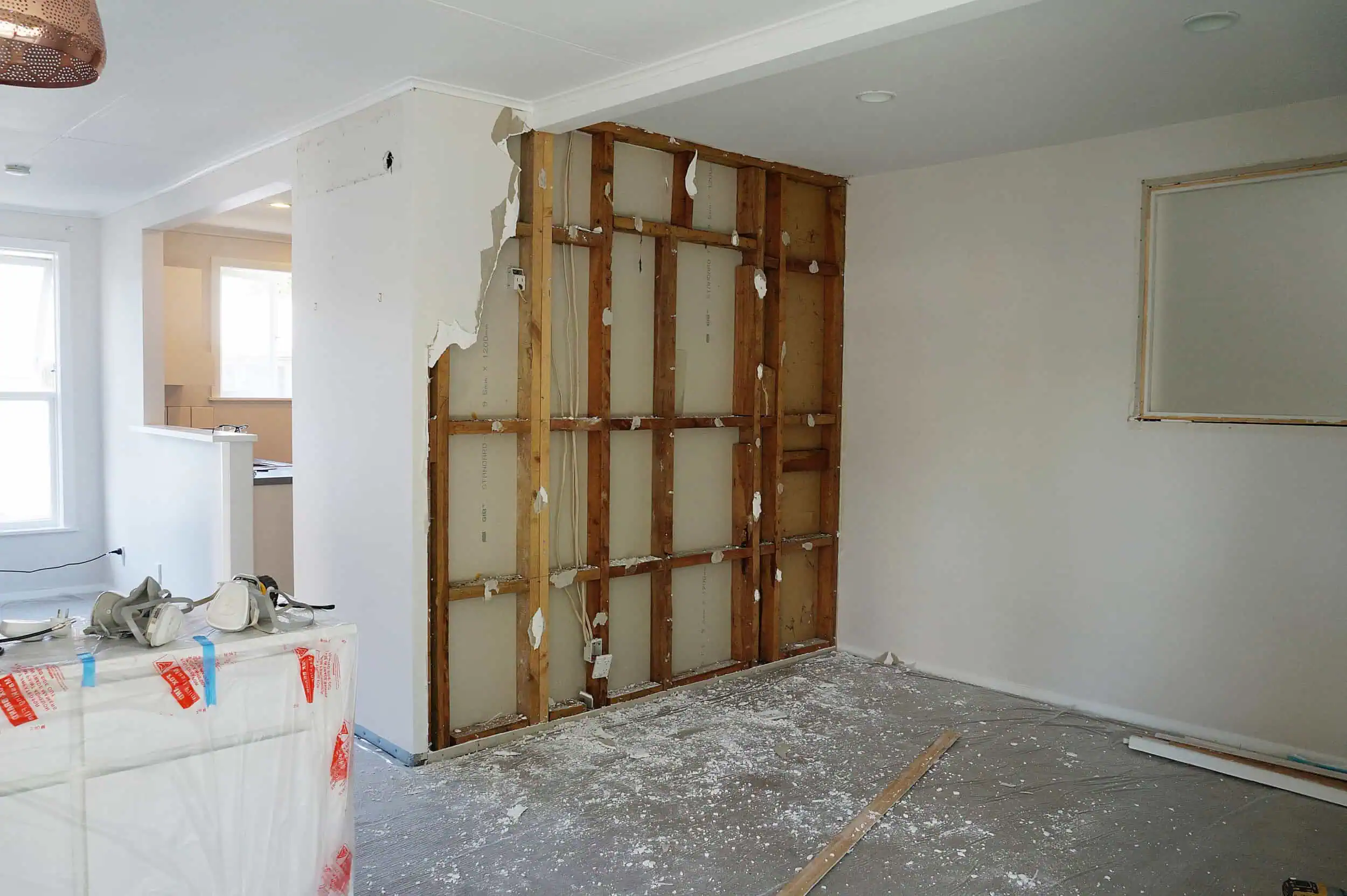
Pull the GIB off a wall in a Grey Lynn villa and you never quite know what you’ll find.
That’s not marketing copy. It’s what we tell clients in the first consultation at our Wairau Valley showroom. We’ve been doing full-home renovations across Auckland since 2017, and if you ask any of our project managers where a build is most likely to surprise everyone — the homeowner, the designer, the builder, the engineer — it’s always the same answer.
Structural.
Not the kitchen layout. Not the bathroom tiling. Not the paint schedule. It’s the moment someone walks into what they thought was a cosmetic refresh, points at a wall, and says “can we just take this out?”
Maybe. Probably. But the honest answer is: it depends on what’s above it, what’s beside it, what’s underneath it, and what the engineer’s numbers say once we’ve measured the loads. And the cost of getting that calculation wrong isn’t a few thousand dollars — it’s the whole programme.
This is a technical piece. Written for Auckland homeowners planning a full-house renovation where walls are coming out, beams are going in, and there’s a real chance the foundation is going to have something to say about it. We’ll walk through load paths, beam specification, foundation implications, and the process we run to keep structural risk bounded before you’ve paid for a single sheet of GIB.
If you’ve been staring at your villa thinking “surely we can open this up” — read on.
Why Structural Work Is Where Most Auckland Renovations Get Expensive
Ask ten Auckland builders where a renovation is most likely to surprise you. You’ll get roughly the same answer.
Cabinetry problems get solved with a phone call to the joinery shop. Tiling issues get fixed with a different batch. Paint gets repainted.
Structural problems rewrite the programme.
There are three reasons this is true across every full-home renovation we’ve done — from 1920s villas in Mt Eden to leaky-era townhouses in Albany to 1970s brick-and-tile in Manurewa. Understanding all three before you sign a building contract is the difference between a reno that runs and one that spirals.
The discovery problem — you can’t plan against what you can’t see
No set of plans drawn from outside a wall tells you what’s inside the wall.
We’ve opened walls in Titirangi that were supposed to be framed with 90×45 pine and found undersized 75×50 studs on 600mm centres with no dwangs where there should’ve been dwangs. We’ve found rotted bottom plates in mid-2000s Hobsonville homes where the original building paper failed. We’ve found notched studs where someone cut a 40mm slot to run a bathroom waste line through in 1986 — quietly compromising the load path of a whole wall for forty years.
None of that shows up in a pre-build quote.
It shows up at day five of demolition. That’s when the engineer’s phone rings at 7:30am.
💡 Quick tip: Ask any renovation company quoting you how they handle structural discovery after demo. If they can’t give you a clear answer — including a contingency line in the quote — the risk is sitting on your side of the contract, not theirs.
The compounding cost problem — one structural change pulls twelve others
Here’s what most homeowners don’t see until they’re mid-build.
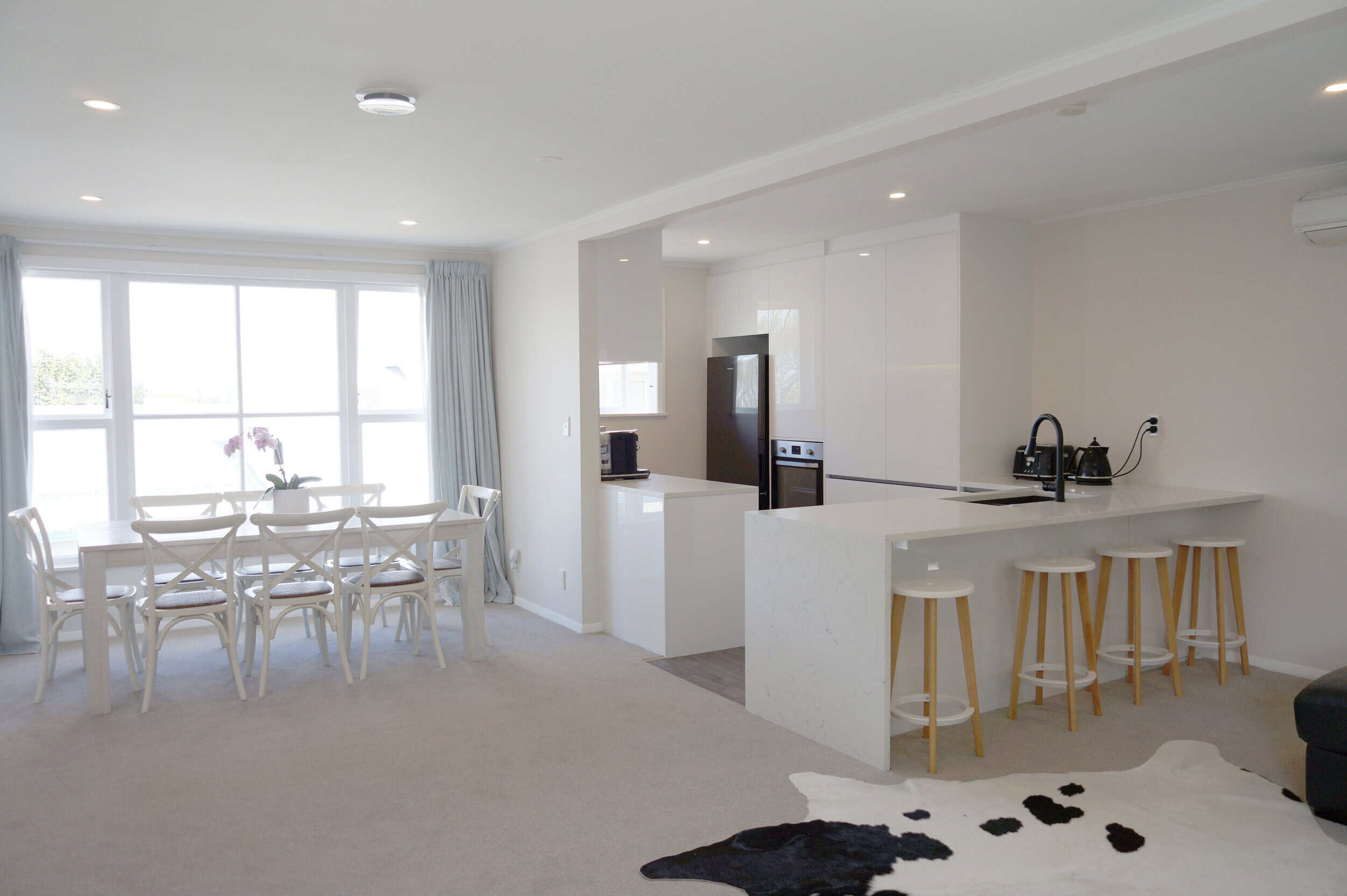
A single structural decision rarely stays single. Remove one load-bearing wall in a 1960s Remuera bungalow and you will likely need: a new beam designed by a chartered engineer, a Producer Statement (PS1) for the design, temporary propping during the swap, an upgrade to the supporting studs or columns at either end of the beam, potentially a new pad footing underneath those supports, an amendment to the Building Consent if the scope shifted from what was lodged, and an inspection from Council before linings go back on.
Each of those line items is manageable in isolation. The risk is the interaction — a beam that turned out 60mm deeper than planned takes out the ceiling plan, which moves the lighting, which means the electrician re-runs, which delays the GIB stopper, which pushes the tiler out, which means the bathroom supplier’s delivery window doesn’t line up anymore.
That’s how a $4,000 structural variation becomes a $28,000 programme event.
The consent exposure problem — what Council cares about is non-negotiable
Most structural work in Auckland sits squarely inside Restricted Building Work under the Building Act. That means you need a Licensed Building Practitioner (LBP) signing it off, a Building Consent from Auckland Council, engineer-specified structural elements, and inspections at defined hold points — often including a pre-line inspection before GIB goes back up.
Skip any of those steps and the consequences aren’t theoretical. A Code of Compliance Certificate (CCC) that won’t issue. A LIM report at sale time that flags unconsented work. An insurance claim that gets declined because the work didn’t meet the Building Code.
We’ve seen homeowners inherit all three after buying a house where the previous owner “just took a wall out.” It takes $30,000–$60,000 of retrospective engineering, strengthening, and consent work to unwind — and that’s if the structure was actually adequate in the first place. MBIE’s Restricted Building Work guidance spells out where the line is. It’s not subtle.
“The three weeks nobody talks about are the three weeks after demo, when we find out what the house is actually made of. No set of drawings tells you that. Every full-home renovation we’ve done in Auckland has revealed something the original build got wrong — and it’s nearly always structural. The builds that run well aren’t the ones where nothing goes wrong. They’re the ones where the process assumes something will, and the engineer is on speed dial.”
— Dorothy Li, Design Manager, Superior Renovations
Identifying Load-Bearing Walls (And Why Getting This Wrong Costs More Than You Think)
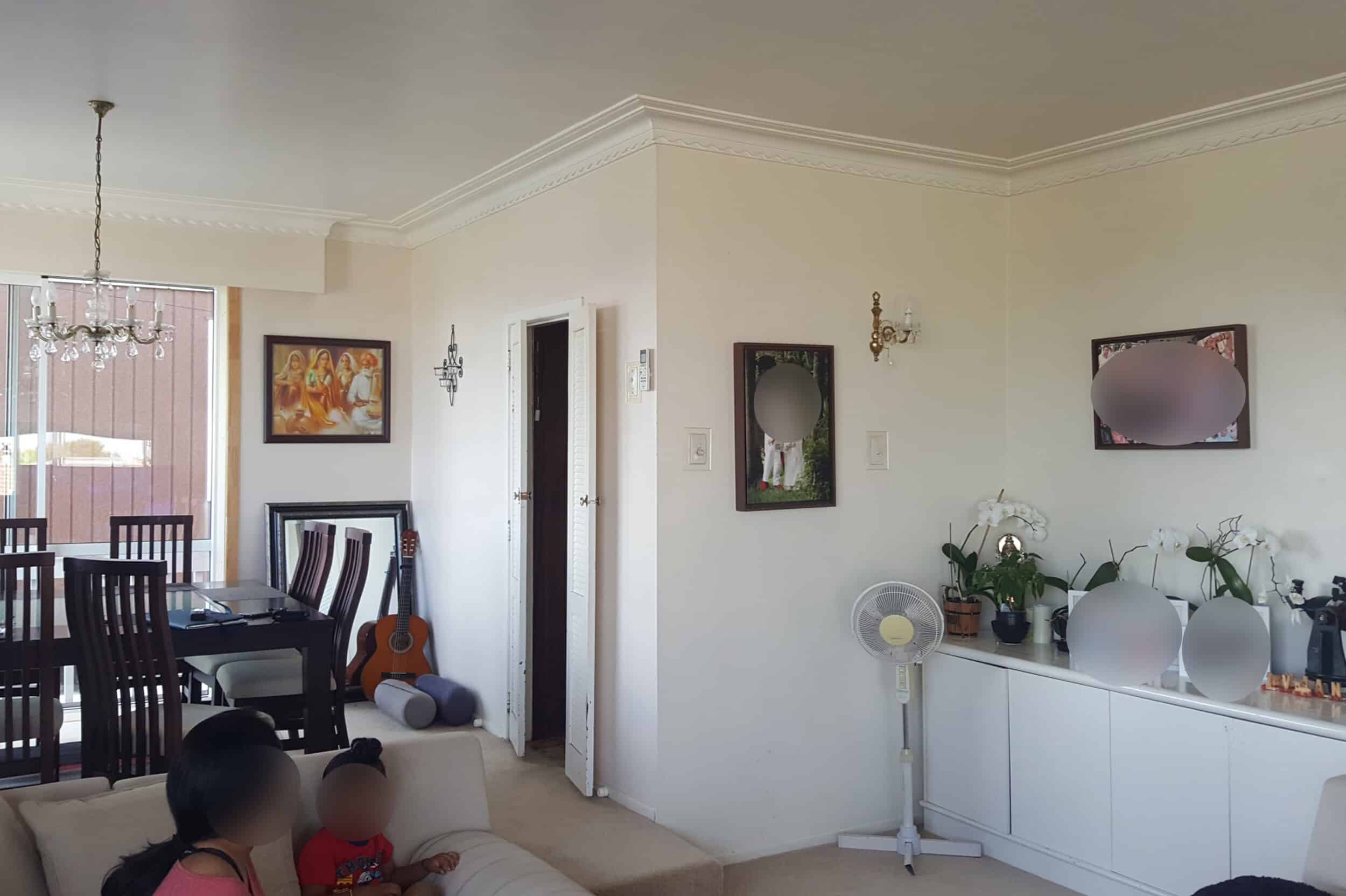
There’s a reason the question “is this wall load-bearing?” gets asked in every first consultation. It’s the single structural question homeowners are most confident about — and most often wrong about.
Not their fault. The answer is rarely obvious from inside the room.
How residential load paths actually work in NZ
Most Kiwi homes built post-1970 are framed to NZS 3604 — Timber-framed buildings. This is the acceptable solution under B1/AS1 of the Building Code for standard residential construction. It defines stud sizes, beam spans, bracing requirements, and connection details for houses of ordinary size and shape.
In a NZS 3604 house, loads travel downward in a predictable chain. Roof weight lands on rafters, which transfer to the top plate, which transfers down through studs in specific walls, which deliver load to the bottom plate, which transfers to the foundation. The walls carrying that vertical load are load-bearing. Walls that only divide space are not.
So far, so textbook.
But there are three places this gets messy in real Auckland housing stock:
Villas and bungalows (pre-1940): Built before NZS 3604 existed. Often framed with whatever timber was around — rimu, kauri, matai — in non-standard sizes on non-standard centres. Original rooflines are often more complicated than they look, with hidden valleys and concealed beams that change which walls carry load. We’ve had villa jobs in Ponsonby where what looked like an internal partition was actually carrying the entire hip roof rafter via a timber beam concealed above the ceiling.
Leaky-building era homes (mid-1990s to mid-2000s): Framed to NZS 3604 correctly in most cases, but with a high rate of framing decay around window and door openings where the weathertightness system failed. Walls that are technically load-bearing may have studs that no longer are. The BRANZ guidance on leaky-home remediation is essential reading before any structural work on a home of this era.
Split-level and complex layouts: Any home with a mezzanine, a split floor level, or a structural beam running mid-span will have load paths that don’t follow the simple “exterior walls carry most of it” rule. This is where homeowner assumptions break down hardest.
Load-bearing vs bracing — a distinction that matters
Here’s a technical point that catches people out. A wall can be non-load-bearing in the vertical sense and still be critical for bracing — the lateral resistance that keeps the house standing up in wind and earthquake.
NZS 3604 calculates the bracing demand for every house based on wind zone and earthquake zone, then requires a certain number of Bracing Units (BUs) distributed around each floor level. Auckland is mostly a High Wind Zone under the latest NZS 3604 map. A house with perfect vertical load paths can still fail its bracing demand if the wrong internal wall comes out.
Take out a wall without accounting for bracing and the house is technically non-compliant — even if the roof isn’t about to fall in. Council inspectors check bracing schedules at the pre-line stage. An engineer’s bracing report is often part of the consent package.
Important note: “The wall is only 2.4 metres long and made of GIB — it can’t be structural” is the assumption that causes the most expensive mistakes we see. Short walls can carry significant point loads. Non-bearing walls can be bracing walls. Always get an engineer’s eye before demo, not after.
Where homeowner and tradie assessments go wrong
We’ve been on the tools long enough to know that a quick visual assessment — even from an experienced builder — is not the same as an engineered assessment. There are four checks people commonly rely on that don’t tell you what they think they tell you:
1. “It’s parallel to the joists, so it’s not structural.” True in simple single-storey homes. Not true in split-level homes, not reliable in villas, and not necessarily true in two-storey homes where the first-floor wall may be carrying a beam that’s perpendicular to the visible joists above.
2. “There’s no wall above it.” This only confirms the wall isn’t carrying a direct stacked load. It says nothing about bracing. And it doesn’t account for concealed beams transferring load laterally across the ceiling space.
3. “The plans show it as a partition.” Original plans in Auckland are often either missing, partially revised during construction, or don’t reflect what was actually built. We regularly find walls built during construction that aren’t on any drawing.
4. “My builder said it was fine.” Builders are skilled. They’re not chartered engineers. For anything in the Restricted Building Work category, the signature you want on the decision is a CPEng structural engineer’s — not a verbal assurance from anyone, however experienced.
This is where our feasibility report process earns its keep. An engineer walks the house before design work starts. We know what’s possible and what’s expensive before you’re attached to a layout.
Beam Sizing and Specification — The Part That’s Easy to Get Wrong on Paper
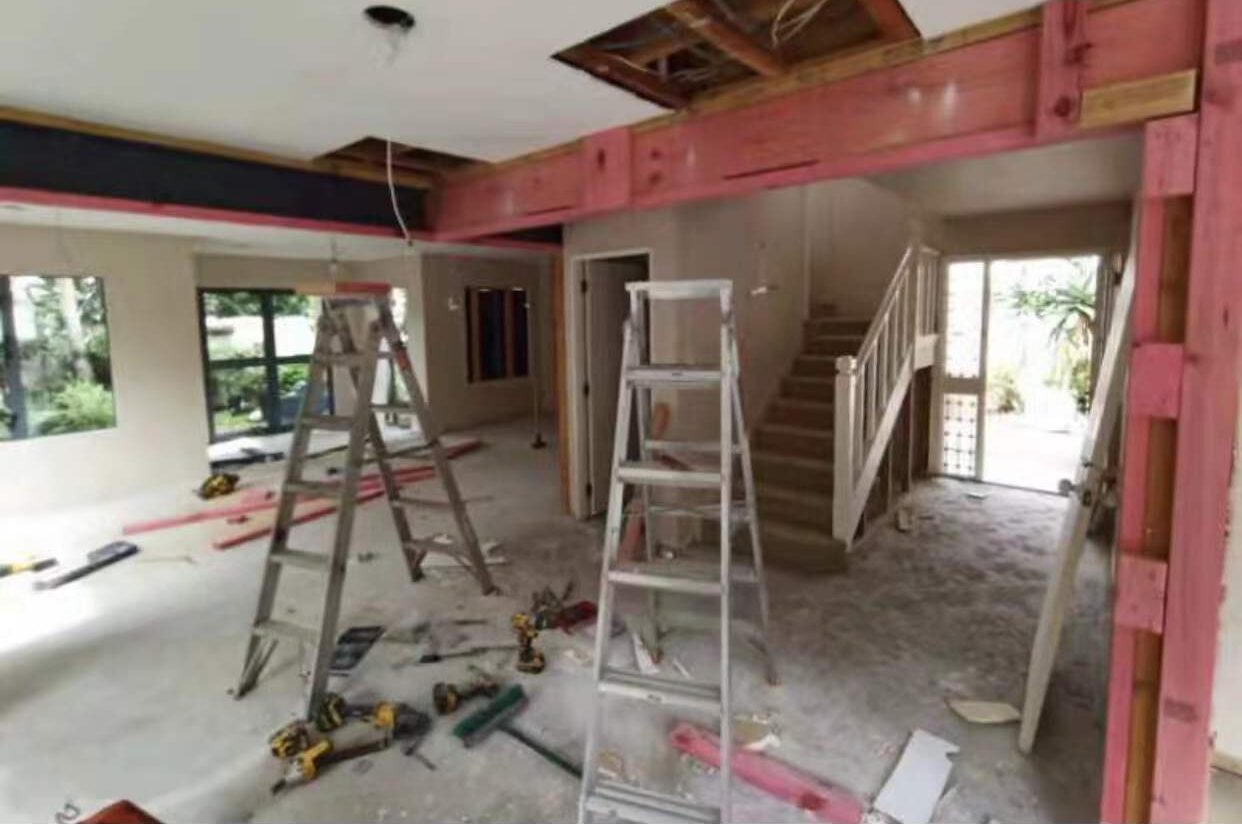
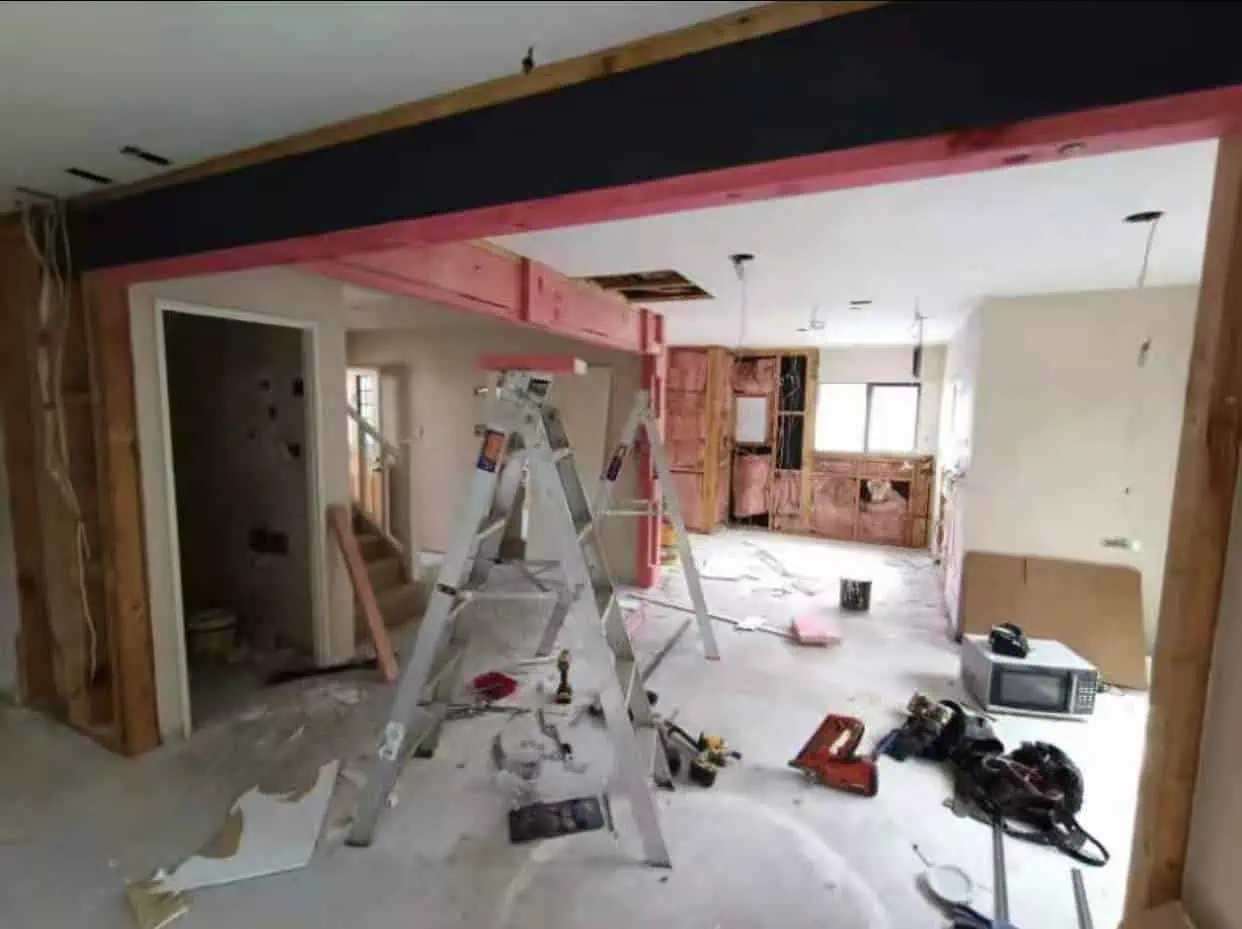
Take out a load-bearing wall and something has to replace the path that load used to travel. Ninety percent of the time, that’s a beam.
Specifying the beam is where renovation projects meet real engineering. It’s also where the paper answer and the build answer can diverge badly if nobody is paying attention.
LVL vs steel — when each is the right call
For residential renovations in Auckland, the two common beam options are Laminated Veneer Lumber (LVL) and structural steel — typically a Parallel Flange Channel (PFC), a Universal Beam (UB), or a Universal Column (UC) used on its side.
LVL beams — manufactured by brands like Nelson Pine and Carter Holt Harvey — are the default for most residential openings. They’re cost-effective, install with standard carpentry trades and tools, and come in standard sections like 2/240×63 LVL11 or 2/360×63 for larger spans. They’re what we use on the majority of single-storey wall removals.
Steel beams become the right answer when:
- The span is too long for a cost-effective LVL (typically above about 5–6 metres, though this depends on load)
- The beam depth has to be minimised to preserve ceiling height
- There’s a significant point load — for example, a second-storey wall stacking onto the new opening
- Fire resistance requirements push towards a non-combustible member
A PFC 250 or a 310 UB can carry loads in depths that LVL simply can’t match. The trade-off is cost, weight, trade coordination (a steel fabricator and an installer with lifting gear, often a HIAB truck for placement), and a more complex connection detail at each end.
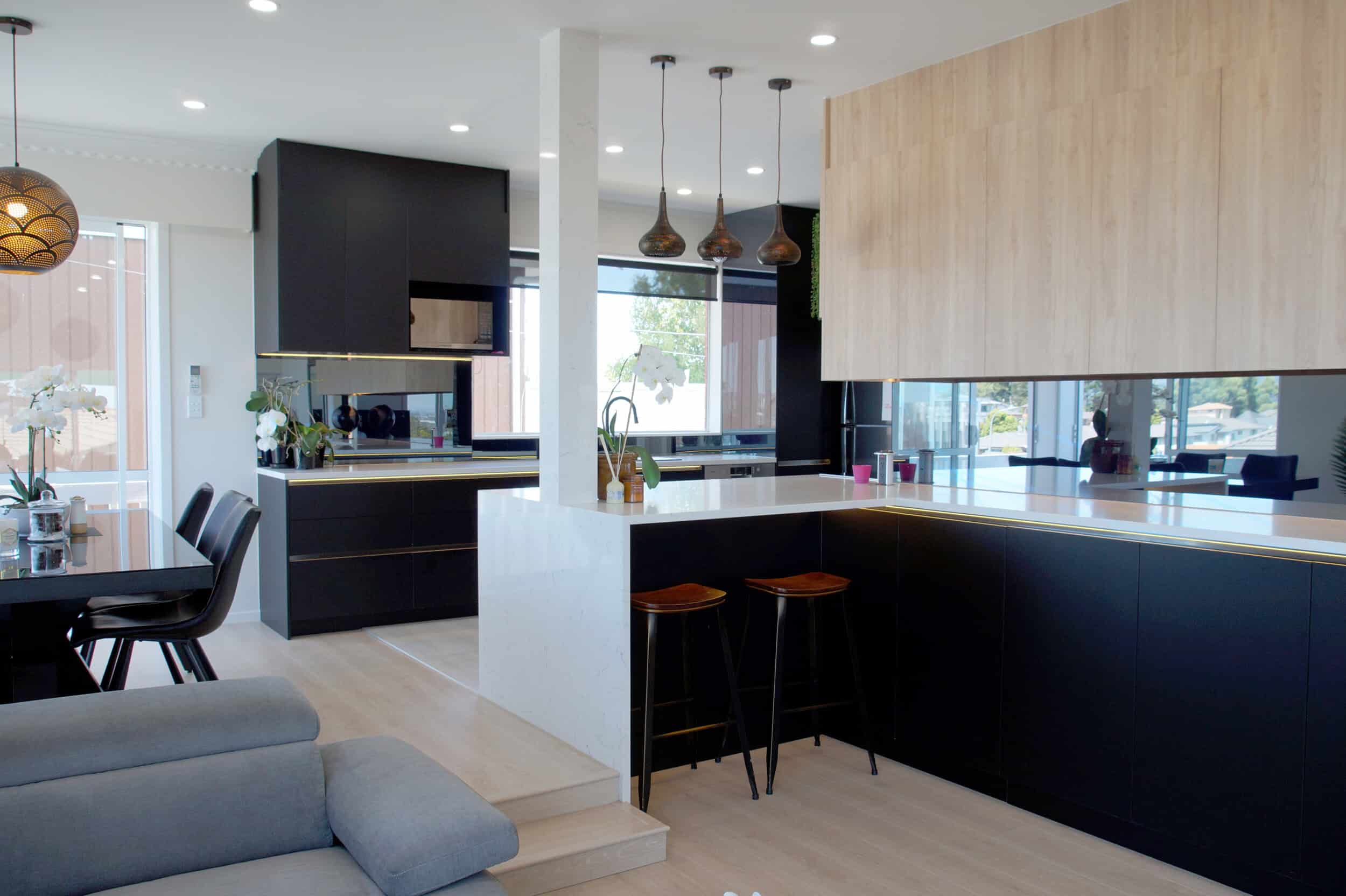
We’ve done Auckland kitchen openings where the choice between a 360-deep LVL soffit dropping below the existing ceiling and a 250-deep PFC sitting flush was the difference between a compromised-looking ceiling plane and a clean open-plan space. The PFC cost an extra [SPECIFIC DETAIL NEEDED — typical extra in $] but saved the design.
“The engineering drawing is usually a thousand-dollar line item. That’s the cheap part. The expensive part is redesigning a kitchen because the beam you wanted turned out to need a 100mm soffit hanging below the ceiling line. I’ve had more than one client pick the beam first and the layout second — which sounds backwards, but on a full-home reno it’s often the order that saves the budget.”
— Alison Yu, Designer, Superior Renovations
Reading a Producer Statement (PS1) — what you’re actually paying for
For any structural member of consequence, you’ll get a Producer Statement — Design (PS1) from a chartered structural engineer (CPEng). This is the legal document that states the beam has been designed to carry the calculated loads, meets the Building Code, and references the drawings and calculations that support that design.
The PS1 for a single residential beam typically costs between $1,500 and $3,000 depending on complexity, site visits, and how much structural analysis is required. For a full-home renovation with multiple openings, a new storey, or a complex roof alteration, an engineer’s total fee across PS1 design, site review, and PS4 construction review can sit between $5,000 and $15,000+.
That’s not where you want to save money. An engineer’s fee is the insurance policy that sits between you and every structural risk we’ve talked about.
Why “a standard 240×45 should do it” isn’t an answer
There’s a type of back-of-a-serviette engineering that still circulates in renovation conversations. “For a 3-metre opening in a single-storey house, a standard 240×45 LVL will be fine.”
Sometimes it will. Often it won’t. And the difference depends on:
- The actual tributary area of roof loading onto the wall (which depends on rafter layout, roof pitch, and whether the beam is carrying just roof or also ceiling)
- Wind zone — Auckland has varying wind zones from Medium to Extra High depending on exposure
- Whether the wall above carries any stacked load from a second storey or an attic conversion
- Snow load (generally zero in Auckland, but not zero everywhere in NZ)
- Deflection limits — the beam might pass strength but fail the serviceability limit for deflection, causing visible sag and cracking in GIB above
- Connection at each end — the studs, trimmers, and bottom-plate-to-foundation path that receives the beam’s end reactions
No standard answer handles all of that. Which is why we engage the engineer at the design stage, not after a wall has been opened.
💡 Quick tip: If you want a rough early-stage cost picture for full-home structural changes including beams, try the house extension cost calculator. It’s not a beam specification tool — but it’ll give you an order-of-magnitude figure to work with before you commit to an engineer’s design brief.
Foundation Implications Most Homeowners Don’t See Coming
Here’s the part of the structural conversation that catches even experienced renovators off guard.
Removing a wall doesn’t just mean adding a beam. It means changing where the loads land at ground level — and the existing foundation may not have been designed to take those new concentrated loads.
From distributed load to point load — why this matters
A load-bearing wall distributes its weight along its entire length. If the wall is 4 metres long, the load per linear metre at the foundation is the total wall load divided by 4 metres.
Replace that wall with a beam sitting on two posts and you’ve changed the game completely. The entire load the wall used to distribute along 4 metres now concentrates onto two small bearing points — often 90×90 or 140×90 timber posts, or a steel column base plate roughly 200x200mm. The force per square metre at those two points is several times higher than it used to be.
That force has to go somewhere. It travels down the post, through the bottom plate, into the foundation, and — ultimately — into the ground. Every element in that chain has to be checked.
This is where the foundation story starts.
Villa piles and the concentrated load problem
Most Auckland villas are founded on timber piles — originally often kauri, sometimes later replaced with concrete perimeter footings when the house was restumped. The piles are designed to carry the distributed weight of the original walls.
They were not designed to carry a concentrated 30kN point load from a new beam-and-post arrangement.
We’ve had Grey Lynn jobs where the engineer’s calculation came back requiring a new pad footing under each end of the new beam — typically a 600x600x400mm mass concrete pad with reinforcing, replacing the original pile in that location. That’s a $2,000–$4,000 cost per pad, plus the sub-floor excavation work, plus the programme time. Times two for a single beam. Times more if multiple walls are coming out.
Older 1920s–40s Grey Lynn, Ponsonby, Herne Bay, and Mt Eden villas are particularly exposed here because the originals often have undersized, rotted, or sunken piles to begin with. A full home renovation is often the right moment to address sub-floor structure comprehensively — rather than patching one pile at a time over twenty years.
Second-storey additions and foundation capacity
If your renovation involves going up — a second storey, an attic conversion, a habitable loft — the foundation conversation escalates.
Adding a storey roughly doubles the vertical dead load on the existing foundation, and more than doubles the seismic and wind-induced lateral loads. The existing footings were designed for what’s there today, not what you want to build on top. For second-storey work we nearly always involve a geotechnical engineer in addition to the structural engineer, particularly in parts of Auckland where site class can be C or D (softer soil, requires deeper or wider footings).
Site class assessment isn’t optional for this work. It’s required under B1/VM1 of the Building Code for significant load changes.
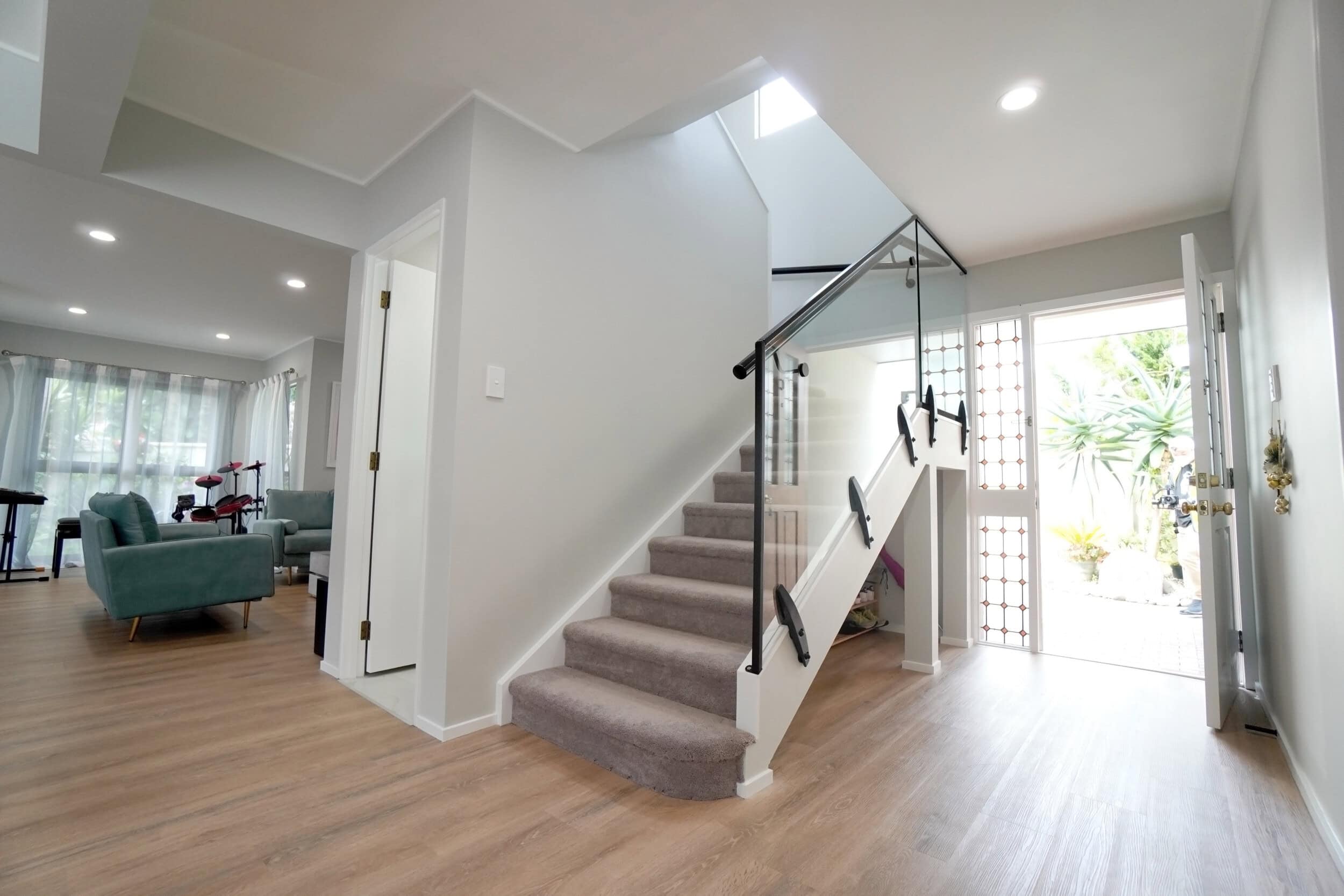
For the Vijeta family’s full-home renovation in West Harbour — a 5-bedroom complete interior and exterior rebuild, including a new staircase and major structural reconfiguration — the foundation and bracing work was sequenced before any of the finishing trades came on site. Seven months on site total. The structural package took roughly the first third of the programme and set the timeline for everything that followed.
If you’re thinking about going up, our group architecture practice Sonder Architecture handles the structural design, engineering coordination, and Resource Consent work. That’s not a plug — it’s because structural additions this complex need a design team that’s connected to the build team from day one.
Concrete slab homes — a different set of constraints
Many post-1970 Auckland homes — brick-and-tile bungalows through South and West Auckland, newer subdivisions in Flat Bush, Hobsonville, Albany, Millwater — are founded on concrete slab-on-grade with integral footings.
Slab foundations have different strengths and weaknesses for renovation. The good news: point loads spread into the slab reasonably well, and you’re less likely to need separate pad footings under new beam supports. The bad news: underfloor services are cast into the slab, which constrains where plumbing changes are viable, and thickening the slab locally for a major new load often isn’t practical.
For slab-founded homes, the structural conversation is usually more about confirming the existing slab has adequate capacity — via engineer’s calculation and sometimes a core sample — than about adding new foundations. This is cheaper and faster. It’s one of the reasons renovating a newer slab home is often simpler than renovating a villa on piles.
How We Manage Structural Risk at Superior Renovations
Everything above is the problem. Here’s our process for keeping it bounded.
We’ve renovated hundreds of Auckland homes and the structural package sits under a specific set of controls — not because we’ve added bureaucracy for its own sake, but because each control is there to prevent a failure mode we’ve seen cost somebody, somewhere, real money.
Before contract: feasibility, not optimism
The single most important thing we do is separate feasibility from quote.
Before any fixed-price renovation contract is signed, we run a feasibility process that includes an engineer walking the house with our project manager. They assess load paths, identify likely structural constraints, flag any foundation concerns, and give us the scope of structural work required to deliver the design brief.
That happens before the quote is priced — not after the contract is signed. It’s the reason our fixed-price quotes hold up. The structural unknowns get investigated at the feasibility stage, not discovered at day five of demo.
You can request this via our free feasibility report. For any full-home renovation involving wall removals or new openings, we’d consider this step non-optional.
During design: engineer as part of the team, not a late add-on
The second control is how we sequence the engineer into the design.
A common failure mode we see in other renovation projects: the architect or designer produces a beautiful set of plans, the homeowner falls in love with them, the plans go to the engineer for sign-off — and the engineer comes back requiring a beam depth that breaks the ceiling plan, or a post position that breaks the kitchen layout, or a foundation upgrade that the budget didn’t account for.
By the time this happens, the client is attached to a design that can’t actually be built as shown. Cue the redesign cycle. Cue the delays.
Our process puts the engineer in the room during design development, not at the end. Every structural element — beam, post, new footing, bracing line — is confirmed before drawings are finalised for consent. The plans you approve are plans that can actually be constructed at the cost we quoted.
💡 Quick tip: If you’re comparing renovation companies, ask at what stage of the design process the structural engineer gets involved. If the answer is “when we submit for consent,” the structural risk is likely to show up in your variation orders rather than the original quote.
During build: PS3, PS4, and the paperwork that keeps you safe
The third control is the sign-off chain during construction.
For any significant structural work, three Producer Statements come into play:
- PS1 — Design: issued by the structural engineer, certifies the design meets the Building Code
- PS3 — Construction: issued by the contractor (us), certifies the work was built in accordance with the consented documents
- PS4 — Construction Review: issued by the engineer after site inspections, certifies they’ve reviewed the construction and it aligns with the design
Auckland Council typically requires PS3 and PS4 before issuing a Code of Compliance Certificate on any renovation with meaningful structural scope. Missing either is a compliance problem that surfaces at CCC stage and, later, at sale.
We schedule engineer site visits at each structural hold point — typically when beams are installed, when bracing is in, and before pre-line inspection. It’s a cost line that clients sometimes ask about. It’s not a line we’ll negotiate down.
Contingency — the line item nobody wants until they need it
Last control. Every full-home renovation quote we produce includes a contingency allowance, specifically for structural and weathertightness discovery. Typically 10–15% of the structural package cost, held in trust and only drawn down by variation when discovery requires it.
If it’s not used, it comes back to the client at the end of the job.
No renovation company can give you a zero-risk structural quote on a 60-year-old Auckland house. What we can do is price the known scope tightly and ringfence the unknown scope in a contingency that’s visible, managed, and doesn’t blindside you mid-build.
That’s how we keep the structural package from being the line that rewrites the programme.
So What Should You Actually Do Before Taking Out a Wall?
Four things, in this order.
Get an engineer’s eye on the house before you sign any renovation contract — ideally through a feasibility report that includes a structural walkthrough. Make sure the company you’re working with runs their engineer into design, not after it. Make sure your quote has a transparent contingency for structural discovery, not a zero-risk promise that’s going to evaporate on day five of demo. And make sure the PS1, PS3, PS4 chain is in your build contract as a deliverable.
If those four things are in place, structural changes stop being the part of the renovation where the budget goes to die. They become what they should be — the part of the renovation that lets you reshape the house you own into the house you actually want to live in.
Drop by our showroom at 16B Link Drive, Wairau Valley, or get in touch through the form at the bottom of this page. We’ll walk the house, answer the specific structural questions for your build, and give you an honest read on what’s possible and what’s expensive.
➡ Book your free in-home consultation with Superior Renovations
➡ Get a rough cost estimate with our house extension cost calculator
➡ Request a free feasibility report for your project
Do I need a building consent to remove a load-bearing wall in Auckland?
Yes — removing a load-bearing wall is Restricted Building Work under the NZ Building Act and requires a Building Consent from Auckland Council, a Licensed Building Practitioner to sign off the structural work, and engineer-specified beam and support design. Consent costs for residential structural work typically sit between $2,500 and $6,000 depending on scope. Doing it without consent creates problems at CCC stage and at resale when the LIM report flags unconsented work.
How much does a structural engineer cost for a renovation in NZ?
For a single residential beam design with a Producer Statement (PS1), expect $1,500 to $3,000. For a full-home renovation with multiple structural elements — beam design, bracing calculations, foundation review, PS1, PS3 and PS4 documentation, and site inspections — total engineer fees typically sit between $5,000 and $15,000+ depending on complexity. This is not where to cut budget. The engineer's fee is the insurance policy that sits between you and every structural risk on the job.
Can I tell if a wall is load-bearing without an engineer?
You can make an educated guess — walls parallel to ceiling joists with no wall above them are often non-structural — but you can't be certain without engineering assessment. Villas, leaky-era homes, and split-level houses have concealed beams and non-obvious load paths. Bracing walls can fail the Building Code even when they don't carry vertical load. For any full-home renovation, pay for a structural engineer's walkthrough before you commit to a layout. Guessing wrong is expensive.
What's the difference between LVL and steel beams for renovations?
LVL (Laminated Veneer Lumber) is the default for most residential openings — cost-effective, installs with standard carpentry trades, works up to about 5-6m spans. Steel (PFC, UB, UC sections) becomes necessary when spans are longer, depth must be minimised to preserve ceiling height, or there are heavy point loads from a second storey above. Steel costs more and needs a fabricator plus lifting gear, but can carry loads in shallower depths. The engineer specifies which is required based on the load and geometry.
How much does it cost to remove a load-bearing wall in Auckland?
For a typical single-storey wall removal in Auckland — engineer design, building consent, beam supply and install, propping, framing adjustments, GIB reinstatement — budget $8,000 to $20,000+ depending on span, beam type, and whether foundation upgrades are required. For multi-storey situations or villas needing new pad footings, costs can escalate above $30,000. As part of a full-home renovation, structural work often adds $15,000 to $40,000 to the overall budget, which fits within the mid-range $80,000–$160,000 full-reno bracket for Auckland.
Do I need to upgrade the foundation when removing a wall?
Often yes — even when the homeowner doesn't expect it. Removing a wall converts a distributed load into two concentrated point loads at the beam supports, which may exceed what the original foundation was designed for. Villas on timber piles frequently need new concrete pad footings under beam posts, typically $2,000–$4,000 per pad. Slab-on-grade homes usually handle the load change without new footings but require an engineer's confirmation. This assessment is part of the structural design, not an afterthought.
What is a PS1, PS3, and PS4 in a renovation?
Producer Statements are documents issued by qualified professionals confirming structural work meets the Building Code. PS1 (Design) is issued by the structural engineer and confirms the design is compliant. PS3 (Construction) is issued by the builder and confirms the work was constructed to the design. PS4 (Construction Review) is issued by the engineer after site inspections and confirms they've reviewed construction. Auckland Council typically requires PS3 and PS4 before issuing a Code of Compliance Certificate for structural work.
How long does structural work add to a full-house renovation timeline?
On a typical Auckland full-home renovation running 5–7 months total, the structural package — demolition, framing, beam installation, bracing, foundation work, engineer inspections — usually consumes the first third of the programme. For the Vijeta family's 5-bedroom West Harbour renovation we completed in February 2020, the total build was 7 months with major structural reconfiguration including a new staircase. Structural work can't be compressed meaningfully — skip stages and you create compliance problems at CCC.
Can I do structural renovation work without telling Auckland Council?
No — not if you want a Code of Compliance Certificate, a clean LIM, and valid insurance. Structural work is Restricted Building Work. Unconsented structural changes become a problem when selling the house (the LIM flags it), when claiming on insurance (claims can be declined), and when applying for future consents (Council can require retrospective remediation). We've seen owners inherit $30,000–$60,000 of retrospective work on homes where a previous owner skipped consent.
Does Superior Renovations handle the engineer and consent process?
Yes — we manage the entire structural process as part of our full-service renovation. Our project manager engages the engineer during the feasibility stage, coordinates structural design alongside the architectural design (via our group practice Sonder Architecture for larger jobs), lodges the Building Consent, schedules site inspections, obtains PS3 and PS4 documentation, and delivers a clean Code of Compliance Certificate at handover. You deal with one point of contact from first consultation to final sign-off.
Further Resources for your full-house renovation
- Featured projects and Client stories to see specifications on some of the projects.
- Real client stories from Auckland
Need more information?
Take advantage of our FREE Complete Home Renovation Guide (48 pages), whether you’re already renovating or in the process of deciding to renovate, it’s not an easy process, this guide which includes a free 100+ point check list – will help you avoid costly mistakes.
Download Free Renovation Guide (PDF)
Still have questions unanswered?
Book a no-obligation consultation with the team at Superior Renovations, we’d love to meet you to discuss your renovation ideas!
[contact-form-7]
Or call us on 0800 199 888

Have you been putting off getting renovations done?
We have partnered with Q Mastercard ® to provide you an 18 Month Interest-Free Payment Option, you can enjoy your new home now and stress less.
Learn More about Interest-Free Payment Options*
*Lending criteria, fees, terms and conditions apply. Mastercard is a registered trademark and the circles design is a trademark of Mastercard International Incorporated.
The post Structural Changes in NZ Renovations: The Real Risks appeared first on Superior Renovations. #superiorrenovations


Comments
Post a Comment