Garage to Granny Flat Auckland 2026: Cost + Consent Guide
Originally posted on Garage to Granny Flat Auckland 2026: Cost + Consent Guide
Superior Renovations - Auckland’s Trusted Home Renovation Specialists
Quick answer: Converting a 30m² garage into a self-contained granny flat in Auckland typically costs $110,000–$145,000 in 2026, plus around $10,000–$20,000 in design and consent fees on top. The work needs building consent, and almost always resource consent for the second household unit. The new 70m² consent-free granny flat exemption that came into force on 15 January 2026 only applies to detached new builds — not to a garage conversion.
We’ve been getting heaps of these enquiries lately. With Auckland property prices where they are and rents not getting any softer, families are looking at that under-used double garage and seeing a granny flat, a teenager’s retreat, or a rental that could pull $350–$650 a week depending on the suburb and the spec.
This guide is the one we’d hand to a client at their first consultation. It covers what actually changed in 2026, which type of conversion you’re really planning, what it’ll cost, and where the consent process trips people up.
Curious about your number? Try our Garage Conversion Cost Calculator
Takes less than 60 seconds. Results land straight in your inbox.
Open the Garage Conversion Cost Calculator
The 2026 granny flat rules — what actually changed (and what didn’t)
This is the section most other articles are getting wrong, so it’s worth getting right up front.
On 15 January 2026, the Building and Construction (Small Stand-alone Dwellings) Amendment Act came into force, introducing a building consent exemption for small standalone dwellings up to 70m². At the same time, the resource consent pathway was streamlined under the new National Environmental Standards for Detached Minor Residential Units (NES-DMRU). Together, these changes mean a qualifying granny flat can now be built without either a building consent or a resource consent.
That sounds like brilliant news for anyone planning a garage conversion. Here’s the catch.
The exemption does NOT apply to a garage conversion. It only applies to a brand-new, detached, single-storey, lightweight dwelling that sits on its own footprint and uses simple plumbing, drainage, and structural systems. A garage conversion is a change of use of an existing structure under the Building Act — it still needs full building consent, and almost always resource consent on top.
So why is the exemption worth knowing about at all? Because if your garage isn’t actually a good candidate for conversion (low ceiling, dodgy slab, awkward location), the smarter play might be to leave the garage alone and build a small detached granny flat in the backyard instead. Under the new rules, that path is now faster, cheaper, and lighter on paperwork than a full conversion. We’ll cover both options in this guide.
Either way, you’ll still need to notify Auckland Council, apply for a Project Information Memorandum (PIM), pay any Development Contributions, and have the work carried out or supervised by Licensed Building Practitioners. The exemption removes the consent step — it does not remove your obligation to comply with the Building Code.
Which type of conversion are you actually planning?
This is where most homeowners get confused — and where Auckland Council classifies your project differently depending on the answer. There are four distinct paths, and the consent, cost, and complexity look very different for each.
1. Garage to non-habitable space (storage, workshop, hobby room)
If you’re not adding a kitchen, not sleeping in there, and not running plumbing, this is the simplest option. Often no consent required, though weatherproofing, insulation, and electrical work all need to comply. Suitable for: storage upgrade, dedicated hobby workshop, home gym without a shower.
2. Garage to habitable room (bedroom, home office, media room)
The moment you intend to live, sleep, or work in there full-time, the room is reclassified from a Class 7.0 outbuilding to a Class 2.0 habitable space under the Building Code. Building consent is required. You’ll need to meet minimum ceiling height, ventilation, natural light, insulation, and fire safety standards. A bathroom is allowed within this scope. A kitchen is not — adding one shifts you into the next category.
3. Garage to self-contained minor dwelling (granny flat)
Once it has a kitchen, it’s a second household unit under the Auckland Unitary Plan. This needs both building consent and resource consent, and it’s the path most of our clients are on. You’ll also trigger Development Contributions from Auckland Council, which can add $5,000–$20,000 depending on your zone and what infrastructure capacity is already there.
4. New detached granny flat (built fresh on the section)
If your garage is genuinely not suitable, this is now the easier path. Under the 2026 exemption, a qualifying detached unit up to 70m² needs no building consent and no resource consent — just notification to the council, a PIM, and Licensed Building Practitioners doing or supervising the work. You still keep the existing garage, which is worth real money to most Auckland buyers.
For the rest of this guide we’ll focus on Option 3 — the self-contained garage-to-granny-flat conversion — since that’s the most common scenario we see. The principles for Option 2 are similar; just take off the kitchen costs and the resource consent.
Is your garage actually suitable for conversion?
Before you start pricing tradies, you need to know whether the bones of your garage can carry the conversion at all. We run this check at every feasibility visit — it takes about twenty minutes and saves people a lot of wasted design fees.
| Check | What we’re looking for |
|---|---|
| Ceiling height | Minimum 2.4m clear height for a habitable space. Plenty of older Auckland garages — especially attached single garages in 60s and 70s homes — come in at 2.2–2.3m. Raising the ceiling is possible but adds significant cost and structural work. |
| Structural condition | No major cracks in the slab, walls plumb, roof structure sound, no signs of subsidence. We see issues most often in older brick garages and lean-to additions. |
| Slab and drainage | A garage slab typically slopes towards the door for water runoff. For a habitable space, it needs to be level, waterproofed, and insulated. If the slab is below the surrounding ground level, drainage gets complicated quickly. |
| Wastewater fall | For a bathroom and kitchen, you need fall away from the building toward the sewer. Detached garages and low-lying sites often need a sewage pump system, which adds $4,000–$8,000 and ongoing maintenance. |
| Utility connections | Power can usually be extended. Water and waste are the harder ones — distance from the main house and the existing line capacity both matter. |
| Zoning and site coverage | Your Auckland Unitary Plan zone sets the rules for what’s allowed. Heritage overlays (common in Mt Eden, Ponsonby, Devonport) add another layer. Pull your property file from Auckland Council early. |
| Parking | You’ll lose your garage parking. Most Auckland zones still require off-street parking for the primary dwelling, so check what’s left on the site after the conversion. |
| Fire egress | A habitable space needs compliant exits and smoke alarms. Attached garage conversions sometimes need a fire-rated wall between the new space and the main house. |
If the answers are mostly “yes,” you’ve got a viable project. If two or three are no’s, the economics shift toward Option 4 — building detached under the new exemption — and we’ll usually steer you that way.
What does a garage-to-granny-flat conversion cost in Auckland in 2026?
Cost ranges shift with site conditions, finish level, and which suburb you’re in — but here’s what we’re seeing across our recent projects.
| Conversion type | Typical size | Build cost (2026) |
|---|---|---|
| Garage to habitable room (no kitchen, no bathroom) | ~30m² (single garage) | $55,000–$80,000 |
| Garage to habitable room with bathroom (no kitchen) | ~30m² (single garage) | $80,000–$110,000 |
| Garage to self-contained minor dwelling (kitchen + bathroom) | ~30m² (single garage) | $110,000–$145,000 |
| Double garage to two-bedroom self-contained unit | ~50–60m² | $160,000–$220,000 |
| New detached granny flat under 2026 exemption | Up to 70m² | $180,000–$260,000 |
These figures cover the build itself. They don’t include design and consent fees (typically $10,000–$20,000), Development Contributions ($5,000–$20,000 depending on your zone), foundation remediation if required, or major drainage works like pump systems.
Where the money actually goes
For a 30m² self-contained conversion, here’s roughly how a $130,000 build breaks down:
- Bathroom — full ensuite with tiled shower, vanity, toilet: $22,000–$28,000
- Kitchen — compact open-plan kitchenette with appliances: $18,000–$28,000
- Structural and weatherproofing — slab works, wall lining, insulation, weather membrane: $25,000–$35,000
- Plumbing and electrical — rough-in and fit-off, separate water and waste connection: $15,000–$22,000
- Glazing and external joinery — replacing the garage door with a wall, windows, and entry door: $12,000–$18,000
- Interior finishes — flooring, painting, ceiling, joinery: $12,000–$18,000
Where conversions blow out is in the things you can’t see until the slab is up: existing drainage that doesn’t have fall, slab cracks needing remediation, undersized incoming power, or weathertightness issues in the existing structure. Always budget a 10–15% contingency on top of the quoted figure.
What can you rent it for?
A well-finished self-contained one-bedroom unit in Auckland is currently letting at $380–$580 per week across most suburbs, with central and inner-west suburbs at the higher end. A two-bedroom from a double-garage conversion lifts that to $520–$720 per week. At those numbers, a $130,000 conversion pays back the build cost in 5–7 years before factoring in property value uplift.
The consent path — building consent, resource consent, and Development Contributions
If you’re going down the self-contained granny flat route, you’re working through three Auckland Council processes in parallel.
Building consent
Required because you’re changing the use of the structure from a Class 7.0 outbuilding to a Class 2.0 habitable space. Your architectural drawings need to demonstrate compliance with the New Zealand Building Code — fire safety, weathertightness, durability, ventilation, energy efficiency, and sanitary fittings. The standard processing window is 20 working days from a complete application.
Resource consent
Required because adding a kitchen creates a second household unit, which most Auckland Unitary Plan zones treat as a non-permitted activity without consent. The plan you’re under (Single House, Mixed Housing Suburban, Mixed Housing Urban, Terraced Housing and Apartment Building) sets the rules around site coverage, building setbacks, height to boundary, and minimum site size. Heritage zones add another layer.
Development Contributions
An additional dwelling triggers a Development Contribution from Auckland Council to cover its share of the infrastructure load — water, wastewater, stormwater, transport, parks. For most Auckland zones in 2026, this lands in the $5,000–$20,000 range. The bill arrives with your building consent and has to be paid before work starts.
💡 Quick tip: Pull your property file from Auckland Council before you spend a cent on design. It’ll show your zoning, any overlays (heritage, character, special character), existing consents, and any unconsented work on the property — all of which affect what’s possible. We’ve had clients save $5,000+ in wasted design fees by spotting an issue at this stage.
How our process works with Sonder Architecture
For anything consent-related — and a self-contained garage conversion always is — we work with our sister brand Sonder Architecture. Their studio sits in the same building as our showroom at 16B Link Drive, Wairau Valley, so handovers between design and build are tight.
The typical path:
- Initial enquiry — you get in touch through our contact page or by calling the office.
- Discovery call — we’ll run through what you’re trying to achieve, take some preliminary site information, and loop in Sonder’s lead architect.
- Property file pull — you request the property file from Auckland Council. This usually takes 5–10 working days.
- Onsite feasibility visit — Sonder visits the site, walks through what’s possible, and identifies any constraints before any design fees are spent.
- Concept and quote for documentation — concept drawings and a fixed quote for the consent-ready architectural set.
- Consent documentation and submission — Sonder lodges with Auckland Council. We project-manage council back-and-forth.
- Detailed build quote — once drawings are consented, our renovation consultant works up the fixed-price build proposal with full specifications.
- Build phase — managed end-to-end by Superior Renovations, including all subtrades.
Most full conversions run 6–10 months from first enquiry to handover, with the consent phase taking 3–5 months and the build phase 12–16 weeks.
Attached vs. detached garage — what changes
The base process is the same, but a few practical differences are worth flagging.
Attached garages usually carry lower structural cost. The walls and roof are already part of the main house, services are close at hand, and the existing slab and roofline can often be re-used. The downside: you’ll likely need a fire-rated wall between the new dwelling and the main house, and any shared wall acoustics need to be properly thought through if it’s going to be rented.
Detached garages carry their own slab, their own connections, and usually a longer drainage run back to the main sewer. That adds cost — sometimes $10,000–$25,000 over and above an equivalent attached conversion. But the upside is a properly independent unit, no shared walls, and a cleaner separation between the granny flat and the main house. For rental purposes, detached almost always lets faster and at a higher rate.
Where the resource consent process is concerned, attached conversions are generally less likely to trigger consent issues around site coverage and building footprint, since the existing structure is already counted. Detached projects can run into site coverage caps, particularly on smaller suburban sections.
The unconsented conversion trap — and why it costs more than getting it done properly
This is the one we wish more homeowners knew before they listened to a mate or watched a YouTube tutorial.
If your garage gets converted to a habitable space without the right consents and final Code Compliance Certificate, you’ve created an unconsented dwelling. The consequences sound abstract until they hit:
- Insurance — many insurers won’t cover unconsented work, and some will void the entire house policy if a claim touches the unconsented area.
- Sale process — pre-purchase inspections flag it. Buyers either walk or use it to negotiate the price down by more than the conversion cost itself.
- Council enforcement — Auckland Council can issue a Notice to Fix and require you to either remove the work or apply for a Certificate of Acceptance retrospectively, which is harder and more expensive than getting consent in the first place.
- Bank lending — refinancing or drawing equity against the property gets messy when the registered floor area doesn’t match what’s there.
If you’ve inherited an unconsented conversion when you bought the property, or one was done before you understood the implications, the right move is to contact the council and start the Certificate of Acceptance process before you list the property. It’s not a quick fix, but it’s the only one that actually clears the issue.
Curious about your number? Try our Garage Conversion Cost Calculator
Takes less than 60 seconds. Results land straight in your inbox.
Open the Garage Conversion Cost Calculator
Common cost drivers (and how to keep them in check)
If you want to keep the project on budget, these are the levers worth understanding.
Drainage and waste. The single biggest cost surprise on detached garages. If there’s no natural fall to the sewer, you’re looking at a sewage pump system, which adds $4,000–$8,000 plus ongoing maintenance. Get this checked at feasibility — not after design is locked in.
Insulation and weathertightness. Garages weren’t built to keep warm bodies dry and comfortable. Upgrading to current Building Code standards — particularly wall and ceiling insulation, weather membrane, and continuous flashing — is non-negotiable for a Code Compliance Certificate. Budget $8,000–$15,000 for a 30m² space.
Replacing the garage door. The big roller door comes out and gets replaced with framed wall, windows, French doors, or a sliding door. Joinery choice drives the cost here — entry-level aluminium is around $4,000–$6,000 for the wall section; thermally broken aluminium or timber joinery can push that to $10,000–$15,000.
Kitchen spec. A compact granny flat kitchen done well — flat-pack carcasses, laminate fronts, basic stone benchtop, mid-range appliances — runs $18,000–$22,000. Step up to bespoke joinery from Little Giant Interiors with stone benchtops and integrated appliances and you’re at $28,000–$40,000. The unit will rent for the same either way, so for a pure investment build, the lower spec is the smarter call.
Raising the ceiling. If your garage doesn’t meet 2.4m clear, raising the roof structure adds $20,000–$40,000 and triggers more structural engineering. In many cases it kills the economics — and the detached-new-build path becomes the better option.
FAQ
How much does it cost to convert a garage into a granny flat in Auckland?
A typical 30m² self-contained garage conversion in Auckland costs $110,000–$145,000 for the build itself in 2026, plus $10,000–$20,000 in design and consent fees and another $5,000–$20,000 in Auckland Council Development Contributions. A larger double-garage conversion to a two-bedroom unit (~50–60m²) typically runs $160,000–$220,000.
Do I need consent to convert my garage to a granny flat?
Yes — both building consent and resource consent are required for a self-contained minor dwelling. The 2026 granny flat consent exemption only applies to detached new builds up to 70m², not to garage conversions. Adding a kitchen makes the space a second household unit under the Auckland Unitary Plan, which triggers resource consent on top of the building consent required for change of use.
Does the 2026 granny flat law apply to my garage conversion?
No. The Building and Construction (Small Stand-alone Dwellings) Amendment Act 2025, which came into force on 15 January 2026, only applies to brand-new detached single-storey dwellings up to 70m² with simple design and construction. A garage conversion is a change of use of an existing structure and still needs full consents.
How long does a garage conversion take in Auckland?
Most full self-contained conversions run 6–10 months from initial enquiry to handover. Design and consent typically takes 3–5 months. The build phase is usually 12–16 weeks. Simpler conversions to a non-self-contained room can be faster, with less consent work and a shorter build.
Can I add a toilet and shower in my garage conversion?
Yes, but drainage is the key constraint. The Building Code requires proper fall to the sewer, and many garages — particularly detached ones — don't have natural fall. Options include cutting the existing slab to run waste lines, trenching to a new connection, or installing a sewage pump system. A pump system adds $4,000–$8,000 plus ongoing maintenance.
What's the minimum ceiling height for a habitable garage conversion?
The New Zealand Building Code requires a minimum 2.4m clear ceiling height for habitable spaces. Many older Auckland garages — particularly in 1960s and 1970s homes — come in at 2.2–2.3m. Raising the ceiling is possible but adds significant structural cost. If you're more than 100mm short, the economics often favour building a new detached granny flat instead.
What can I rent a converted granny flat for in Auckland?
A well-finished self-contained one-bedroom unit currently lets at $380–$580 per week across most Auckland suburbs in 2026, with inner-city and inner-west suburbs at the higher end. A two-bedroom from a double-garage conversion lifts that to $520–$720 per week. At those figures, a $130,000 conversion typically pays back the build cost in 5–7 years before factoring in property value uplift.
What happens if I convert my garage without consent?
Unconsented conversions create real problems at insurance time, at sale, and with the bank. Many insurers won't cover unconsented work and can void the entire house policy. Buyers either walk from the deal or use it to discount the price. Auckland Council can issue a Notice to Fix requiring removal or retrospective Certificate of Acceptance. The right move is always to start the Certificate of Acceptance process before listing if an unconsented conversion is on the property.
Attached or detached garage — which is easier to convert?
Attached garages are usually cheaper to convert because the walls, roof, and services are already integrated with the main house. Resource consent issues around site coverage and building footprint are also less likely. Detached garages give you a properly independent unit and typically rent faster and at a higher rate, but the longer drainage runs and separate connections can add $10,000–$25,000 over an equivalent attached conversion.
Still got questions? Let’s talk through your project
Book a free no-obligation consultation with our team. We’ll walk through your garage, give you a feasibility view, and either point you toward a conversion that stacks up — or steer you toward a detached granny flat under the new 2026 exemption if that’s the better path.
Request Your In-Home Consultation
Or call us on 0800 199 888
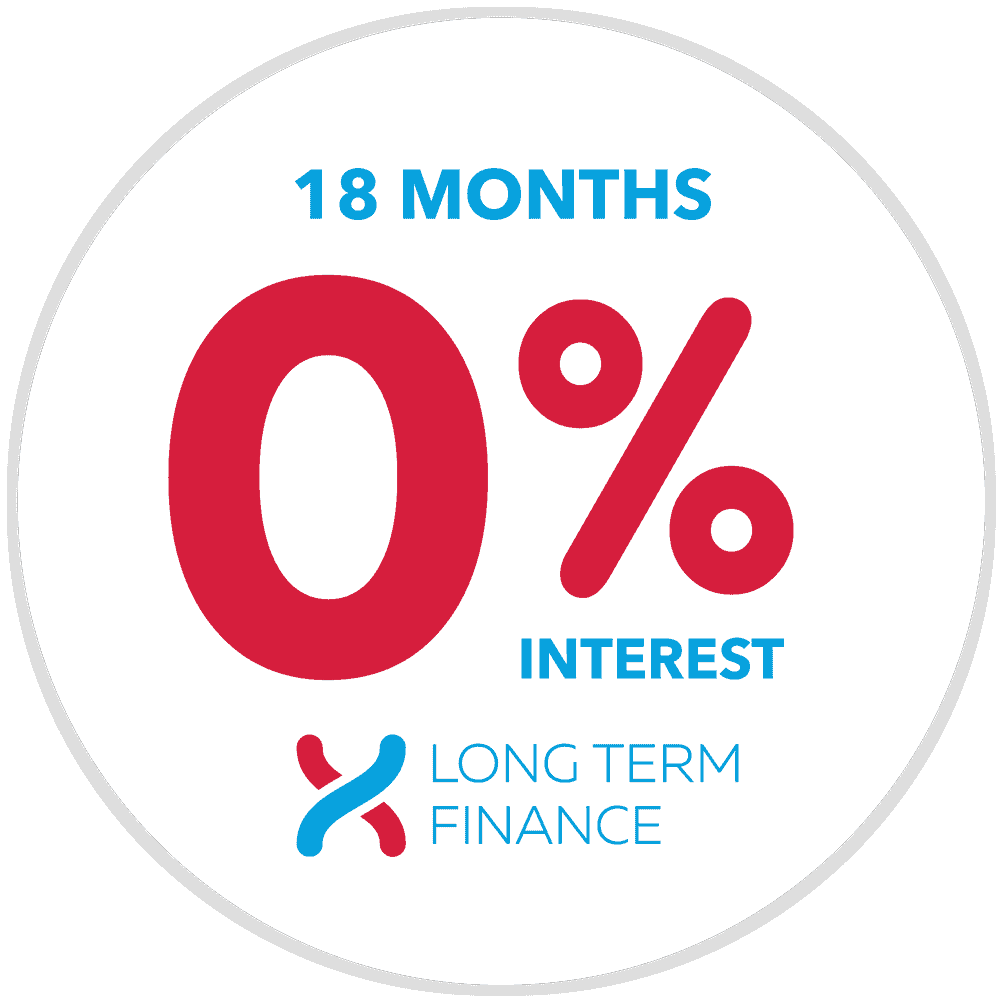
Been putting this off because of the cost?
We’ve partnered with Q Mastercard® to offer an 18-month interest-free payment option on renovations. You can get your granny flat done now and stress less about the cashflow.
Learn more about Interest-Free Payment Options
Lending criteria, fees, terms and conditions apply. Mastercard is a registered trademark and the circles design is a trademark of Mastercard International Incorporated.
Please note: All information is considered correct at the date of publication. Building regulations, costs, and council requirements change over time. Superior Renovations is not liable for the accuracy of information that has changed since publication. Always confirm current rules with Auckland Council and a Licensed Building Practitioner before committing to a project.
The post Garage to Granny Flat Auckland 2026: Cost + Consent Guide appeared first on Superior Renovations. #superiorrenovations


Comments
Post a Comment