Shower Glass for Auckland Bathrooms: Types, Frameless & Care
Originally posted on Shower Glass for Auckland Bathrooms: Types, Frameless & Care
Superior Renovations - Auckland’s Trusted Home Renovation Specialists
Shower Glass for Your Auckland Bathroom: Choosing the Right Glass Panel, Spec and Care
The shower glass is one of the last things specified in a bathroom and one of the first things anyone notices walking in. Get the type and finish right and a tight ensuite reads twice its size; get it wrong and you’re chasing water spots every morning or staring at a green tinge on a panel that should look crisp.
This guide covers what we actually specify across Auckland bathrooms: the glass types, the privacy-versus-light trade-off, frameless versus framed, the suppliers behind the product, the safety standards that have to be met, and how to keep it clear. We’ve completed more than 1,000 Auckland renovations, so the advice here is what holds up in our humidity and salt air, not a generic product brochure.
Choosing a Shower Glass Panel: The Main Types
The glass type sets both the look and the upkeep, and the right call depends on the room and who uses it. Here’s what we work with most across Auckland homes, from a Ponsonby villa to a modern Mt Eden apartment.
- Clear glass. The open, gallery-style look. It makes a small bathroom feel larger and shows off good tiling. The catch is upkeep — clear glass needs a regular wipe to stay free of water spots and soap scum.
- Frosted glass. Diffuses light, blurs the view, keeps the room bright. The sensible pick for shared family bathrooms in suburbs like Remuera or Epsom.
- Tinted glass. Grey or bronze tones for a modern edge, common in Grey Lynn renovations. It buys some privacy but darkens the room, so the lighting plan has to allow for it.
- Textured glass (fluted, reeded, rain). Decorative and practical at once — privacy plus better at hiding water marks than clear. Popular in higher-end Herne Bay work.
- Low-iron glass. Ultra-clear, without the faint green cast of standard glass. The premium choice when the tiling deserves to be seen properly — you’ll see it in a lot of St Heliers builds.

External example: royalglass.co.nz/services/reeded-glass
Getting the Privacy and Light Balance Right
Texture and transparency decide how private the shower feels, how much daylight reaches the room, and how much cleaning you’ll be doing. In Auckland, where homes run from cosy Grey Lynn bungalows to open family pads in Howick, that balance is what separates a bathroom that works from one that doesn’t.
If privacy is the priority, go higher opacity — frosted or textured. If an open, light-filled feel matters more, stay with clear or low-iron. Maximising natural light also trims your reliance on artificial lighting, which lines up with EECA’s guidance on energy-efficient homes.
Transparency, from clear to opaque
- Fully transparent (clear). Maximum light, the illusion of more space, zero privacy. Fine for a solo ensuite or a compact CBD apartment.
- Semi-transparent (tinted or low-iron). Tinted adds a hue for moderate privacy; low-iron keeps the clarity without the green cast. Works well in modern Parnell homes.
- Obscured (frosted or etched). Soft light, blurred view, high privacy. The right call for a shared family bathroom in a suburb like Pakuranga.
- Opaque (heavily textured or patterned). Almost no see-through, still passes light. Suits guest bathrooms and ensuites in older villas.
Under NZ building standards, all shower glass has to be safety-rated and is usually toughened so it breaks safely, as set out in Building Code clause B1 (Structure). Even fully clear glass has to clear that bar.
A closer look at textures
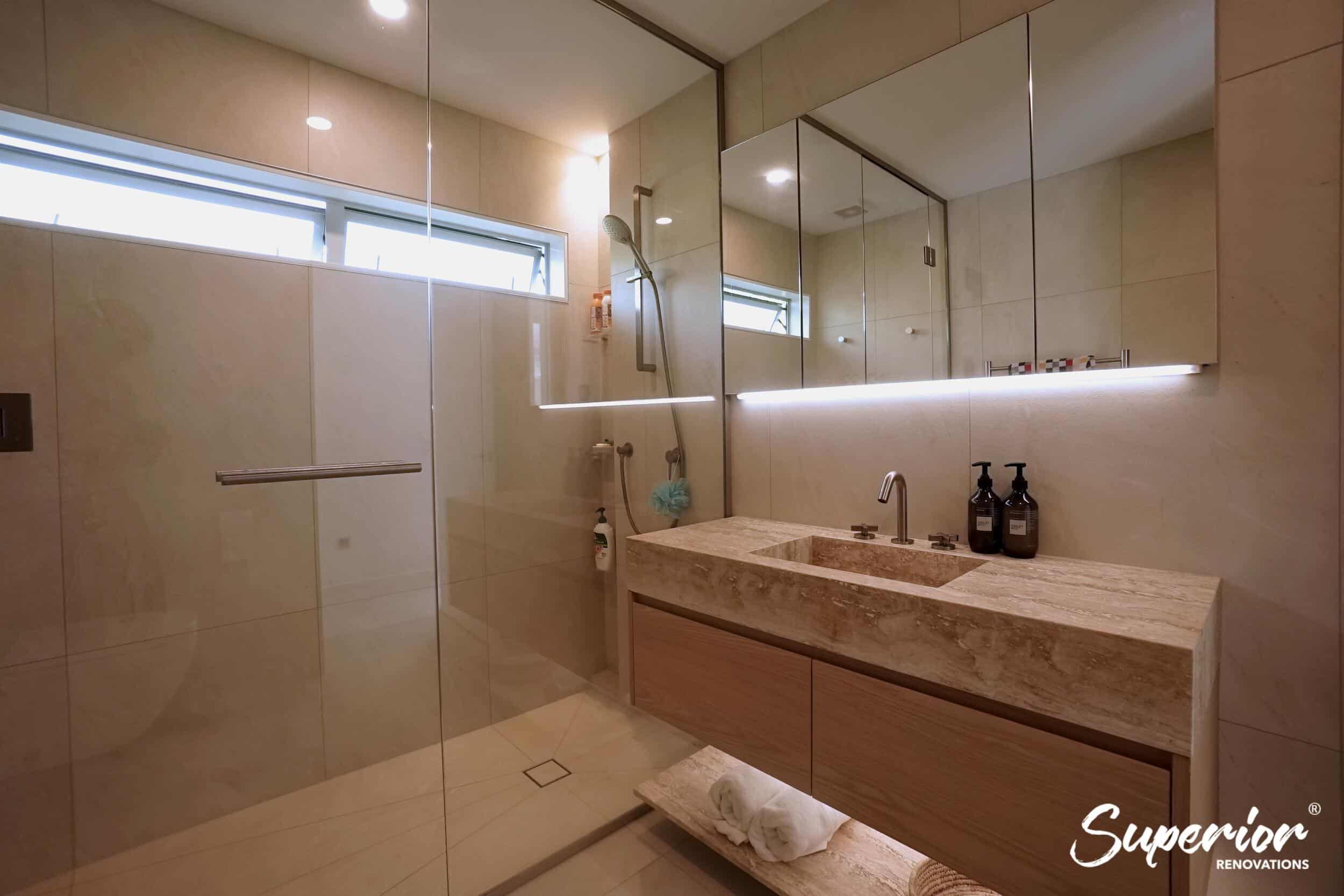
Smooth is the baseline — easy to clean, but it shows fingerprints and water spots. Fluted or reeded glass has vertical ridges that catch the light and give privacy without fully blocking it; it also hides water marks better than smooth. Frosted or etched glass is acid-etched or sandblasted for a matte finish that scatters light and shows grime less. Patterned glass — rain or hammered effects — adds a custom, decorative feel and hides imperfections, though the pattern takes a bit more effort to keep clean.
| Texture | Transparency | Pros | Cons | Best for |
|---|---|---|---|---|
| Smooth | High (clear/tinted) | Easy to clean, maximises light | Shows spots, low privacy | Compact city apartments |
| Fluted/Reeded | Medium | Hides marks, good privacy-light balance | Can trap soap, pricier | Family bathrooms |
| Frosted/Etched | Low | High privacy, low maintenance | Can feel enclosed | Shared bathrooms |
| Patterned | Low to medium | Decorative, conceals grime | Harder to clean, custom cost | Designer renovations |
One thing we tell every client: look at a sample under your own bathroom lighting before you commit. Glass that reads soft and elegant in a showroom can look completely different in a north-facing Auckland bathroom at 7am.
“Fluted glass is one of the easiest ways to get privacy and a bit of character without closing the room in,” says Cici Zou, Designer at Superior Renovations. “I just tell people to test a sample under their own lights first — the effect shifts with the room.”
Frameless vs Framed: Which Suits Your Bathroom
Frameless glass is the single biggest decision most people make on their shower, and it’s where the budget moves most. It’s surged in popularity across Auckland, and for good reason — but it isn’t automatically the right answer for every bathroom.
What frameless actually is
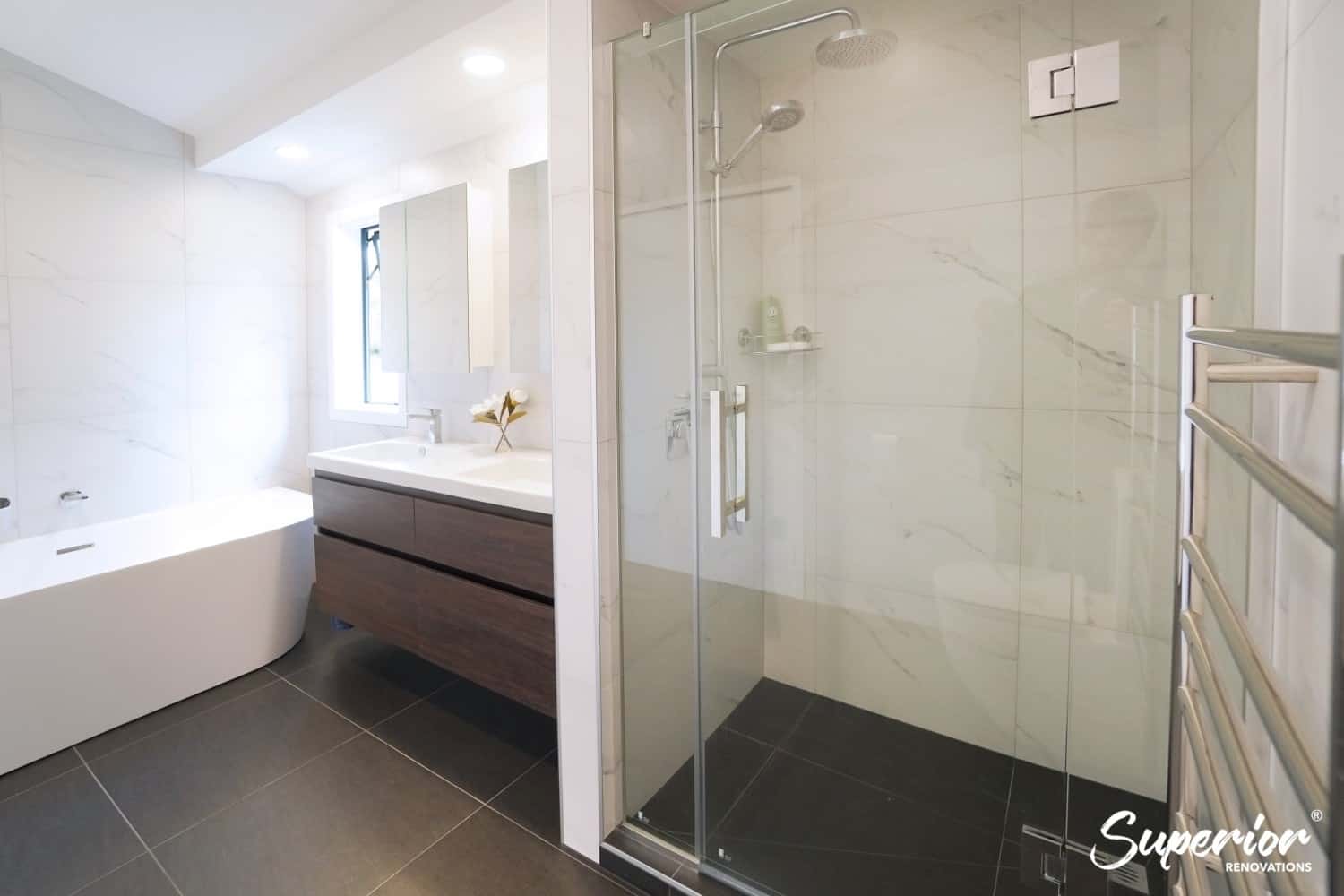
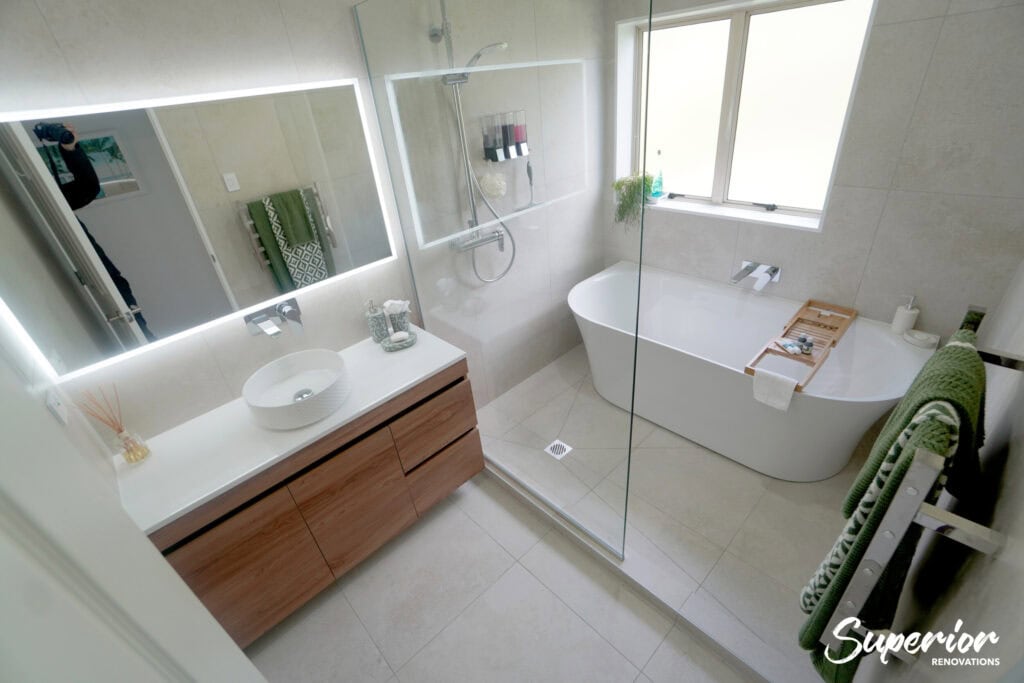
A frameless shower uses thick toughened glass, usually 10–12mm, held by discreet brackets, hinges or channels instead of a full metal frame. The result is minimalist and open, with the glass doing the visual work. It still has to meet AS/NZS 2208 under Building Code clause B1, and because the glass carries more load and there’s no frame to hide behind, the install has to be precise to stay leak-free.
The case for frameless
Frameless makes a room feel larger by removing the visual barrier of a frame. It’s easier to clean — no frame crevices for mould to sit in — and it lets light bounce around, which helps on grey Auckland days. The thicker glass is durable, and you can run it clear, frosted or textured to suit anything from a beachy Takapuna look to urban Britomart. For a small bathroom, frameless is often the thing that tips it from cramped to genuinely luxurious.
The trade-offs
It costs more — typically 20–50% above framed, given the thicker glass and specialised fittings. It demands a precise install, because a small misalignment causes leaks or instability, and that’s a real risk in older homes with floors that aren’t level. Water containment takes more care without a frame, so the sealing has to be right. In an exposed coastal spot like Piha, the hardware needs to be properly corrosion-resistant or it won’t last.
| Aspect | Framed | Frameless |
|---|---|---|
| Cost (glass + install) | Lower ($500–$1,500) | Higher ($1,200–$3,000+) |
| Look | Traditional, structured | Modern, seamless |
| Install | More forgiving | Precise, pro-only |
| Maintenance | Frames trap dirt | Easier clean, seals need attention |
| Durability | Good, frames can corrode | Excellent with thick glass |
“Frameless brings an effortless, airy feel — it’s often what makes a small bathroom feel properly luxurious,” says Dorothy Li, Senior Designer at Superior Renovations. “The honest caveat is it only works if the install is exact. It’s not a DIY job.”
Thinking about frameless for your bathroom? Book a free in-home consultation and we’ll talk through whether it suits your space and budget — or try the bathroom renovation cost calculator for a ballpark first.
The Suppliers Behind Auckland Shower Glass
When we spec a bathroom, the shower glass panel comes from established NZ suppliers who can prove their product meets the Building Code and back it with a warranty. You don’t need to source or coordinate any of this — as your renovation company we handle supply and install — but it helps to understand who makes what, and why it matters for a home dealing with Auckland humidity and, near the coast, salt air.
Metro Glass
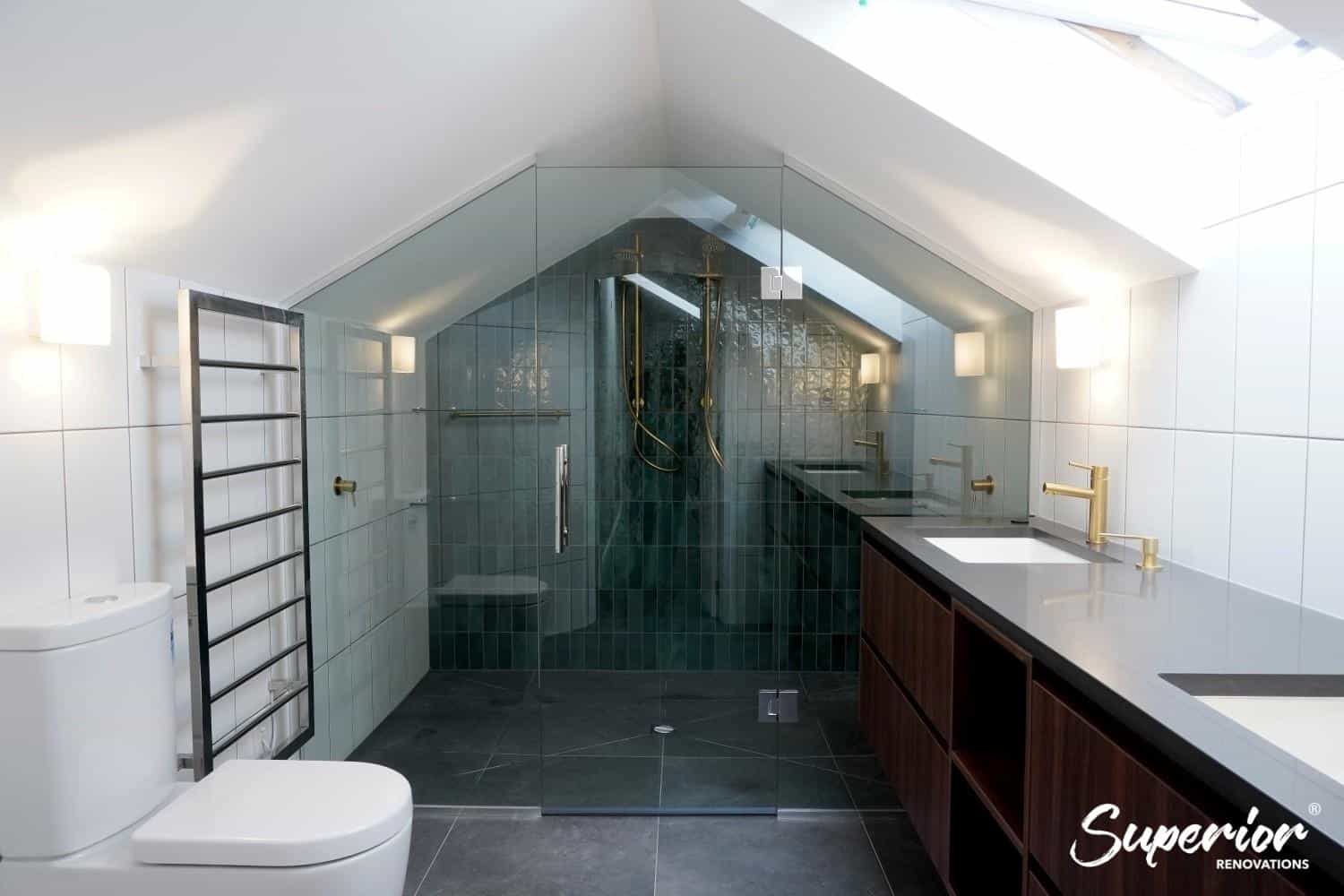
Metro Glass is one of the larger players in the NZ glass market, with a strong Auckland presence. They make toughened shower glass for everything from frameless panels to sliding doors, in clear, low-iron and frosted finishes, all meeting NZ safety standards. Their shower glass range includes 10mm panels suited to larger bathrooms in areas like Remuera, plus custom tinting if you’re matching a bronze tone to a villa. Basic panels start around $600 and scale up for custom work.
“Low-iron panels are what we reach for when someone wants that seamless, high-end finish and the tiling deserves to be seen properly,” says Kevin Yang, Lead Designer at Superior Renovations.
Mico
Mico is a long-standing Auckland bathroom supplier with a broad range of shower glass doors and panels — pivot doors, fixed screens, semi-framed and frameless. Their shower doors and panels range runs from clear glass around $400 up to premium frosted near $1,200, with rust-resistant hardware that matters in coastal suburbs like Takapuna.
Reece
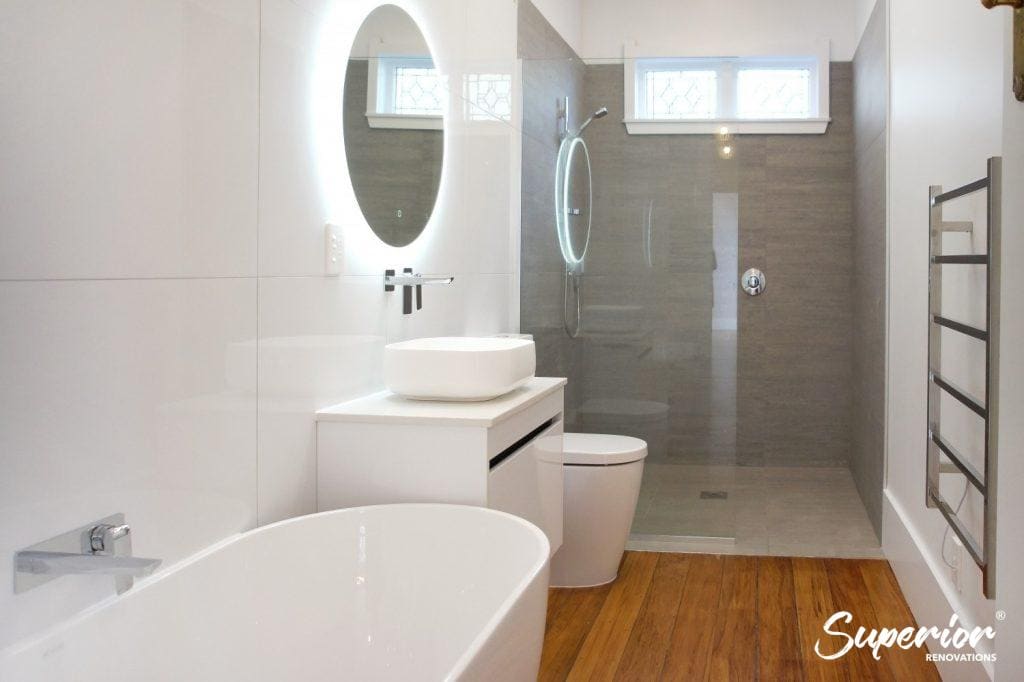
For higher-end work, Reece carries quality imports and local fabrications, including ultra-clear low-iron and tinted glass suited to contemporary apartments. Their shower systems range covers thicknesses from 8mm to 12mm and textures like etched or fluted, often with easy-clean coatings that cut maintenance in humid conditions.
| Supplier | Specialties | Price range (NZD) | Best for | Certification |
|---|---|---|---|---|
| Metro Glass | Clear, frosted, low-iron, custom tinting | $600–$2,000 | Luxury and custom renos | AS/NZS 2208 |
| Mico | Pivot doors, fixed screens, textured | $400–$1,500 | Budget to mid-range | Safety glass standards |
| Reece | Low-iron, tinted, frameless screens | $800–$2,500 | Premium custom designs | AS/NZS 2208 |
Plumbing World is also worth knowing for practical selections often bundled with a full bathroom fit-out, and Plumbline for quality hardware and fittings. The value of using a renovation company here is that we already know which supplier suits which job — the glass gets matched to the home and the rest of the bathroom, not picked off a shelf in isolation.
“Half the job is knowing which supplier suits which bathroom,” says Alison Yu, Designer at Superior Renovations. “We’re matching the glass to the home and the finish, not just ordering a panel.”
The Safety Standards That Apply in NZ
Shower glass in a wet area has to be safe and compliant, or it won’t pass inspection — and an uncertified panel can cause grief with insurance and resale later. Here’s what has to be met.
AS/NZS 2208 — the one that’s non-negotiable
AS/NZS 2208 is the joint Australian/New Zealand standard for safety glazing. It means the glass is toughened or laminated to break safely — into small, blunt pieces rather than sharp shards. For shower glass it’s mandatory, and it matters most in homes with kids or older residents, where the injury risk from a break is highest. Under Building Code clause B1, all glazing in high-risk areas like showers must comply. The AS/NZS 2208 mark is etched permanently into the glass — that’s where to check for it.
The Building Code clauses that come up
Three clauses are relevant to a shower. B1 (Structure) means the glass can take impact and load — someone leaning on a door. G12 (Water Supplies) covers the waterproofing around the shower that stops leaks. F2 (Hazardous Building Materials) requires safety glass to reduce injury from breakage. These are set out on building.govt.nz, and evidence of compliance is needed at consent stage. Auckland Council inspects bathrooms closely, so certified glass keeps approvals moving.
“Across the mix of old and new homes we work on, the safety standard is the line that doesn’t move,” says Dorothy Li, Senior Designer at Superior Renovations. “The design can flex. AS/NZS 2208 can’t.”
| Standard | What it covers | Why it matters |
|---|---|---|
| AS/NZS 2208 | Safety glazing | Glass breaks safely; mandatory in wet areas |
| Building Code B1 / G12 / F2 | Structure, water, hazardous materials | Required for consent sign-off |
| NZS 4223 | Glazing in buildings | Referenced in Auckland Council consents |
How the Glass Actually Gets Installed
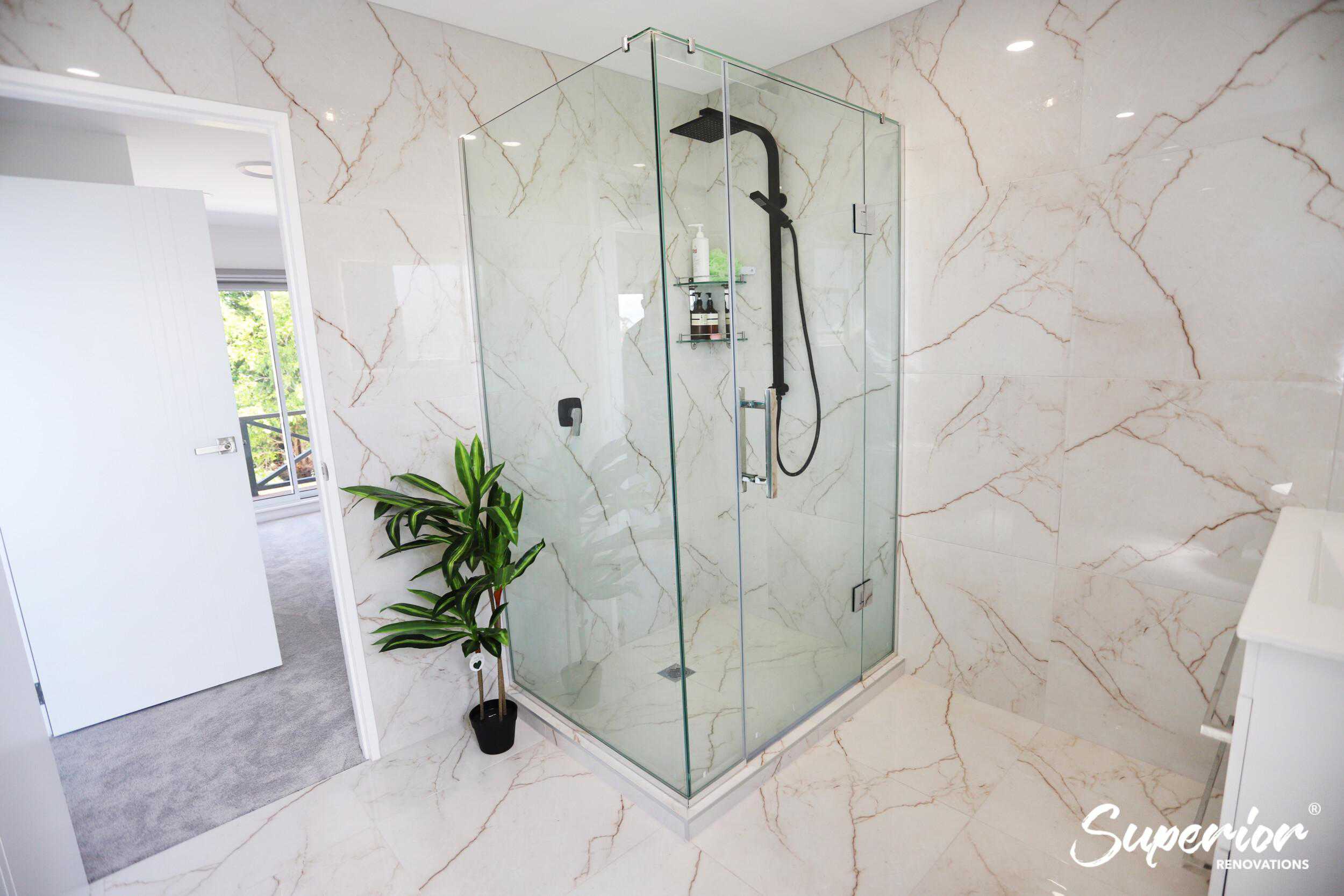
Installation is where a good-looking panel either stays leak-free for years or turns into a problem — and frameless glass in particular is not a weekend job. It’s precise work: accurate measurements off walls that are rarely perfectly plumb in older Auckland homes, secure fixings into studs, and watertight sealing that meets the Building Code (G12 for watertightness, B1 for structure).
When Superior Renovations manages your bathroom, the glass is measured, supplied and installed by our team as part of the build — waterproofing, sealing and council sign-off included — so there’s no coordinating a separate glazier or chasing a certificate of compliance yourself.
Superior Renovations
What happens, step by step
- Prep. Walls are checked for plumb, and the tiled surface and waterproofing are confirmed sound before anything is fixed.
- Measure. Width is taken at top and bottom, because walls in character homes aren’t straight. For an over-bath screen, the bath lip is factored in.
- Fit and fix. Framed screens sit in channels fixed to studs; frameless panels are secured with brackets or U-channels into reinforced walls, using corrosion-resistant stainless hardware.
- Seal. Silicone is applied and left to cure before use, then the join is water-tested.
- Sign-off. Stability, operation and watertightness are checked, and a certificate of compliance is obtained where the job requires it.
A standard frameless setup takes a day or two; an older home with uneven floors and odd angles — many Ponsonby terraces, for instance — takes longer. Where structural changes are involved, Auckland Council consent may be required, so it’s worth checking Auckland Council’s building and consents pages early. On a managed renovation we handle that in-house.
“A leak-free finish starts with prep,” says Cici Zou, Designer at Superior Renovations. “Across the range of homes we work on, the trick is adapting to each one’s quirks rather than forcing a standard install.”
Warranties and Your Rights
A new shower glass panel shouldn’t fog, crack or fail early — and if it does, knowing what’s covered saves real money. Most warranties cover manufacturing defects like bubbles or faulty tempering, but not misuse or poor installation.
Manufacturer’s warranties on the glass typically run 5–10 years. Installation warranties from a professional usually cover labour for 1–2 years against leaks or misalignment. Hardware often carries its own 5-year cover against rust — important in a coastal spot like Mission Bay. Underneath all of that, the Consumer Guarantees Act requires products to be fit for purpose and durable for a reasonable time, whether or not there’s a written warranty.
| Supplier | Glass warranty | Coverage | Common exclusions |
|---|---|---|---|
| Metro Glass | ~10 years | Defects, shattering, hardware (5 yrs) | Install errors, abuse |
| Mico | ~5–7 years | Manufacturing flaws, seals | Chemical damage |
| Reece | ~10–15 years | Extended on premium lines, corrosion | Normal wear, harsh cleaning |
Warranty terms change, so confirm the current cover with the supplier at the time of purchase. The common exclusions to watch are abrasive cleaners, impact damage, and — in Auckland’s hard-water areas — mineral buildup, which keeping the glass clean prevents.
“A warranty isn’t just paperwork — it’s the assurance the bathroom holds up in our climate,” says Kevin Yang, Lead Designer at Superior Renovations. “We document supply and install so that if anything ever does go wrong, the claim is straightforward.”
Keeping Shower Glass Clear
In Auckland’s humidity, the difference between glass that looks new for years and glass that hazes over is a short routine, not hours of scrubbing. Hard-water minerals, soap residue and mould all thrive in a damp bathroom and, left long enough, can etch the glass permanently.
The routine is simple. Squeegee the glass after each shower — thirty seconds, and it’s the single biggest thing you can do. Once a week, spray a 50/50 white vinegar and water mix, leave it five to ten minutes, scrub gently, rinse and squeegee dry. For stubborn limescale, a baking soda paste left fifteen minutes then scrubbed off works, though you should skip it on coated glass and check the manufacturer’s guidance first. Run the extractor fan to cut the moisture that feeds mould. Consumer NZ’s cleaning product reviews are a good reference for what works without being harsh.
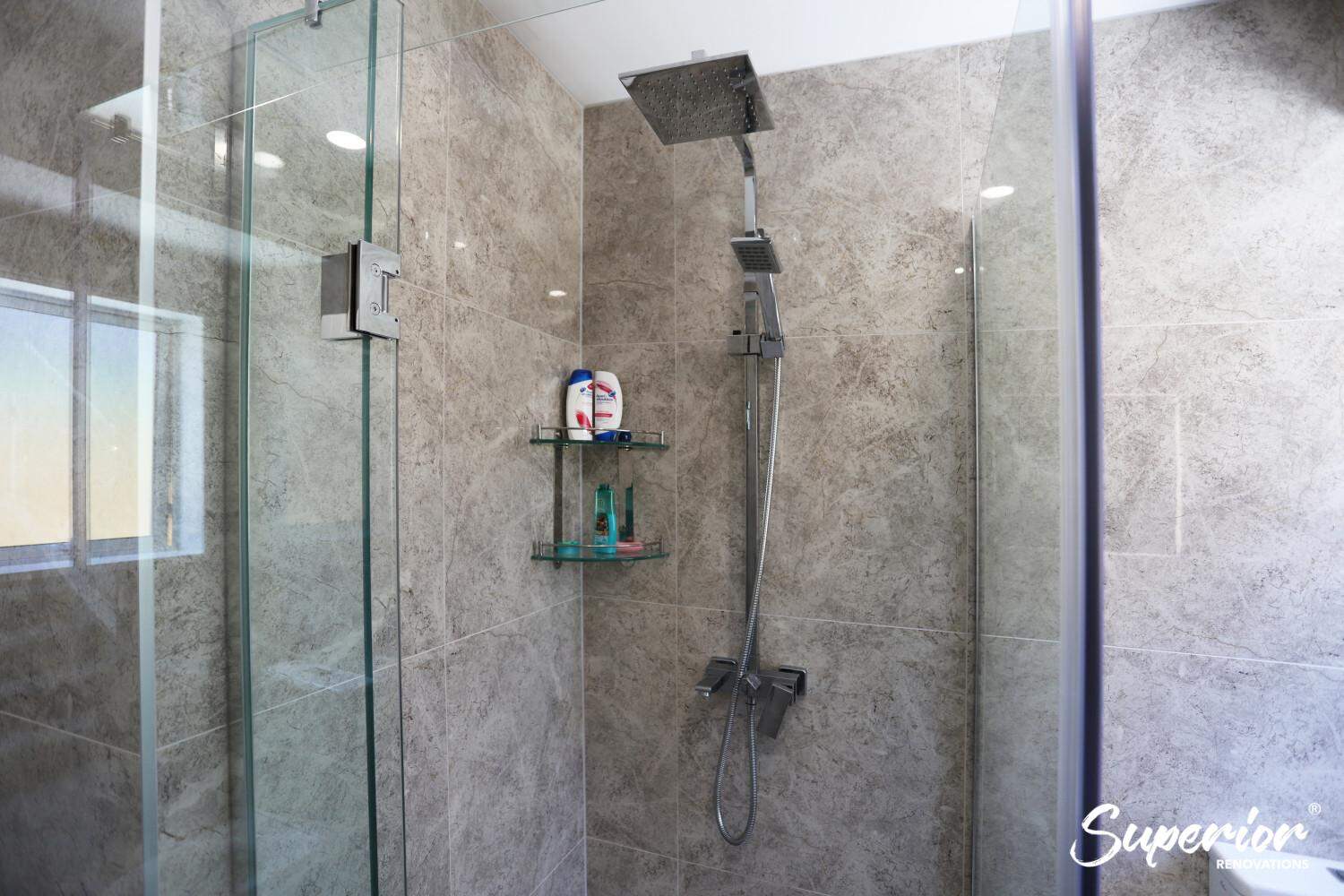
Different glass needs slightly different care. Clear glass shows spots most, so daily squeegeeing matters; frosted and textured glass hides marks but traps residue in the grooves, where a soft brush helps. For coated glass, skip harsh chemicals so the coating lasts, and near the coast, rinse salt residue off weekly.
“Consistency beats intensity,” says Alison Yu, Designer at Superior Renovations. “A quick daily squeegee keeps the glass looking premium and saves the heavy cleans.”
Hardware and Fittings: The Part That Holds It Together
The hinges, clips, channels, handles and seals are what decide whether a shower stays secure and splash-proof or turns into a wobbly, leaky annoyance. In Auckland’s humid, sometimes coastal conditions, the material choice matters as much as the glass.
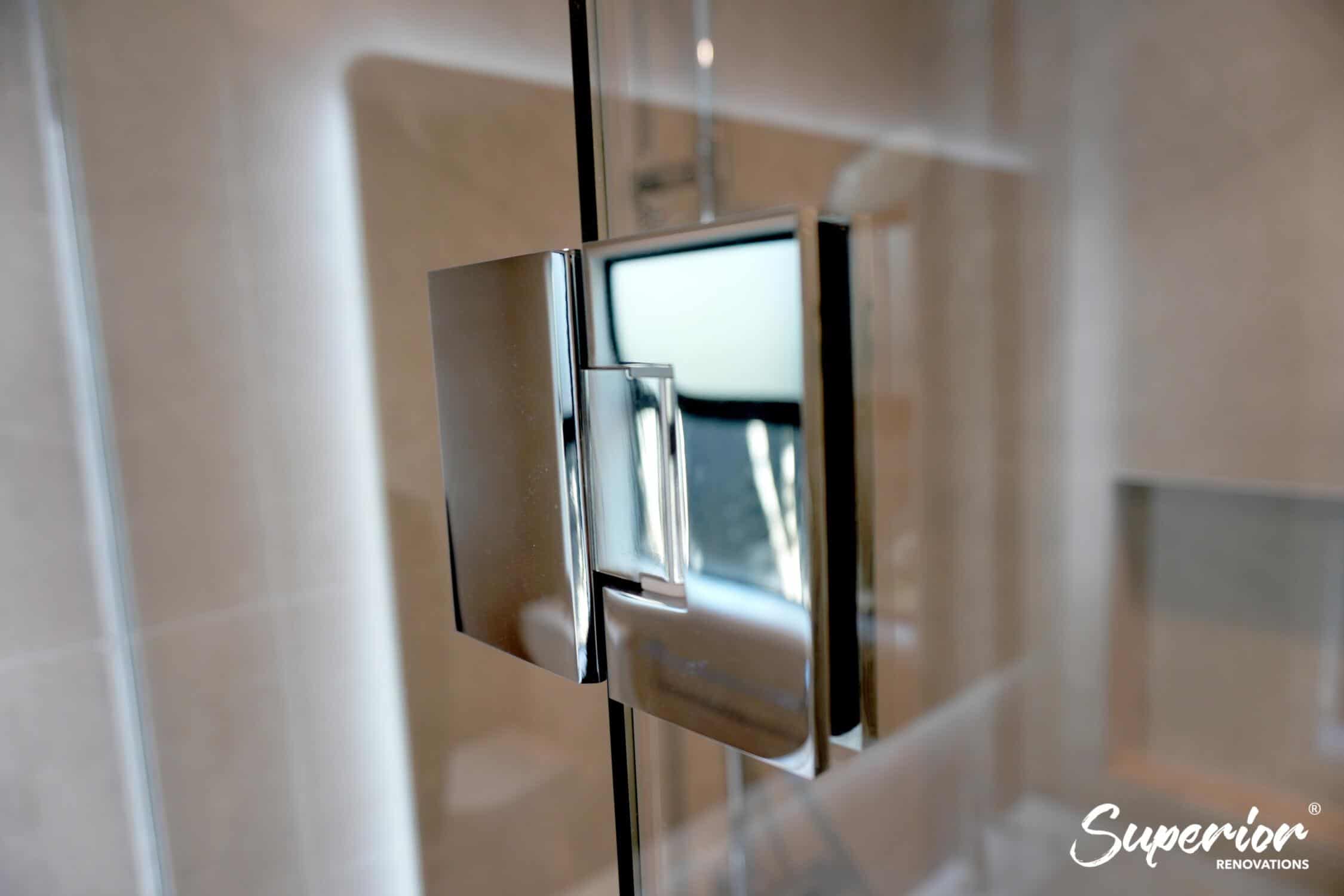
Fittings need to be rust-resistant, strong and compliant. Stainless steel — grade 304 or 316 — or brass resists the corrosion that salt air accelerates in suburbs like Devonport. The Building Code requires fittings to contribute to overall stability and watertightness under clause G12. Frameless setups need heavy-duty, minimal hardware — glass-to-glass hinges or point-fixed clamps — to keep the clean look, while framed setups use simpler, more forgiving tracks and rollers.
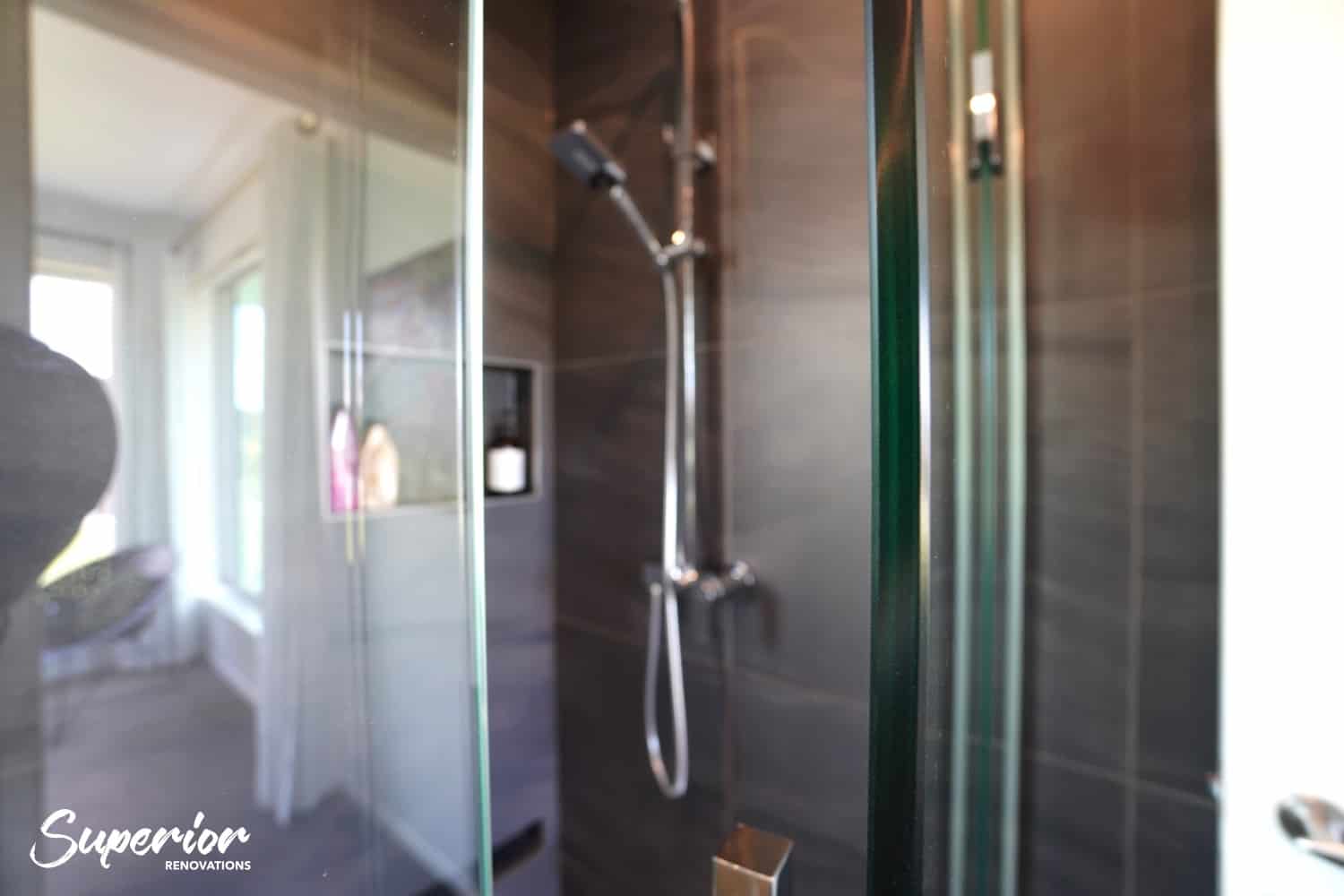
What to prioritise: marine-grade corrosion resistance, load capacity rated for 10mm+ panels, adjustability for the uneven walls common in older homes, and a finish — matte black, chrome or brushed nickel — that matches the rest of the bathroom. Plumbline carries a solid range of hinges and handles; see their shower components. As with the glass, on a managed renovation we specify and supply the fittings to suit your enclosure.
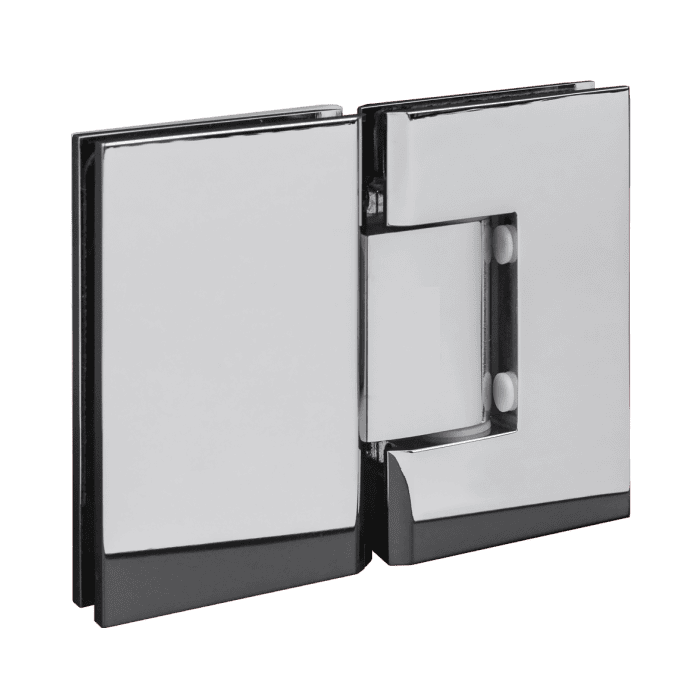
External example: plumbline.co.nz
“The right hardware is what takes a shower from functional to genuinely good,” says Alison Yu, Designer at Superior Renovations. “It’s a small part of the budget that quietly carries the whole enclosure.”
Getting Your Shower Glass Right
The glass is one of the details that decides whether a finished bathroom feels considered or compromised. The simplest way to get it right is to have it specified and installed as part of the whole renovation, so the glass, the tiling, the waterproofing and the consents all line up.
That’s what we do. If you’re planning a bathroom renovation, our designers will talk you through the right glass for your home, your finish and your budget as part of a free in-home consultation.
Book your free in-home consultation — or try the bathroom renovation cost calculator to ballpark your project first. For more inspiration, browse our Bathroom Design Gallery.
What's the best type of shower glass for a small Auckland bathroom?
Clear or low-iron glass works best in a small bathroom because it maximises light and makes the space feel larger. If the bathroom is shared, frosted glass adds privacy without closing the room in.
How much does a frameless shower glass panel cost in Auckland?
A basic frameless single-panel setup runs roughly $1,200 to $2,000 supplied and installed, and a full enclosure with a door can reach $3,000 or more. Glass type, size and hardware all move the figure.
Is frameless shower glass worth it over framed?
Frameless gives a more open, seamless look and is easier to clean, but it costs 20 to 50 percent more and needs a precise professional install. Framed is more budget-friendly and more forgiving, which suits busy family bathrooms.
What safety certification does shower glass need in New Zealand?
Shower glass must meet AS/NZS 2208 for safety glazing, plus the relevant Building Code clauses (B1, G12 and F2) and NZS 4223 for glazing. The AS/NZS 2208 mark is etched permanently into the glass.
Which Auckland suppliers make shower glass panels?
Metro Glass, Mico and Reece are the main NZ suppliers, ranging from budget through to premium low-iron and custom work. On a managed renovation, your renovation company specifies and supplies the glass to suit your home.
How do I stop my shower glass going cloudy?
Squeegee the glass after every shower and do a weekly clean with a 50/50 white vinegar and water mix. In Auckland's hard-water areas this prevents the mineral buildup that eventually hazes and etches the glass.
Can I install frameless shower glass myself?
It's not recommended. Frameless panels are heavy and need exact alignment and wall reinforcement to stay leak-free and safe, so professional installation is the sensible choice.
Is the shower glass included when Superior Renovations does my bathroom?
Yes. We specify, supply and install the glass as part of the bathroom renovation, with waterproofing and council compliance handled in-house, so you're not coordinating a separate glazier.
Need more information?
Take advantage of our FREE Complete Home Renovation Guide (48 pages). Whether you’re already renovating or still deciding, this guide — which includes a free 100+ point checklist — will help you avoid costly mistakes.
- Download Free Renovation Guide (PDF)
- Plan your budget with our Cost Calculator
- See finished projects in our Bathroom Design Gallery
- Explore ideas in our Kitchen Design Gallery
- Read more on our Blog
Still have questions?
Book a no-obligation consultation with the team at Superior Renovations — we’d love to talk through your bathroom renovation.
[contact-form-7]
Or call us on 0800 199 888

Have you been putting off getting renovations done?
We’ve partnered with Q Mastercard ® to provide an 18-Month Interest-Free Payment Option, so you can enjoy your new home now and stress less.
Learn more about Interest-Free Payment Options*
*Lending criteria, fees, terms and conditions apply. Mastercard is a registered trademark and the circles design is a trademark of Mastercard International Incorporated.
The post Shower Glass for Auckland Bathrooms: Types, Frameless & Care appeared first on Superior Renovations. #superiorrenovations


Comments
Post a Comment