Single vs Double Glazing NZ: Is It Worth Upgrading?
Originally posted on Single vs Double Glazing NZ: Is It Worth Upgrading?
Superior Renovations - Auckland’s Trusted Home Renovation Specialists
Single vs Double Glazing NZ: Should You Upgrade? A Practical Decision Guide for Auckland Homeowners
Quick answer: For most Auckland homes built before 2000, upgrading from single to double glazing is worth it — reducing heat loss through windows by up to 80%, cutting power bills, and adding measurable resale value. With green home loans now available at 0–1% interest from major NZ banks, the financial case has never been stronger.
Here’s the honest version of this conversation: single glazing is not going to kill you. Plenty of Aucklanders live in older villas and bungalows with original sash windows and manage just fine — expensive power bills, a bit of condensation on cold mornings, maybe a heat pump running longer than it should. You get used to it.
But “used to it” is not the same as “good enough.” And when every major New Zealand bank is now offering you money at 0–1% interest to fix it, the conversation shifts from “can I afford this?” to “can I afford not to?”
This article is not a technical deep-dive into insulated glass units or R-values. We have another article that covers exactly that. This one is about the decision itself — whether upgrading makes sense for your home, your timeline, and your budget. It covers windows, sliding doors, and skylights. It covers the green loan products that make this genuinely affordable right now. And it gives you a clear framework to decide.
We have worked on enough Auckland homes to know that this question is more common than people admit. The 1970s brick-and-tile in Papatoetoe. The post-war bungalow in Hillsborough. The Grey Lynn villa with the gorgeous timber sashes that let a cold southerly straight through every July. All different homes, different budgets, different decisions.
Let’s work through it.
Superior Renovations
What Single Glazing Is Actually Doing to Your Home (and Your Power Bill)
Single glazing has been around for centuries. One pane of glass, a frame, and that’s it. For most of New Zealand’s housing history, it was the only option — and for homes built before the updated NZ Building Code requirements took effect, it was simply what you got.
The problem is physics. Glass is an excellent conductor of heat — which is precisely the opposite of what you want in a window. In a well-insulated Auckland home, windows and glazed doors can account for up to 60% of total heat loss. Add single-glazed skylights into the mix and the number climbs further.
In practical terms: your heat pump runs longer, your power bill grows, and the rooms furthest from your heating source stay cold. You know the feeling — the bedroom at the end of the hall that never quite warms up, the condensation pooling on the glass every winter morning.
The Condensation Problem in Auckland Homes
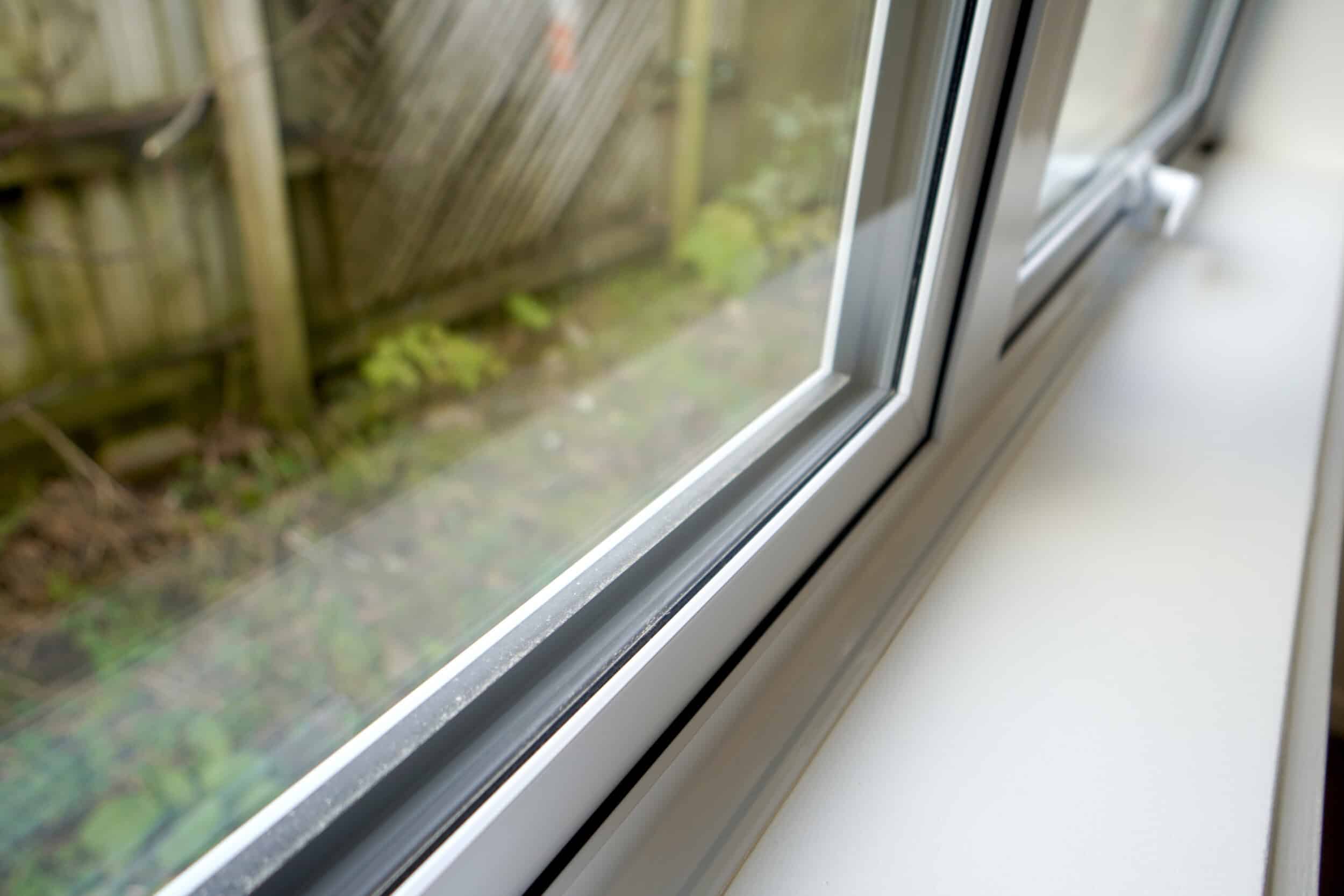
Condensation is not just annoying. It’s the precursor to mould — and mould is expensive to remediate and genuinely harmful to health, particularly for children and anyone with respiratory conditions. In Auckland’s humid climate, single-glazed windows stay cold to the touch in winter, and the warm air inside condenses on the surface. Do that for enough years and you’re looking at black mould on the frames, on the GIB beside the window, and sometimes on the sill. We’ve seen it in homes across West Auckland, in older North Shore properties, and in character homes all over the isthmus.
💡 Quick tip: If you’re seeing condensation on the inside of your windows regularly in winter, single glazing is almost certainly contributing — even if you have ceiling and wall insulation. The window surface is the coldest point in the room, and warm moist air will always find it.
The Sound Issue Nobody Talks About Enough
Acoustic performance is the benefit most people underestimate before they experience it. Single glazing offers essentially no barrier to traffic noise, neighbourhood sound, or the general ambient noise of urban Auckland. According to building.govt.nz, glass is typically the weakest barrier to noise in the building envelope — and standard single glazing does very little for most sound frequencies.
If you live near a main road, under a flight path, or in any of the busier parts of Auckland — think Dominion Road, Great North Road, the North Shore motorway corridors — this matters more than you might expect. Double glazing with a good cavity width makes a meaningful difference. Not silence, but noticeably quieter.
When Is Single Glazing Not a Problem?
To be fair: single glazing is not universally wrong for every situation. If your home is already warm, dry, and comfortable, and your power bills are reasonable — and you’re not planning to sell for many years — the urgency is lower. If your frames are rotten or badly corroded and need full replacement anyway, the conversation becomes about which glazing type to specify in the new frames, not whether to upgrade at all.
The situations where single glazing genuinely is a problem: regular condensation and mould, high winter heating costs ($200+/month), draughts around the frames, noise intrusion affecting sleep or work-from-home, and — increasingly — a buyer’s market where double glazing is simply expected.
“The homes I find most telling are the ones where the owners have put in a heat pump, added ceiling insulation, and still can’t get the living room warm. Nine times out of ten, we look at the windows and the answer’s right there — single glazing with old aluminium frames conducting the cold straight through. You can’t out-insulate a window that’s actively working against you.”
— Dorothy Li, Design Manager, Superior Renovations
For a deeper look at how double glazing works technically — spacers, gas fills, Low-E coatings, and R-ratings — read our full double glazing explainer here. For this article, we’ll stay focused on the decision.
Not Just Windows: What to Upgrade and In What Order
Most homeowners default to thinking about windows when double glazing comes up. Fair enough — windows are the most visible, and often the largest glazed surface. But the question of what to upgrade, and in what sequence, deserves more thought.
Sliding Doors and Bifolds: The Overlooked Heat Loss Source
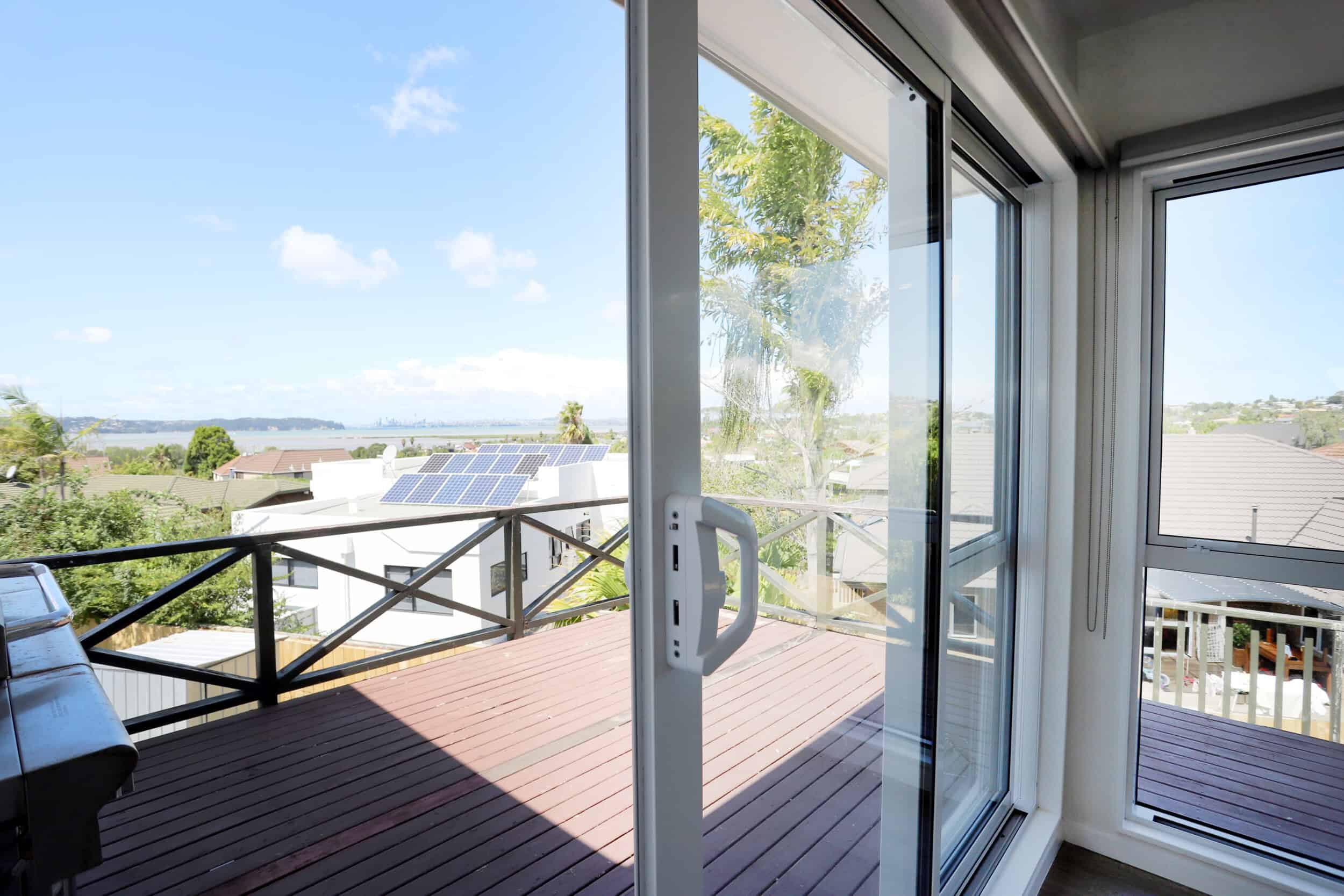
A standard single-glazed sliding ranch slider has more surface area than three medium windows combined. Yet these rarely feature in the conversation. We see this regularly — homeowners invest in double-glazed windows throughout the house but leave their single-glazed sliding doors in place. The result is a thermal envelope with a significant gap in it.
If you have sliding doors opening to a deck in West Harbour, or bifold doors that span the full width of your living area in Hobsonville — these need to be part of the upgrade plan. The good news is that double-glazed slider and bifold replacements are now standard products from every major NZ joinery supplier, and the difference in a living room that has a fully glazed external wall is substantial.
Suppliers like Altus Window Systems have built much of their reputation on high-performance door systems — including their LevelStep™ sill options for indoor-outdoor flow without thermal compromise. Thermosash is another strong option, particularly for thermally broken aluminium joinery. Both are worth getting quotes from when your scope includes doors.
Skylights: Possible, but Different
Skylights are a specialist item. Standard retrofit approaches don’t apply — you’re working with a roof penetration, weather sealing, and a glazing unit designed for a different load than a vertical window. That said, double-glazed skylight units do exist and are well worth specifying if you’re replacing an existing skylight or installing a new one.
If your current skylights are original single-glazed units — common in 1970s and 1980s homes — and they’re showing age (condensation, staining, or frame deterioration), replacement with a double-glazed unit is sensible work. Bundling it with your window upgrade avoids a second round of disruption and usually gets a better total price from your installer.
Which Windows to Tackle First
Budget doesn’t always allow for a whole-house upgrade in one hit. Building.govt.nz recommends prioritising windows in rooms you use most frequently, or rooms that are hardest to heat. The living room, kitchen, and master bedroom are almost always the right starting points. Secondary bedrooms and bathrooms can follow.
For character homes — the pre-1940s villas in Grey Lynn, Ponsonby, and Mt Eden — there’s often a specific concern about changing the character of the windows. Vistalite’s dual GLAZE™ insert window system is designed precisely for this situation: the existing timber frames stay in place, and a new double-glazed unit is inserted into the existing frame. You keep the heritage look. The house gets warm.
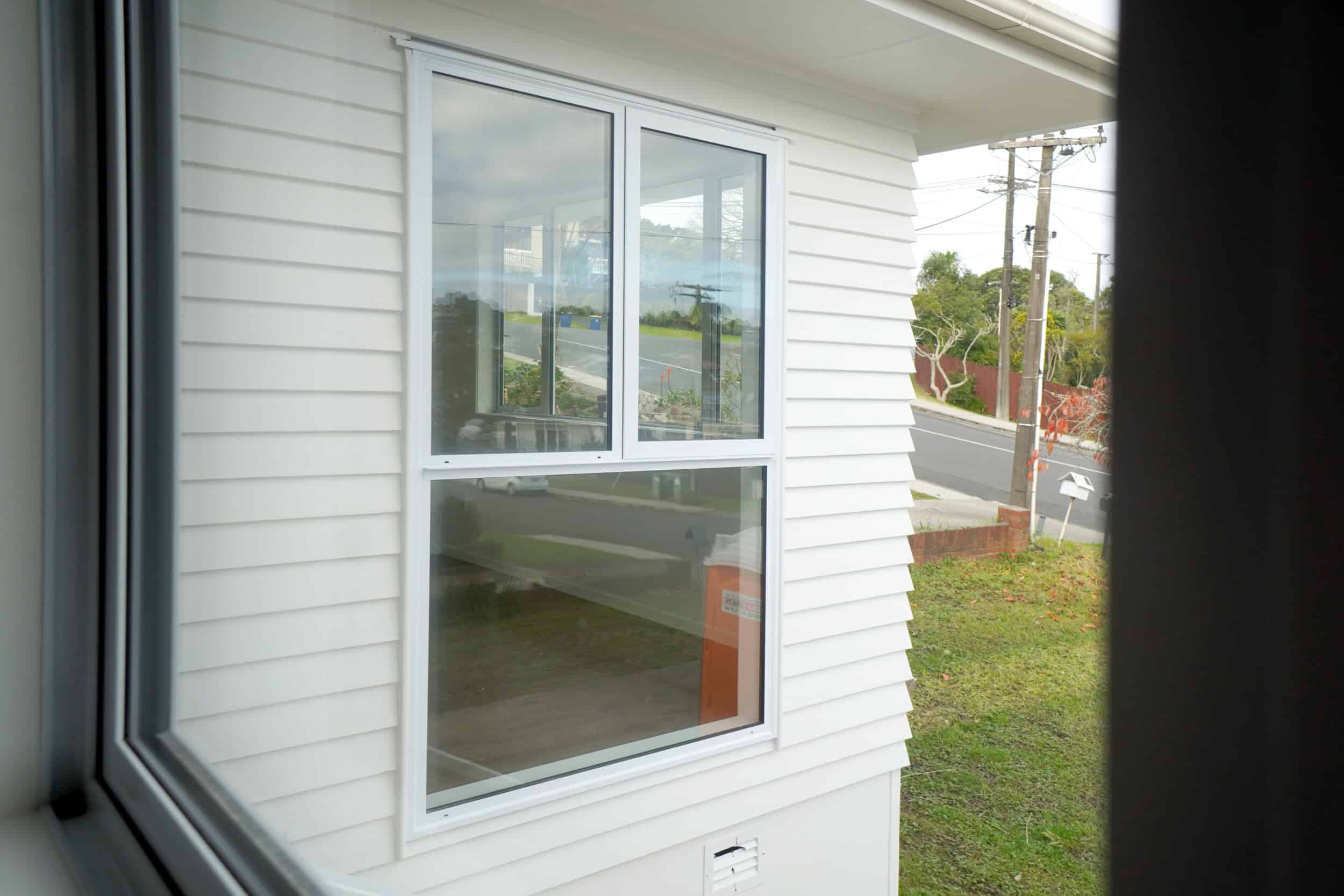
💡 Quick tip: Before committing to a full window replacement, have the frames assessed. If they’re structurally sound — no rot, no serious corrosion — retrofit or insert double glazing is typically the faster and more cost-effective route. Full replacement is the right call when the frames themselves are beyond serviceable life.
Aluminium vs Timber Frames: Does the Frame Type Change the Equation?
It does, slightly. Standard aluminium frames conduct heat — which means a standard aluminium double-glazed unit, while much better than single glazing, still allows some heat transfer through the frame itself. Thermally broken aluminium joinery — where an insulating barrier is built into the frame — is significantly better. Vistalite’s Southern41™ Thermal system uses a pour-and-debridge method to achieve this. Altus and Thermosash have equivalent products.
Timber frames naturally insulate better than aluminium. If you have original timber sash windows in good condition, they’re worth preserving — both for heritage character and thermal performance. Pair them with double-glazed inserts and you have a genuinely high-performing window without destroying the look of the house.
“A lot of our villa and bungalow clients come in expecting they’ll have to choose between keeping the character look or getting warm. The insert double glazing options available now make that a false choice in most cases — you can have both. The frames stay, the glass changes, and the house performs completely differently.”
— Alison Yu, Designer, Superior Renovations
For more on how the full home renovation process integrates window upgrades — including how we sequence this within a broader renovation scope — our home renovation page covers the process in detail.
The Financial Case: Is Double Glazing Worth It in NZ?
Let’s be direct: the pure energy-savings payback on double glazing, calculated in isolation, is long. A full double glazing upgrade for a 100m² Auckland home costs around $35,000 for new frames and IGUs — or $15,000–$18,000 for retrofit double glazing — and the annual saving on power bills alone is typically 10–15%. If your heating bill is $3,000 per year, that’s $300–$450 in annual savings from glazing — not $35,000 worth in the short term.
But nobody who has thought carefully about this decision calculates only energy savings. The actual financial case has at least five components, and when you add them up, it looks different.
The Full Cost Picture
| Upgrade Type | Typical Cost (100m² Auckland Home) | Best For |
|---|---|---|
| Full replacement (new frames + IGU) | ~$35,000 | Old, corroded, or rotten frames |
| Retrofit double glazing (IGU into existing frames) | $15,000–$18,000 | Good aluminium or timber frames |
| Insert windows (aluminium into existing timber frames) | Varies — typically mid-range between retrofit and full replacement | Character homes, heritage timber frames |
| Secondary glazing (add-on pane to existing window) | $8,000–$14,000 | Budget option; partial improvement only |
| Per-window cost (full replacement) | $3,000–$3,500 per window | Staged upgrades, room by room |
Source: Superior Renovations double glazing cost calculator. Use the calculator to get an indicative figure for your specific home.
Property Value: The Buyer’s Perspective
Auckland buyers in the current market are not passive. They know what double glazing is, they know what single glazing means (cold, condensation, high power bills), and they price accordingly. A well-presented home with double glazing consistently commands more interest than an identical property with single glazing.
We completed an energy upgrade for a client in Takapuna — double-glazed windows, wool insulation, and a smart thermostat — for a total of $28,000. The property subsequently sold for approximately $38,000 more than a comparable property nearby that had not been upgraded. That’s not a guaranteed outcome, and results vary with the market — but it illustrates that the resale component of the ROI calculation is real, not theoretical.
For homeowners planning to sell within three to five years, this is often the most compelling part of the financial case. The upgrade costs money now; you recoup a significant portion (and sometimes more) on the sale.
Health and Comfort: The Benefits That Don’t Show Up on a Spreadsheet
Mould remediation in a New Zealand home can cost $2,000–$15,000 depending on severity. A single respiratory illness, particularly in a household with young children or older family members, costs real money — GP visits, prescriptions, time off work. These costs are diffuse and invisible until they happen, but they are real.
Warmer rooms also mean less reliance on supplementary heating. Fewer heat pump hours. Less overnight heating. The kind of background savings that show up in your bill twelve months later and that you only notice because you remember how much worse it was before.
💡 Quick tip: Use our double glazing cost calculator to get an indicative estimate for your home, then run the numbers against a green home loan repayment. The comparison is often more compelling than people expect.
Green Home Loans: Why Every Major NZ Bank Is Now Subsidising This Upgrade
This is where the conversation has changed in the last two years. And it’s worth understanding not just what the loans offer, but why the banks are offering them — because that context helps you understand how seriously they’re taking this.
Right now, every major New Zealand bank has a product specifically designed to help you finance double glazing, insulation, heat pumps, and energy efficiency upgrades at a rate dramatically below their standard home loan rates. These are not marketing gimmicks. They’re substantive financial products with real terms — 0% interest for up to five years in the case of Westpac, 1% fixed for three years across ANZ, ASB, and BNZ.
Green Home Loan Comparison Table
| Bank | Product Name | Rate | Max Amount | Term | Double Glazing Eligible? |
|---|---|---|---|---|---|
| Westpac | Greater Choices Home Loan | 0% (interest-free) | Up to $50,000 | 5 years | ✅ Yes |
| ANZ | Good Energy Home Loan | 1% p.a. fixed | Up to $80,000 | 3 years | ✅ Yes |
| ASB | Better Homes Top Up | 1% p.a. fixed | Up to $80,000 | 3 years | ✅ Yes |
| BNZ | Better Future Home Loan | 1% p.a. fixed | Up to $80,000 | 3 years | ✅ Yes |
| Kiwibank | Sustainable Energy Loan | Standard variable rate | Depends on equity | 7–10 years | ⚠️ Primarily for renewable energy — check eligibility |
Important note: Bank products change. The figures above are accurate at time of writing (April 2026) but terms, amounts, and eligible upgrades can be updated at any time. Always confirm current terms directly with your bank before applying. Most banks require a valid quote from a professional installer before approving the loan — so have your quote in hand first.
Why Are the Banks Doing This?
This is the question most homeowners don’t stop to ask — and it’s worth asking, because the answer clarifies why these products are serious and likely to remain available.
The short version: healthier, more energy-efficient homes are better collateral. A well-insulated, double-glazed home is more comfortable, more marketable, and — banks have data on this — associated with better financial resilience in the homeowner. Lower power bills mean more cash available for mortgage repayments. A warmer, drier home has lower maintenance costs. Both factors reduce the bank’s lending risk.
There’s also the ESG angle. New Zealand’s major banks have made public commitments to reduce emissions across their lending portfolios, and residential green lending is one of the most direct ways they can demonstrate progress. The NZ Climate Change Commission has set residential emissions reduction targets, and the banking sector is under real pressure — from shareholders, from regulators, and from their own published climate strategies — to show that their lending supports the transition.
Homestar certification is another factor. Homes that achieve a 6-Homestar rating or higher are eligible for ANZ’s Healthy Home Loan package, which offers 0.7–1% off standard home loan interest rates. That’s a meaningful saving across a 25-year mortgage — and it creates an incentive for homeowners to invest in upgrades that lift their home’s performance rating. Double glazing is a significant contributor to a Homestar rating.
So when a bank offers you 0% finance for five years to upgrade your glazing — they’re not being charitable. They’re making a calculated decision that healthier homes mean healthier books.
What the Numbers Look Like With a Green Loan
Let’s run an actual scenario. A full double glazing upgrade for a 120m² Auckland home: $38,000.
At Westpac’s Greater Choices rate (0% for 5 years): $633/month for 60 months. No interest paid. Total cost to you: $38,000.
At a standard home loan top-up rate of 7.5% over 5 years: approximately $760/month. Total cost: ~$45,600.
That’s a difference of roughly $7,600 — purely from accessing the green loan product. And because the monthly repayment is lower under the 0% option, the power bill savings contribute more meaningfully to the net position from day one.
For a retrofit at $17,000: Westpac’s 0% loan would see it paid off in under 27 months at $633/month — and that’s at maximum monthly repayment. You could stretch the repayments to $283/month over 60 months. Genuinely affordable for most households with a standard Auckland mortgage.
For more on how we help clients structure renovation finance, see our finance options page.
“We’re seeing more clients come in with the financing already sorted — they’ve spoken to their bank, have a pre-approval for a green loan, and they just need the quote to finalise the application. That’s new. A couple of years ago, finance was the thing that stalled these projects. Now it’s genuinely not the barrier it was.”
— Eunice Qin, Designer, Superior Renovations
Should You Upgrade? A Practical Decision Framework for Auckland Homeowners
Enough context. Here’s how to actually make the call.
Start With Your Home’s Age and Frame Condition
Pre-1940s villas and bungalows (Grey Lynn, Ponsonby, Mt Eden, Epsom, Remuera): Almost certainly single-glazed, often with original timber sash windows. If the timber frames are sound — no rot, structurally intact — these are strong candidates for insert double glazing. You preserve the heritage character, the house gets warm. If the frames are beyond serviceable life, budget for full replacement with new thermally broken joinery.
1950s–70s homes: Mix of timber and early aluminium joinery. Aluminium frames from this era are often in reasonable condition and good retrofit candidates. Have them assessed before assuming you need full replacement.
1970s–80s brick-and-tile (South Auckland, Papatoetoe, Manurewa, Henderson, Waitakere): Standard aluminium frames. These are typically the most straightforward retrofit candidates — frames are usually still serviceable, just single-glazed. Cost-effective and high-impact upgrade.
Mid-1990s–2000s plaster homes (leaky building era): Often had glazing specified to the standards of the time. Some already have double glazing; others don’t. Check specifications or get an assessment. If you’re recladding anyway, this is exactly the right time to upgrade the glazing simultaneously — it’s already disrupted.
Post-2000 homes (Hobsonville, Flat Bush, Millwater, Silverdale): Most new builds in subdivisions after the updated Building Code requirements will already have double glazing. Verify rather than assume.
Decision Checklist
| Question | If Yes: What It Means |
|---|---|
| Do you have regular condensation or mould on your window frames? | Strong case for upgrading now — health and structural risk is present |
| Is your heating bill above $200/month in winter? | Meaningful energy saving likely — upgrade improves the financial case |
| Do you plan to sell within 3–5 years? | Strong resale case — buyers expect double glazing in Auckland’s current market |
| Is your home a character villa or bungalow with original timber sashes? | Insert double glazing (Vistalite) can preserve frames — no heritage compromise required |
| Are you already doing a major renovation or recladding? | Bundle the glazing upgrade — disruption is already happening, installation cost reduces significantly |
| Do you have a mortgage with one of the four main banks? | Green home loan at 0–1% is likely available — check eligibility this week |
| Are your frames rotten, corroded, or structurally compromised? | Retrofit not viable — budget for full replacement; get a full-spec quote |
When to Hold Off
There are genuine situations where upgrading now doesn’t make sense. If you’re planning to move within 12–18 months with no plan to improve before selling — and the home is in a location where the market doesn’t particularly reward double glazing — the ROI maths may not stack up. If you’re facing more urgent structural or weathertightness issues (roof, foundation, cladding), fix those first. Double glazing in a leaky home is investing in the wrong problem.
But for the majority of Auckland homeowners sitting on pre-2000 single-glazed homes, the combination of available finance, rising buyer expectations, and genuine comfort and health benefits makes this one of the more straightforward upgrades to justify. The 0% interest loan option, in particular, changes the calculus significantly. It means you’re spreading the cost over 5 years with no financing charge — and living in a warmer, quieter, healthier home from day one.
Bundling With a Broader Renovation
One thing we see consistently: glazing upgrades done as part of a broader renovation cost less per window than glazing done as a standalone project. The reason is straightforward — builders, project managers, and installers are already on site. Scaffolding that’s up for a recladding project can be used for window work. The workflow is coordinated rather than sequential.
If you’re planning a full home renovation, or even a substantial bathroom or kitchen project that involves some structural or external work, the conversation about glazing is worth having early. We can scope it as part of the project rather than an add-on.
💡 Quick tip: Check with your bank about their green home loan before you do anything else. The application process for most products requires a professional installer’s quote — so the sequence is: get an assessment and quote first, then apply for the green loan, then book the work. Don’t pay full installation costs out of pocket only to discover after the fact that you were eligible for 0% finance.
The Bottom Line
Single glazing is not some catastrophic failure in your home. It’s just the product of an era when nobody was thinking particularly hard about thermal performance, and the New Zealand building industry hadn’t caught up with the countries that had already worked this out.
Double glazing is not a magic solution either. It doesn’t eliminate heating costs. It doesn’t guarantee a specific resale premium. And it’s not always the first thing to fix if your home has more pressing structural issues.
What it does do: keeps your home noticeably warmer with less energy, significantly reduces condensation and mould risk, takes a meaningful edge off road noise, adds real value in Auckland’s current market — and with 0–1% green home loans now available, you’re financing this at a fraction of the cost you would have been two years ago.
For most Auckland homeowners on pre-2000 single-glazed homes, the question is no longer really whether to upgrade. It’s when, and how to structure it.
Talk to your bank this week. Get a quote. Run the numbers. Then book a conversation with us if you want help scoping the work.
➡ Book your free in-home consultation with Superior Renovations
➡ Use our free double glazing cost calculator to estimate your project
➡ Request a free feasibility report for your renovation project
Is double glazing worth it in NZ?
For most New Zealand homes built before 2000, yes. Double glazing reduces heat loss through windows by up to 80%, cuts condensation and mould risk, reduces noise, and adds measurable resale value. With green home loans now available at 0–1% interest from major NZ banks, the financial case is stronger than it has ever been. The best way to assess your specific situation is to get a professional quote and run the numbers against a green loan repayment.
How much does it cost to double glaze a house in Auckland?
A full double glazing replacement (new frames and insulated glass units) for a 100m² Auckland home costs around $35,000. Retrofit double glazing — fitting new glass units into existing frames — typically costs $15,000–$18,000 for the same size home. Individual windows run $3,000–$3,500 each for full replacement. Use the Superior Renovations double glazing cost calculator for an indicative figure based on your home's specifications.
What is the difference between single and double glazing?
Single glazing uses one pane of glass with no thermal barrier — heat passes through easily. Double glazing uses two panes separated by a sealed air or gas-filled cavity, which acts as insulation. The result is significantly less heat loss (up to 80% less through the window), reduced condensation, better sound reduction, and a warmer interior. Adding Low-E glass coating and argon gas fill improves performance further.
Can I get a low-interest loan to pay for double glazing in NZ?
Yes. All four major NZ banks currently offer green home loan products that cover double glazing as an eligible upgrade. Westpac's Greater Choices loan offers up to $50,000 interest-free for 5 years. ANZ, ASB, and BNZ all offer up to $80,000 at 1% p.a. fixed for 3 years. Most require a current home loan with that bank and at least 20% equity. A professional installer quote is typically required to apply. Check current terms directly with your bank as products are updated.
Does double glazing add value to a house in Auckland?
Yes, meaningfully. Auckland buyers actively look for double glazing and price accordingly in the current market. The value uplift varies with the property and location, but a $28,000 energy upgrade including double glazing on a Takapuna home we completed added an estimated $38,000 to the sale value — a return exceeding the investment. The resale case is strongest for homes priced at mid-to-upper market levels where buyer expectations for warmth and energy efficiency are highest.
Do I need a building consent to replace my windows with double glazing in NZ?
In most cases, no. Replacing existing windows like-for-like with double-glazed units of the same size and in the same location is typically an exempt building work under Schedule 1 of the New Zealand Building Act 2004. If you're changing the size or location of windows, adding new openings, or making structural changes, consent may be required. When in doubt, check with Auckland Council or visit building.govt.nz — or ask your installer, who should be familiar with consent requirements for this type of work.
Should I upgrade my sliding doors and skylights to double glazing as well?
Yes, where possible. Sliding ranch sliders and bifold doors typically have a larger surface area than several windows combined, making them significant sources of heat loss when single-glazed. Upgrading them alongside your windows gives you a complete thermal envelope rather than a patchy improvement. Skylights are more specialised but double-glazed units are available — if yours are ageing or showing condensation, replacement with a double-glazed unit is worthwhile, especially when bundled with a broader window project.
What is retrofit double glazing and is it cheaper than full replacement?
Retrofit double glazing means fitting a new insulated glass unit (IGU) into your existing window frames, rather than replacing the entire window including the frame. It's typically cheaper — $15,000–$18,000 for a 100m² home versus $35,000 for full replacement — and is viable when your current frames are structurally sound and in good condition. If frames are corroded, rotten, or thermally compromised (standard aluminium conducts heat through the frame), full replacement with thermally broken joinery gives better long-term results.
What is the difference between argon gas and air in double glazing?
Most double-glazed windows have a sealed cavity filled with either still air or argon gas. Argon is a better insulator than air — it reduces convection within the cavity, improving thermal performance. Combined with a Low-E (low emissivity) glass coating, argon-filled double glazing provides significantly better insulation than air-filled clear glass units. The performance gain justifies the modest additional cost, particularly for north and south-facing windows in Auckland homes.
Can I get a Warmer Kiwi Homes grant for double glazing?
The Warmer Kiwi Homes programme administered by EECA primarily covers ceiling and underfloor insulation and heating (heat pumps, wood burners). As of early 2026, window glazing upgrades are not covered under this programme. However, the green home loan products from major banks (Westpac, ANZ, ASB, BNZ) are available for double glazing at 0–1% interest. Check the EECA website at eeca.govt.nz for the most current programme details, as eligibility criteria are reviewed periodically.
How long does it take to double glaze a house in Auckland?
A full double glazing project for a typical Auckland home (3–4 bedrooms) typically takes 3–5 days for installation once the windows are manufactured. Manufacturing lead times vary by supplier — allow 4–8 weeks from confirmed order to installation in the current Auckland market. A retrofit or insert window project on existing frames is faster, sometimes completable in 1–2 days. The timeline depends on the number of windows, access requirements, and whether doors and skylights are included.
Is there a Homestar rating benefit for upgrading to double glazing in NZ?
Yes. Double glazing is a key component in achieving a higher Homestar rating under New Zealand's residential sustainability framework. Homes rated 6 Homestar or higher qualify for ANZ's Healthy Home Loan package, which offers 0.7–1% off standard home loan interest rates. For homeowners with an existing ANZ mortgage, achieving this rating through glazing, insulation, and heating upgrades can translate to meaningful savings across the full mortgage term — on top of lower power bills and the other benefits of double glazing.
Further Resources for your double glazing and home renovation project
- Featured projects and client stories — see specifications from completed Auckland renovations including glazing upgrades.
- Real client stories from Auckland homeowners who have renovated with Superior Renovations.
- What is double glazing? Our full technical explainer — IGUs, R-ratings, spacers, gas fills, and retrofit vs full replacement explained in detail.
Need more information?
Take advantage of our FREE Complete Home Renovation Guide (48 pages), whether you’re already renovating or in the process of deciding to renovate, it’s not an easy process, this guide which includes a free 100+ point check list – will help you avoid costly mistakes.
Download Free Renovation Guide (PDF)
Still have questions unanswered?
Book a no-obligation consultation with the team at Superior Renovations,
we’d love to meet you to discuss your renovation ideas!
[contact-form-7]
Or call us on 0800 199 888
Have you been putting off getting renovations done?
We have partnered with Q Mastercard ® to provide you an 18 Month Interest-Free Payment Option, you can enjoy your new home now and stress less.
Learn More about Interest-Free Payment Options*
*Lending criteria, fees, terms and conditions apply. Mastercard is a registered trademark and the circles design is a trademark of Mastercard International Incorporated.
The post Single vs Double Glazing NZ: Is It Worth Upgrading? appeared first on Superior Renovations. #superiorrenovations


Comments
Post a Comment