Renovation Cost Per Square Metre NZ (2026 Breakdown) – Superior Renovations
Originally posted on Renovation Cost Per Square Metre NZ (2026 Breakdown) – Superior Renovations
Superior Renovations - Auckland’s Trusted Home Renovation Specialists
Renovation Cost Per Square Metre NZ: The 2026 Cost Breakdown
Quick answer: Renovation cost in NZ runs about $2,000–$4,500 per square metre for a standard Auckland job in 2026, climbing past $5,500/m² for high-end work. Below that headline, costs split three ways — per square metre, per component, and per type of renovation — and that’s where the real budget lives.

A per-square-metre figure is the fastest way to sanity-check a renovation budget. It’s also the one most likely to mislead you. A $3,000/m² rate sounds tidy until you find rotten framing behind the GIB in a Grey Lynn villa, or until the kitchen — which eats a wildly disproportionate share of the budget — drags the average up on its own.
So this page does the thing most cost guides skip. We break the number down properly: what a square metre actually buys, what each component costs on its own, and what changes when you move from a tidy-up to a full strip-out. The figures come from quoting and delivering renovations across Auckland — over 1000 of them — and every external number is dated to 2026 and sourced.
One thing worth saying up front, because it’s shaping every quote in the country right now: material prices are moving again, and not gently. More on that below, because it changes how you should read any cost figure written before this year.
Renovation Cost Per Square Metre in NZ — What the Rate Actually Buys
The per-m² rate is a planning tool, not a quote. It works for rough budgeting across a whole floor area, then falls apart the moment one room is doing more work than another. Here’s the honest 2026 picture.
The 2026 per-square-metre bands
For a standard Auckland renovation, expect $2,000–$4,500 per square metre, with high-end finishes pushing past $5,500/m². Independent NZ guidance lands in the same territory — Builders Near Me puts NZ renovations at $2,000–$4,000 per m² including GST for 2026, and the QV Costbuilder index confirms costs firmed up heading into the year rather than easing.
| Renovation level | Cost per m² (2026) | What it covers |
|---|---|---|
| Basic / refresh | $2,000–$2,500/m² | Cosmetic — repaint, flooring, fixture swaps, existing layout kept |
| Mid-range | $2,500–$4,500/m² | New kitchen and bathroom, some layout change, mid to upper finishes |
| High-end / structural | $5,500/m²+ | Strip-out, structural change, premium finishes, full services replacement |
For a whole-home job, that maths out to roughly $80,000–$160,000 for a mid-range full home renovation in Auckland — the band we quote most often for a standard three-bedroom.
Why the rate lies on older Auckland homes
The per-m² figure assumes the bones are sound. On a lot of Auckland stock, they aren’t. Pre-1940s villas and bungalows routinely hide old wiring, galvanised plumbing well past its life, and the occasional asbestos surprise in floor coverings — and that lifts the real rate well above the headline. Industry guidance suggests budgeting a meaningful premium on top of the base per-m² rate for anything built before 1940, with smaller premiums for 1940s–70s and 1980s–2000s homes.
💡 Quick tip: Use the per-m² rate to set a ballpark, then add a 10–20% contingency before you fall in love with it. On a pre-1940s do-up in Mt Eden or Ponsonby, lean towards 20%.
We had a full home renovation in West Harbour where the per-m² average looked sensible on paper — until we stripped it back to the framing to insulate it properly and found the real scope. That’s the gap between a rate and a quote. If you want the broader planning picture rather than the numbers, our complete Auckland renovation guide walks through consents, trends and timelines; this page stays on the costs.
“A per-metre rate is the first question every client asks, and the most dangerous one to answer in isolation. I’ve seen two identical-sized homes a street apart in Glendowie come in $90,000 apart — one had good bones, one didn’t. The number that matters isn’t the rate. It’s the rate plus what’s hiding behind the walls.”
— Dorothy Li, Design Manager, Superior Renovations
Renovation Cost Breakdown by Component — Where the Money Actually Goes
This is the part the per-m² rate hides. Two renovations at the same rate can spend completely differently depending on which services need replacing. Here’s what each major component costs on its own in 2026, so you can build a budget from the parts up.
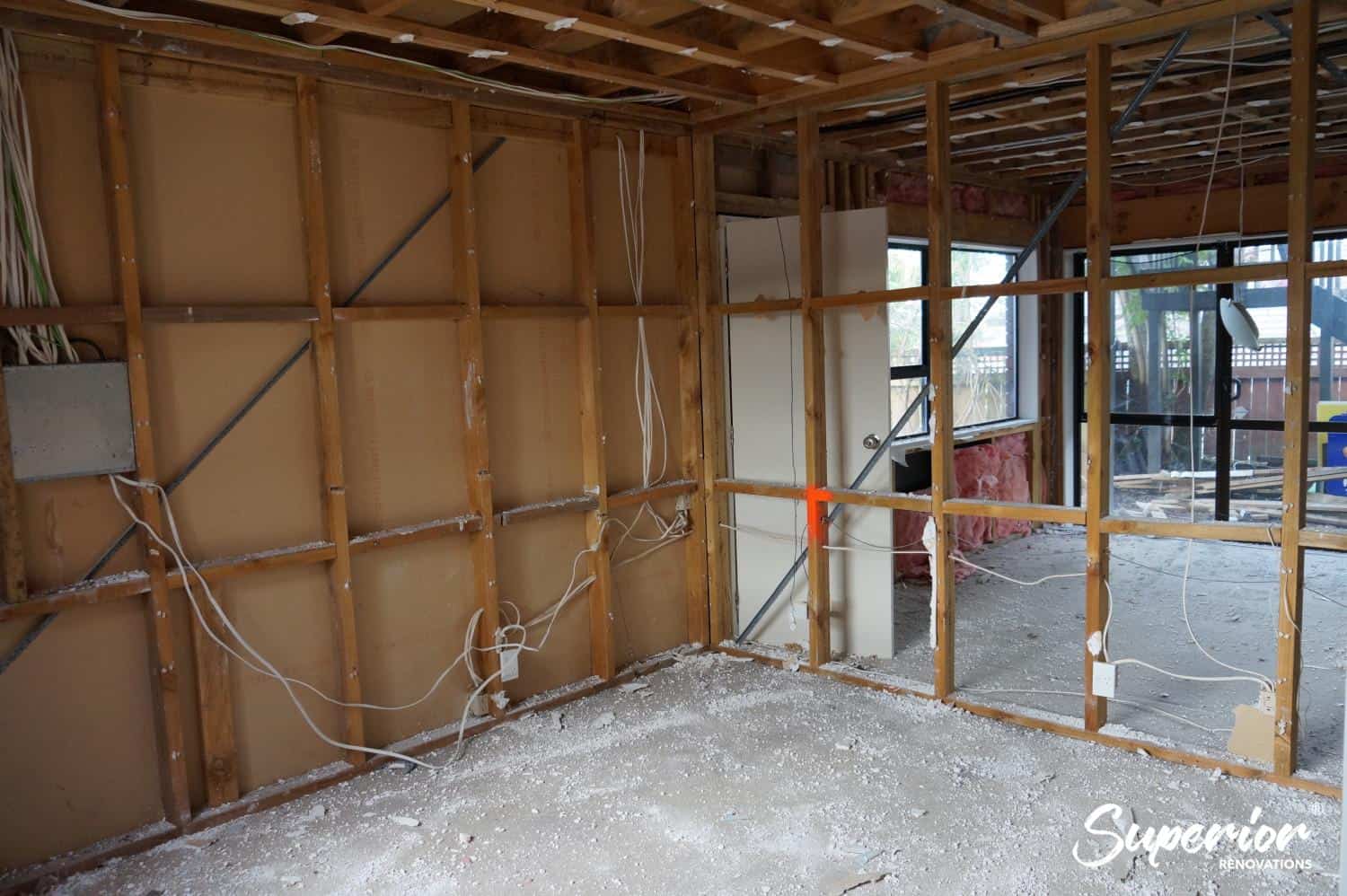
Rewiring and replumbing — the older-home tax
If your home was built before the 1990s, these two are often non-negotiable, and they’re a big slice of any budget. A full rewire of a standard three-bedroom Auckland home runs $8,000–$15,000, with larger or two-storey homes pushing past $20,000 — a range confirmed across multiple NZ electricians, including Neon Electrical’s 2026 rewiring guide. Old TRS or rubber-insulated cabling isn’t just a compliance issue; most insurers now refuse cover until it’s replaced.
Replumbing sits in a similar band. A full-house replumb in Auckland typically costs $10,000–$20,000 in 2026, depending on size, pipe runs and how much wall and floor has to come off to get at it. Galvanised steel and tired old copper are the usual culprits in anything pre-1990.
| Component | Typical 2026 cost | Notes |
|---|---|---|
| Full rewire (3-bed) | $8,000–$15,000 | $20,000+ for larger or two-storey homes |
| Full replumb | $10,000–$20,000 | Driven by wall/floor access and pipe runs |
| Insulation | $40–$160/m² | Material and access dependent |
| Retrofit double glazing | $20,000–$35,000 | Full house; frame condition affects feasibility |
| Tradie labour rate | $90–$120/hr | Indicative, based on our quoting experience; specialist trades higher |
Insulation, glazing and the warmth upgrades
If walls are already open for rewiring or replumbing, this is the cheapest time to deal with insulation and glazing — the labour’s half-done. Insulation runs $40–$160 per square metre depending on material and how reachable the cavity is, and EECA notes proper insulation cuts running costs over the life of the home (see EECA’s home energy guidance). Retrofit double glazing for a full house lands around $20,000–$35,000, though older Auckland frames that are skewed or damaged often can’t take a retrofit unit and need full replacement instead.
💡 Quick tip: Bundle the disruptive services — rewire, replumb, insulate — into one open-wall phase. Doing them separately later means cutting back into finished walls and paying for the same access twice.
Smart wiring while the walls are open
It’s the same logic for smart-home wiring. App-controlled lighting and switching through a system like PDL by Schneider Electric costs a few hundred dollars per room when the sparky’s already on site and the walls are open — far less than retrofitting it later. All electrical work has to comply with the NZ wiring rules, AS/NZS 3000, so it’s a job for a licensed electrician, not a weekend.

Cost Breakdown by Type of Renovation — Kitchen, Bathroom and Full Home
The other reason the per-m² rate misleads: kitchens and bathrooms cost far more per square metre than the rest of the house. They’re dense with services, cabinetry and fixtures. Here’s how the big-ticket rooms break down in 2026.
Kitchen renovation cost
A mid-range kitchen renovation in Auckland costs $26,000–$35,000, working out to roughly $2,300 per square metre for a typical 10–12m² space. Go large — 18m² and up — or premium, and you’re into $62,000–$138,000+ territory once you add custom joinery, stone and integrated appliances. The cabinetry is the single biggest line; layout changes that move plumbing or electrical add cost fast.
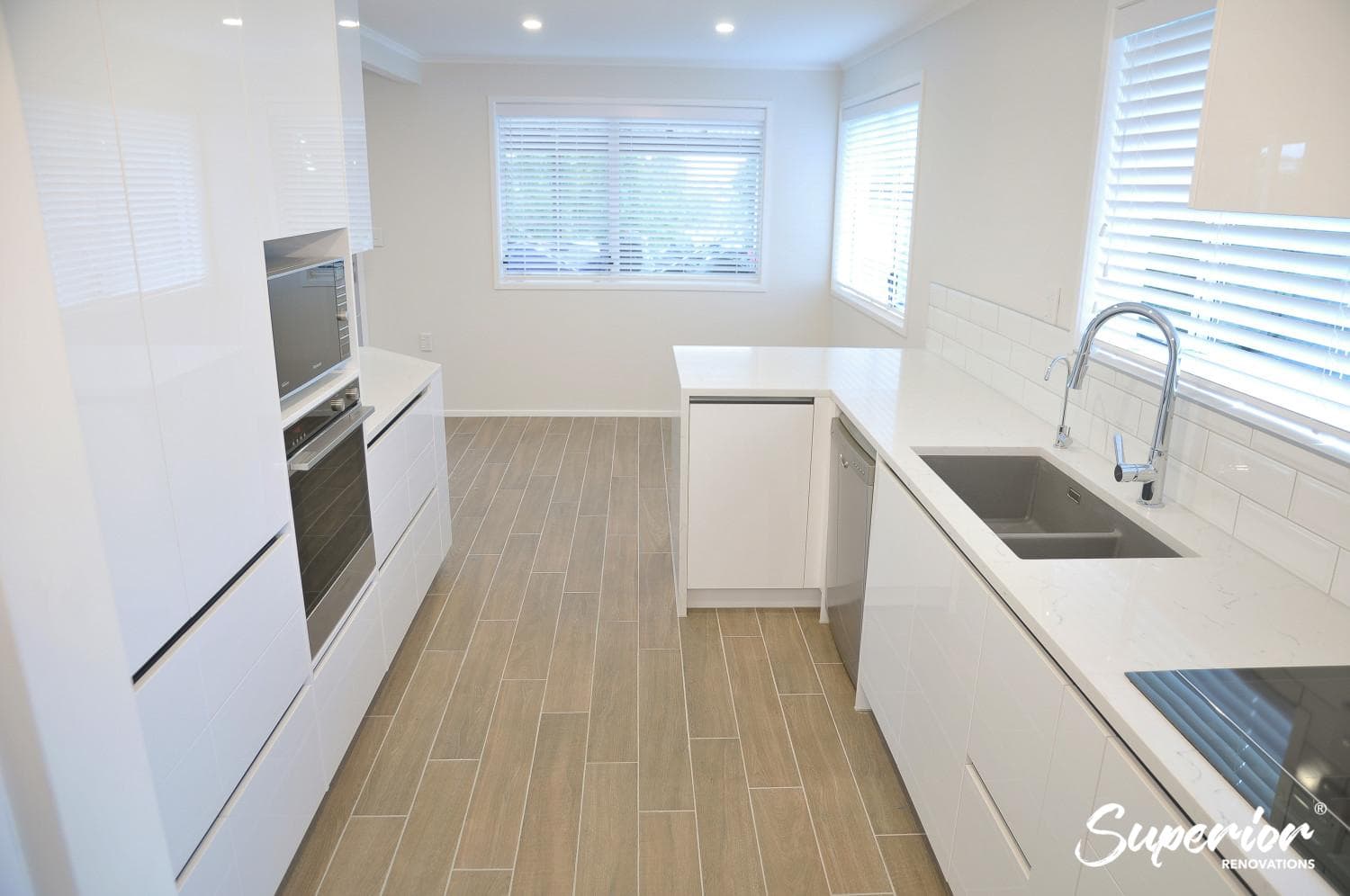
For cabinetry and surfaces, most mid-range Auckland kitchens land on MDF or melamine carcasses with acrylic or laminate fronts — materials like Laminex and Melteca sit right in this band — and an engineered-stone benchtop. If you want to see where the dollars sit line by line, our kitchen renovation cost calculator breaks it down by component.
“People budget for the benchtop and forget the carcass behind it. In a mid-range kitchen, the cabinetry — boxes, fronts, hardware, soft-close runners — is where 40-odd percent of the money goes. Pick the splashback last, not first. It’s the cheapest way to add character and the easiest place to overspend.”
— Alison Yu, Designer, Superior Renovations
Bathroom renovation cost
A mid-range bathroom renovation in Auckland runs $26,000–$35,000, with a full overhaul — retiling, new layout, premium fixtures — reaching $40,000–$60,000. The big cost lever is layout: leave the toilet, shower and vanity where they are and you save thousands; move the waste pipes and you’re into consent territory and an architect’s drawings, which adds materially to the bill.
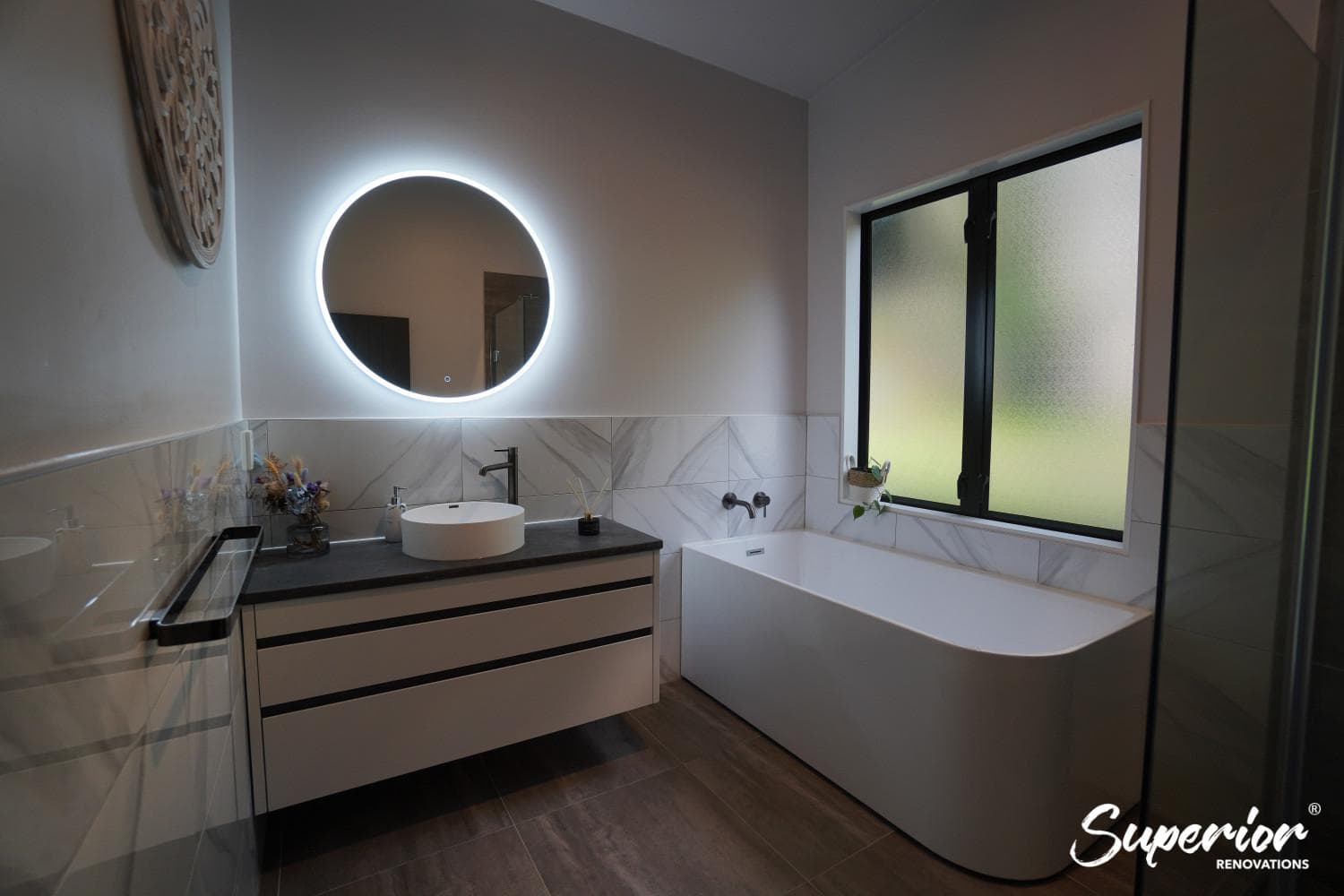
Tiles and fixtures set the final number. Reece is our preferred bathroom supplier and carries most of the brands clients choose; Tile Depot covers the tile range for most tastes and budgets. Waterproofing isn’t the place to save — it’s covered by Building Code clause E3 (internal moisture), and getting it wrong is the most expensive mistake in the room. For a per-component figure, the bathroom renovation cost calculator does the maths.
Full home renovation cost
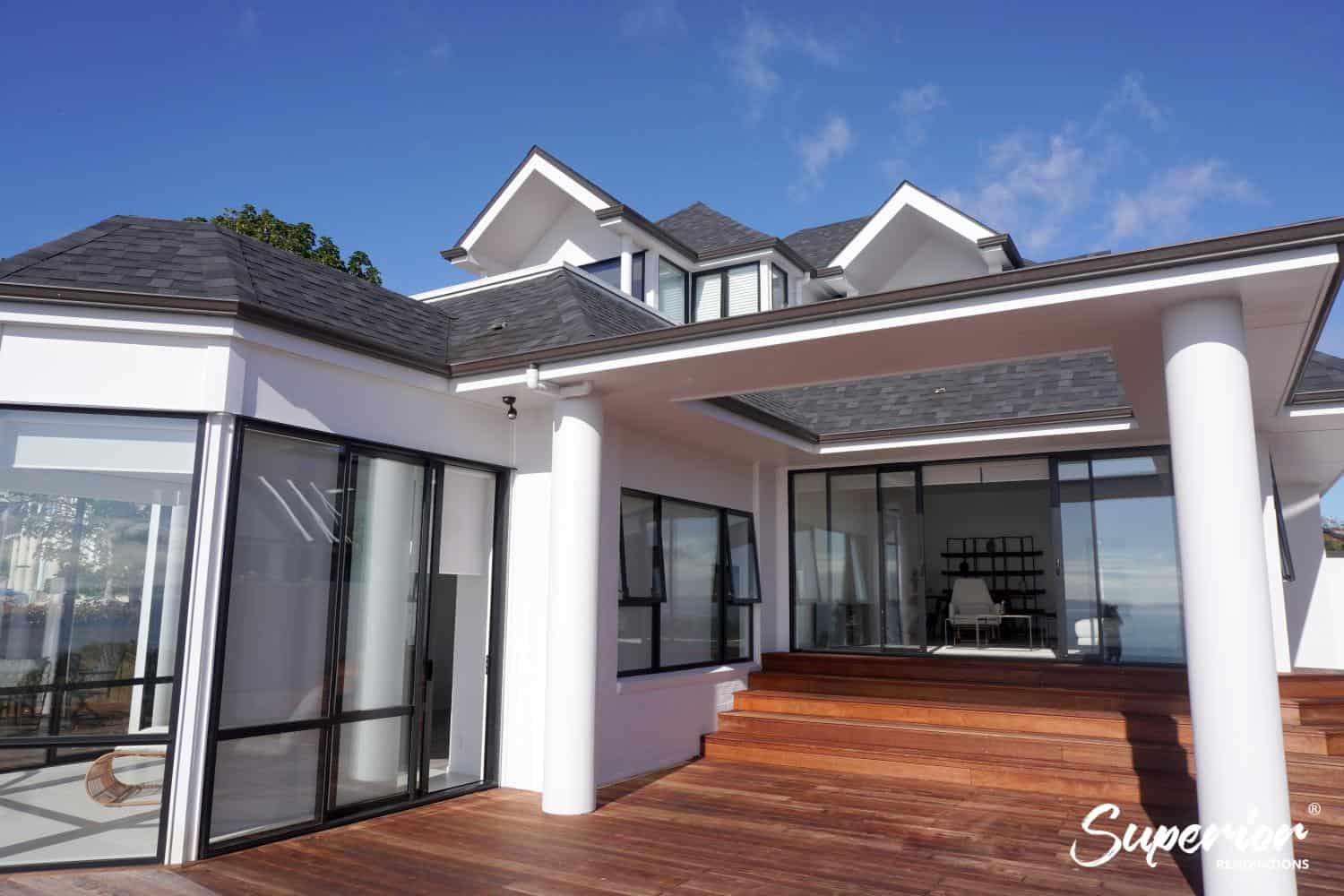
Stack the components and rooms together and a mid-range full home renovation in Auckland lands at $80,000–$160,000, or $2,000–$4,500 per square metre. Strip a home back to its framing, add structural change, recladding and premium finishes, and a large project runs well beyond that. The scope, the size, and the condition of what’s behind the walls decide where you sit in the range.
💡 Quick tip: If you’re touching every room anyway, get one fixed-price scope across the whole job rather than pricing rooms piecemeal. Bundled, the per-m² rate usually drops — shared setup, scaffolding and project management get spread across more floor area.
For the full planning side of a whole-home project — process, consents, choosing a builder — see our house renovation service for Auckland homeowners. To pressure-test your own numbers before you start, the renovation cost calculator tools cover each project type.
Why Renovation Costs Are Climbing in 2026 — The Bit Other Cost Guides Skip
Here’s the part that makes every figure above a moving target, and the reason you shouldn’t trust a cost guide written before this year. Two forces are pulling in opposite directions on your renovation budget right now.
Cheap money, dear materials
On the finance side, borrowing got cheaper. The Reserve Bank cut the Official Cash Rate hard through 2024–25 and has held it at 2.25% as of mid-2026 — stimulatory territory, which feeds into lower mortgage and renovation finance rates.
On the materials side, the opposite. A Middle East conflict has pushed up oil, freight and shipping costs, and it’s flowing straight into building products. RNZ reported in early 2026 that one importer was already seeing a 30% increase coming through on an oil-based, freighted material, with the warning that oil-derived products — drainage pipe, anything heated in production — are broadly exposed. A follow-up report described a federation member being asked to pay 22% more for the same imported product, with freight and transport charges up 44%. Aluminium, bitumen and the chemicals used in timber treatment were all flagged as directly affected.
It isn’t only the imports. The QV Costbuilder index for late 2025 had structural timber up 5.2%, proprietary cladding systems up 5.0% and concrete up 4.5% quarter-on-quarter — modest on their own, but the trend was firming, not cooling, heading into 2026.
Important note: The RBNZ has signalled that rate rises may come later in 2026 as the same conflict pushes inflation toward 4.2%. So the cheap-money window and the dear-materials pressure may not stay split for long — which is exactly why locking a fixed-price scope early matters this year.
What this means for your budget
Two practical takeaways. First, get a fixed-price quote rather than an estimate — in a rising-material market, a fixed scope shifts the price risk off you and onto the builder. Second, build a real contingency. A 10–20% buffer was always sensible; in 2026, with material prices moving and older Auckland homes hiding surprises, it’s closer to essential.
If you want certainty before committing, a free feasibility report on your project sets realistic numbers against your actual home and scope — not a generic per-m² rate.
How to Read a Renovation Quote Without Getting Caught Out
Once you’ve got the per-m² rate, the components and the 2026 pressures in your head, the last skill is reading the quote in front of you. A few things separate a real quote from a hopeful one.
Estimate versus fixed-price quote
An estimate is a guess that can move. A fixed-price quote is a commitment. In a year where material costs are climbing, the difference is real money. Ask which one you’re holding, and ask what triggers a variation — the honest answer is usually “hidden damage we can’t see until we open it up,” which is fair, as long as it’s spelled out.
What a complete quote includes
A proper renovation quote covers labour, materials, project management, consent costs where they apply, and a clear scope of works. If a number looks low next to everything on this page, something’s been left out — usually consent, project management, or a contingency the builder is quietly hoping they won’t need. Auckland Council’s building consent information is the place to confirm whether your scope needs consent before you sign anything.
💡 Quick tip: Get the scope of works in writing before you compare prices. Two quotes that look $20,000 apart are often pricing two different jobs — one’s quoted a full rewire, the other’s assumed your wiring is fine. Compare scope first, price second.
You can see how this works on real jobs in our renovation case studies from across Auckland — suburb, scope and where the budget went.
Get Your Renovation Costs Right Before You Start
A per-square-metre rate gets you a ballpark. The component and scope breakdown gets you a budget. And in 2026, with material prices moving, a fixed-price quote against your actual home gets you certainty. We’ve quoted and delivered over 1000 Auckland renovations from our showroom at 16B Link Drive, Wairau Valley — so the numbers on this page come from real jobs, not guesswork.
➡ Book your free in-home consultation with Superior Renovations
➡ Try our renovation cost calculator tools for your project type
➡ Request a free feasibility report for your project
How much does renovation cost per square metre in NZ in 2026?
A standard Auckland renovation costs about $2,000–$4,500 per square metre in 2026, with high-end work pushing past $5,500/m². The rate depends on finish level, how much of the layout changes, and the condition of the home — pre-1940s villas and bungalows often run higher once old wiring, plumbing or framing problems are found. Use the per-m² rate for a ballpark, then add a 10–20% contingency before committing.
What does a full home renovation cost in Auckland?
A mid-range full home renovation in Auckland costs $80,000–$160,000 in 2026, or roughly $2,000–$4,500 per square metre. A standard three-bedroom with a new kitchen, bathroom, flooring, painting and some services replacement sits in this band. Strip-outs with structural change, recladding and premium finishes run well beyond it. Size, scope and what's hidden behind the walls decide where you land.
How much does it cost to rewire a house in NZ?
A full rewire of a standard three-bedroom Auckland home costs $8,000–$15,000 in 2026, with larger or two-storey homes exceeding $20,000. Homes built before the 1990s with old TRS or rubber-insulated cabling usually need it — most insurers now require replacement before they'll cover the home. Rewiring while walls are open for other work keeps the cost down. All electrical work must comply with AS/NZS 3000 and be done by a licensed electrician.
How much does it cost to replumb a house in NZ?
A full-house replumb in Auckland typically costs $10,000–$20,000 in 2026. The price depends on the size of the home, the pipe runs, and how much wall and floor has to be opened to reach the existing plumbing. Pre-1990 homes with galvanised steel or aged copper pipes are the usual candidates. Like rewiring, it's cheapest to do while walls are already open for other renovation work.
Why is the per square metre rate often misleading?
Because it assumes an even spread of cost across the floor area, and renovations aren't even. Kitchens and bathrooms cost far more per square metre than bedrooms or living areas because they're dense with services, cabinetry and fixtures. The rate also assumes sound bones — older Auckland homes frequently hide wiring, plumbing or framing problems that lift the real cost well above the headline figure. Always pair the rate with a component-level breakdown.
How much does a kitchen renovation cost in NZ?
A mid-range kitchen renovation in Auckland costs $26,000–$35,000 in 2026, about $2,300 per square metre for a typical 10–12m² kitchen. Larger kitchens (18m²+) or premium builds with custom joinery, stone benchtops and integrated appliances run $62,000–$138,000 or more. Cabinetry is the biggest single cost. Changing the layout to move plumbing or electrical adds cost quickly.
How much does a bathroom renovation cost in NZ?
A mid-range bathroom renovation in Auckland runs $26,000–$35,000 in 2026, with a full overhaul reaching $40,000–$60,000. The biggest cost lever is layout: keeping the toilet, shower and vanity in place saves thousands, while moving waste pipes triggers consent and architect's drawings. Tiles, fixtures and waterproofing (covered by Building Code clause E3) make up the rest of the spend.
Are renovation costs going up in 2026?
Yes. A Middle East conflict has pushed up oil, freight and shipping costs in 2026, flowing into building products — one importer reported a 22% price rise on an imported product with freight and transport up 44%, per RNZ and NZ Herald reporting. The QV Costbuilder index also showed structural timber up 5.2% and cladding up 5.0% quarter-on-quarter heading into 2026. Borrowing is cheaper with the OCR at 2.25%, but rate rises are signalled for later in the year.
Should I get an estimate or a fixed-price quote?
A fixed-price quote, especially in 2026's rising-material market. An estimate can move; a fixed-price quote commits the builder to the number and shifts price risk off you. Ask what triggers a variation — the honest answer is usually hidden damage that can't be seen until walls are opened, which is fair if it's spelled out clearly. Always get the full scope of works in writing so you're comparing like for like.
How much contingency should I budget for a renovation?
Budget 10–20% on top of your quoted renovation cost. In 2026, with material prices moving and older Auckland homes commonly hiding wiring, plumbing or framing surprises, lean towards the higher end — closer to 20% for a pre-1940s villa or bungalow. The contingency covers the unknowns that only appear once work starts, like rotten framing behind the GIB, and keeps a surprise from becoming a stalled project.
Further Resources for your renovation
- Featured projects and Client stories to see specifications on some of the projects.
- Real client stories from Auckland
Need more information?
Take advantage of our FREE Complete Home Renovation Guide (48 pages), whether you’re already renovating or in the process of deciding to renovate, it’s not an easy process, this guide which includes a free 100+ point check list – will help you avoid costly mistakes.
Download Free Renovation Guide (PDF)
Have you been putting off getting renovations done?
We have partnered with Q Mastercard ® to provide you an 18 Month Interest-Free Payment Option, you can enjoy your new home now and stress less.
Learn More about Interest-Free Payment Options*
*Lending criteria, fees, terms and conditions apply. Mastercard is a registered trademark and the circles design is a trademark of Mastercard International Incorporated.
Still have questions unanswered?
Book a no-obligation consultation with the team at Superior Renovations, we’d love to meet you to discuss your renovation ideas!
[contact-form-7]
References
- Reserve Bank of New Zealand — The Official Cash Rate (held at 2.25%, 2026)
- RNZ — ‘It’s going to get messy’: Construction costs to jump (2026)
- NZ Herald — Crisis looming as construction costs soar (2026)
- QV Costbuilder — Building costs edge higher as timber and cladding prices rise
- Builders Near Me NZ — Home renovation cost per square metre 2026
- Neon Electrical — House rewiring cost NZ 2026
- EECA — Energy efficiency and home insulation
- Auckland Council — Building and consents
The post Renovation Cost Per Square Metre NZ (2026 Breakdown) – Superior Renovations appeared first on Superior Renovations. #superiorrenovations


Comments
Post a Comment